
If you own a Maytag washing machine, you may have seen the 5D code pop up on your washer’s display. This error can be confusing and sometimes frustrating, especially if it appears in the middle of a busy laundry day. Many users don’t realize what causes the 5D code, how to fix it, or what steps can prevent it from happening again. Understanding this error will help you keep your washer running smoothly and avoid unexpected delays.
The 5D code is not a rare problem. In fact, it’s one of the most common issues reported by Maytag owners. While it might seem like a technical glitch, the cause is usually something simple, and you can often solve it yourself without calling a technician.
In this article, you’ll learn what the Maytag 5D code means, how to fix it, and how to prevent it in the future. You’ll also discover practical tips and insights that even many experienced users overlook.
What Does The Maytag 5d Code Mean?
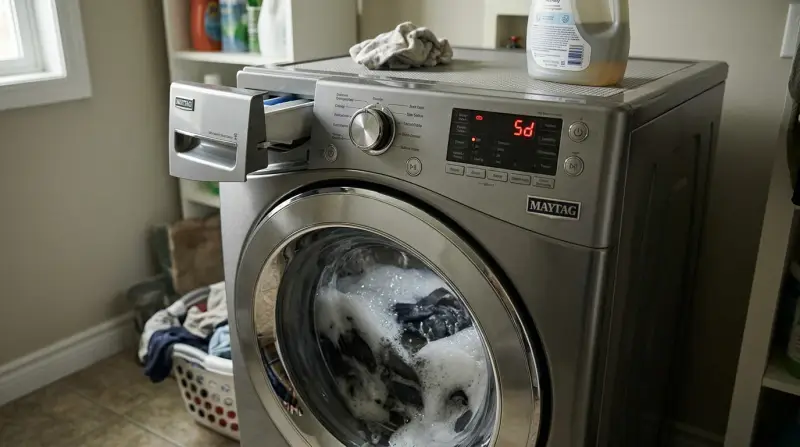
The 5D code (sometimes displayed as SD) on a Maytag washer stands for “Suds Detected”. This means the washing machine’s sensors have found too many soap suds during a cycle. Most modern Maytag washers use sensors to monitor the amount of foam in the drum. When there’s too much suds, the washer pauses the cycle and tries to remove the excess before continuing.
This code can happen with both top-loading and front-loading Maytag washers. You might notice the drum stops spinning, or the cycle seems to last longer than usual. The washer may add extra rinse cycles to clear the suds, which wastes both water and time.
Why Too Many Suds Is A Problem
Excess suds make it hard for your washer to clean and rinse clothes properly. Instead of lifting dirt away, the foam can actually trap soils, making clothes less clean. Too much suds can also overflow and leak from the washer, sometimes causing water damage.
Finally, the washer’s pump can struggle to remove all the foam, which can lead to mechanical problems over time.
Main Causes Of The 5d Code
You might be surprised to learn that the root causes of the 5D code are often simple mistakes. Here are the most common reasons:
- Using too much detergent: This is the number one cause. Adding more soap doesn’t make clothes cleaner; it just creates more foam.
- Non-HE detergent: If your washer is high-efficiency (HE), you must use HE detergent. Regular detergents create more suds than HE models can handle.
- Clogged or dirty drain: If the washer can’t drain properly, suds can build up.
- Washing a small load: A very small load with a normal amount of detergent can make more suds.
- Water quality: Soft water creates more foam with less detergent.
Some Maytag models are more sensitive to these factors than others. For example, newer models with advanced sensors are more likely to show the 5D code with even a little too much soap.

How To Fix The Maytag 5d Code
If you see the 5D code, don’t panic. You can usually fix it yourself in a few steps.
Step-by-step Solution
- Wait for the washer to finish: Most Maytag washers will pause, add water, and try to rinse out the excess suds automatically. Give it 5–10 minutes.
- Remove excess suds manually: If suds remain, open the washer (when safe), scoop out foam with a towel, and run an extra rinse and spin cycle.
- Check and clean the drain: Clogged drains trap soap and water. Inspect the drain hose and filter for blockages.
- Use less detergent next time: For future loads, use only the recommended amount, especially if you have soft water.
- Switch to HE detergent: If you aren’t already using HE detergent, switch immediately.
When To Reset The Washer
If your washer seems stuck on the 5D code, a simple reset can help. Unplug the washer for one minute, then plug it back in. This clears the error and lets you start a new cycle.
When To Call A Professional
If you’ve tried these steps and the code keeps coming back, you may have a faulty sensor, a problem with the control board, or a broken drain pump. In this case, it’s best to call a qualified appliance technician.
Comparing Detergent Types And Suds Levels
The type of detergent you use plays a big role in how often you see the 5D code. Here’s a quick comparison:
| Detergent Type | Suds Level | Recommended for HE Washers? |
|---|---|---|
| HE Detergent | Low | Yes |
| Regular Detergent | High | No |
| Homemade Soap | Varies (Usually High) | No |
HE detergent is specially made to produce fewer suds, which is safer for your Maytag washer. Even a small amount of regular detergent can cause excess foam.

How To Prevent The 5d Code
A few simple habits can help you avoid the 5D code in the future:
- Always use the right detergent for your washer model.
- Measure detergent carefully; use less in soft water areas.
- Don’t overload or underload the washer.
- Clean the washer’s filter and drain hose every few months.
- Run a cleaning cycle with washing machine cleaner monthly.
It’s also smart to check your washer’s user manual for specific detergent recommendations. Some models need even less soap than you might expect.
Water Hardness And Detergent Use
Not all water is the same. In cities with soft water, you need less detergent because soap dissolves more easily. In hard water areas, you may need a little more, but still less than you think. Many people use a full cap of detergent when half is enough.
Key Washer Features That Affect Suds
Maytag washers have different features that can impact how often the 5D code appears. Here’s a comparison of two common models:
| Feature | Maytag Front Loader | Maytag Top Loader |
|---|---|---|
| Sensor Type | Advanced foam sensor | Basic foam sensor |
| HE Detergent Required | Yes | Yes |
| Extra Rinse Option | Available | Available |
| Manual Suds Removal | Easy access | Easy access |
Front loaders often have more sensitive sensors, so they show the 5D code more quickly if there’s too much soap.
Common Mistakes To Avoid
Many users make small mistakes that trigger the 5D code. Here are a few to watch out for:
- Guessing detergent amount: Always measure. “Eyeballing” leads to using too much.
- Ignoring regular maintenance: A blocked filter or drain can cause issues.
- Mixing detergent types: Never combine regular and HE detergents.
- Skipping extra rinses for bulky items: Heavy bedding can hold more soap.
Another mistake is ignoring repeated 5D codes. If your washer shows this error often, it’s a sign that something needs to be fixed or changed.
Practical Tips For Stubborn Suds Problems
Sometimes, the usual solutions don’t work, especially if you’ve had a suds issue for a while. Here are some expert tips:
- Run the washer empty with hot water and no detergent. This helps flush out soap residue.
- Use a washer cleaning tablet monthly to keep the drum and sensors clean.
- If you use fabric softener, make sure it’s HE-compatible as well.
Also, check that your washer is level. If it’s tilted, water may not drain correctly, making suds problems worse.
When The 5d Code Hides Bigger Issues
In rare cases, the 5D code is a sign of a bigger problem, such as:
- Faulty foam sensor
- Clogged or broken drain pump
- Control board failure
If you’ve tried all the basic fixes and the code returns immediately, a mechanical issue is likely. At this point, professional repair is the safest option. It’s important not to keep running cycles with repeated errors, as this can damage your washer further.
How Maytag’s 5d Code Compares To Other Washer Brands
Different brands use different codes for suds problems. Here’s how Maytag compares:
| Brand | Suds Code | Meaning |
|---|---|---|
| Maytag | 5D / SD | Suds detected |
| Whirlpool | SD | Suds detected |
| Samsung | Sud | Suds detected |
| LG | OE | Drain error (can be caused by suds) |
Knowing this can help if you ever switch brands or help friends and family with their washers.
Real-world Example: Solving A Persistent 5d Code
Imagine a family in a city with soft water. They use a high-efficiency Maytag front-loader and regularly see the 5D code. They switch to HE detergent, but the problem continues. After measuring their water hardness, they learn their city’s water is extremely soft, so they cut their detergent in half.
They also start cleaning the washer monthly. The 5D code disappears.
This example shows that even after switching to the right detergent, other factors like water quality and regular cleaning matter. Many users focus only on detergent type, missing these extra steps.
Helpful Resources
If you need more information, your washer’s user manual is a great place to start. You can also visit the official Maytag support site or check resources like Maytag Error Codes for detailed explanations.
Frequently Asked Questions
What Is The Main Reason For The 5d Code On Maytag Washers?
The main reason is using too much detergent or using non-HE detergent. Both cause excess suds, which trigger the washer’s sensors to stop the cycle until the foam is cleared.
Can I Fix The 5d Code Without Calling A Repair Technician?
Yes, most of the time. You can fix the 5D code by removing excess suds, running extra rinse cycles, and using the correct detergent amount. Only call a technician if these steps do not solve the problem.
Is The 5d Code Dangerous For My Washer?
The code itself is not dangerous, but ignoring it can cause long-term damage. Repeated suds issues can clog the pump and sensors, leading to expensive repairs.
How Can I Tell If My Washer Needs He Detergent?
Check your washer’s manual or the sticker near the detergent drawer. Most modern Maytag washers require HE detergent for best performance and to avoid suds errors.
How Often Should I Clean My Maytag Washer To Prevent The 5d Code?
Run a cleaning cycle at least once a month, especially if you do a lot of laundry. This helps remove soap residue and keeps sensors working properly.
Keeping your Maytag washer free from the 5D code is easier than you might think. A few smart habits—using the right detergent, regular maintenance, and not overloading—can save you time and trouble. If the error appears, follow the steps in this guide before reaching for the phone.
With the right approach, you’ll enjoy clean clothes and a reliable washer for years to come.