
When shopping for lighting, you may see terms like Par20 and Par30. These are common types of light bulbs used in homes, offices, shops, and even outdoors. But what is the real difference between Par20 and Par30? Which one is right for your needs? This article breaks down every key factor, with clear examples and expert guidance, so you can confidently choose the perfect bulb. If you’re unsure about size, brightness, energy use, or fitting, you’ll find answers here.
What Does “par” Mean?
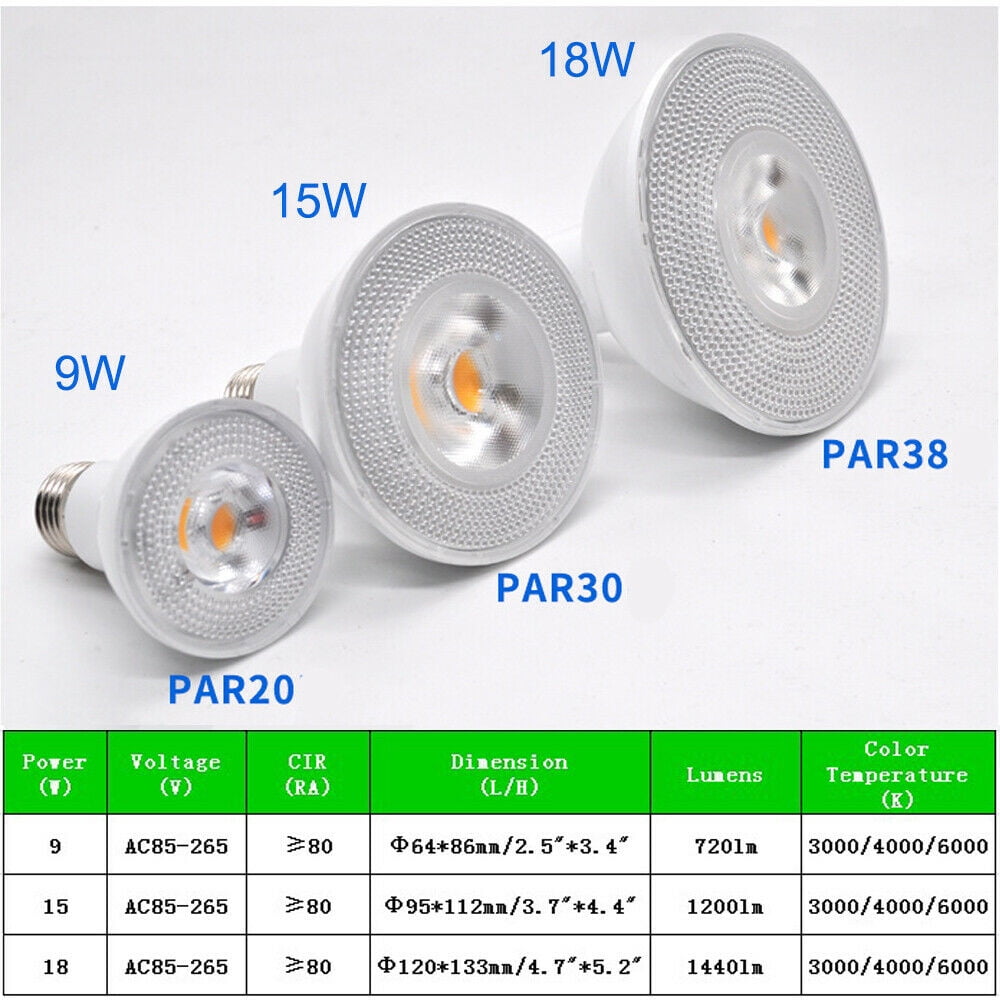
“PAR” stands for Parabolic Aluminized Reflector. This means the bulb has a special shape and coating inside that focuses the light. PAR bulbs are used for spot lighting, accent lighting, and flood lighting. The number after “PAR” (like 20 or 30) tells you the diameter of the bulb in eighths of an inch.
For example:
- Par20: 20 × 1/8 inch = 2.5 inches diameter
- Par30: 30 × 1/8 inch = 3.75 inches diameter
This size difference is the starting point for choosing between Par20 and Par30.
Par20 Vs Par30: Key Differences
Let’s look at the core differences between these bulbs. Here’s a quick side-by-side overview:
| Feature | Par20 | Par30 |
|---|---|---|
| Diameter | 2.5 inches | 3.75 inches |
| Length | 3.1-3.4 inches | 4.5-5 inches |
| Wattage | 7-50W | 10-75W |
| Lumens | 400-650 | 700-1200 |
| Beam Angle | 15-40° | 15-40° |
| Common Uses | Accent, small rooms | General, larger rooms |
These are the main differences. Now let’s dive deeper into 20 important details and comparisons.
Size And Shape
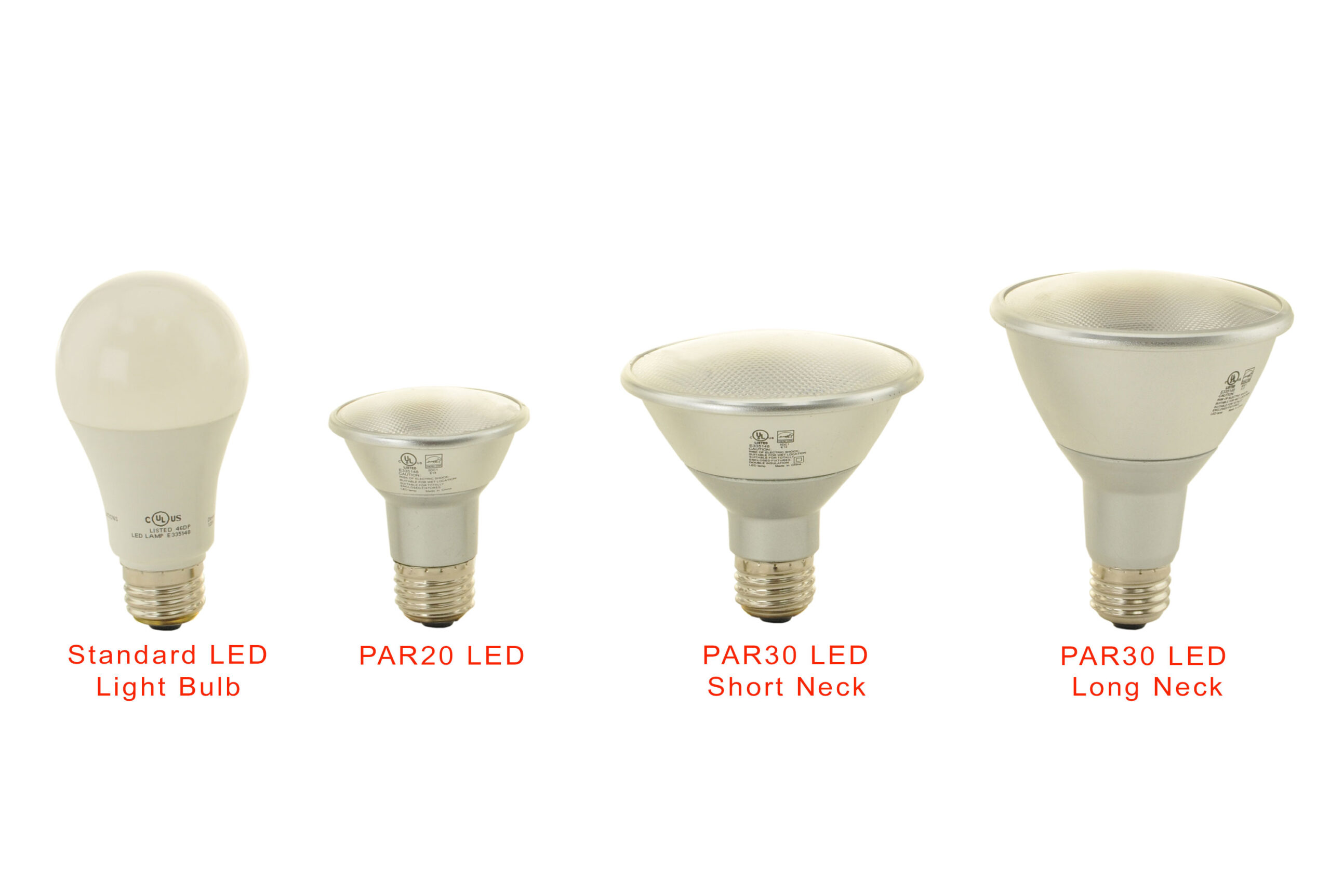
Par20 bulbs are smaller and fit in tight spaces, like track lighting, cabinets, or small recessed fixtures. Par30 bulbs are larger and better for open ceilings or big fixtures. Many people overlook this: the actual fixture must be big enough for the bulb.
Wattage Range
Par20 bulbs typically use 7–50 watts. Par30 bulbs range from 10–75 watts. If you want lower energy use, Par20 is often the winner. But with LED technology, both types can be very efficient.
Light Output (lumens)
A Par20 bulb usually produces 400–650 lumens. Par30 bulbs can shine with 700–1200 lumens. For bright spaces or highlighting objects, Par30 gives more light. But for cozy corners, Par20 is enough.
Beam Angle
Both Par20 and Par30 come with various beam angles (spot, flood, or wide flood). However, Par30 bulbs often have wider beam options, making them ideal for lighting larger areas.
Fixture Compatibility
Not every fixture accepts both sizes. Par20 fits smaller sockets and shallow fixtures. Par30 needs more space. Always check your fixture’s specifications before buying.
Ceiling Height
For low ceilings (under 8 feet), Par20 bulbs are usually better. For high ceilings, Par30 bulbs give stronger and wider coverage. This is an important detail many beginners miss.
Cost
Par20 bulbs are often less expensive than Par30. However, the price difference can shrink with LED models. Always compare brands, features, and warranties.
Color Temperature
Both bulb types offer warm white (2700K), neutral white (3000K–3500K), and cool white (4000K–5000K) options. Choose color temperature based on your room’s mood and function.
Dimmability
Most Par20 and Par30 bulbs are available in dimmable versions. But check the packaging: not all bulbs or fixtures support dimming.
Lifespan
LED Par20 and Par30 bulbs can last 15,000–25,000 hours. This is much longer than old halogen or incandescent bulbs. The lifespan is usually similar for both types.
Heat Production
Par30 bulbs are bigger and sometimes produce more heat. For cabinets or tight spots, Par20 is safer and cooler. For open spaces, heat is less of a concern.
Outdoor Use
Par30 bulbs are more common in outdoor floodlights because their size lets them handle weatherproofing and strong light. Par20 is used for smaller garden lights or porch spots.
Decorative Lighting
If you want a subtle, less noticeable bulb, Par20 is better. For bold, visible lighting, Par30 creates a stronger effect.
Energy Efficiency
LED versions of both Par20 and Par30 are very efficient. But the smaller Par20 bulb uses less power for the same technology. For large areas, Par30’s efficiency shines because you need fewer bulbs.
Replacement And Availability
Par30 bulbs are more widely available in stores because they are used for general lighting. Par20 bulbs are popular for specialty applications, but may be harder to find in some regions.
Installation Tips
Always turn off power before replacing bulbs. Use gloves to avoid fingerprints, which can shorten bulb life. For Par30, make sure the fixture is deep enough.

Common Mistakes
One big mistake: buying the wrong size for your fixture. Another: mixing color temperatures in the same room, which makes lighting look uneven.
Smart Lighting Options
Both Par20 and Par30 are available as smart bulbs (Wi-Fi, Bluetooth control). Par30 models often have more advanced features, like color changing and scheduling.
Application Examples
- Par20: Art galleries, reading nooks, display cases, bathroom mirrors.
- Par30: Living rooms, kitchens, hallways, outdoor floodlights.
Environmental Impact
LED bulbs of both types use less energy and produce less waste. Par20 is slightly “greener” if you only need a small amount of light. Always recycle old bulbs responsibly.
Par20 Vs Par30: Detailed Comparison Table
Here’s another table showing real-world differences:
| Feature | Par20 | Par30 |
|---|---|---|
| Best For | Small spaces, accent | Large spaces, general |
| Typical Price | $5–$15 | $8–$25 |
| LED Version? | Yes | Yes |
| Outdoor Use? | Limited | Common |
| Smart Bulb? | Some | Many |
Choosing The Right Bulb For Your Needs
Picking between Par20 and Par30 depends on your space, fixture, and goals. Here’s a step-by-step guide:
- Measure your fixture’s diameter and depth.
- Decide how much light you need (lumens).
- Choose the right color temperature for your room.
- Check if you need dimmable or smart features.
- Compare energy use and price.
Remember, the bulb’s size affects the look and feel of your space. For accent lighting, Par20 is often best. For general lighting, Par30 is usually better.
Real-world Examples
Let’s look at practical situations:
- Kitchen: Par30 bulbs in recessed ceiling fixtures give broad, bright light.
- Art Gallery: Par20 bulbs highlight artwork without overpowering the room.
- Patio: Par30 outdoor floodlights cover wide areas, while Par20 can create cozy spots.
Many people miss the impact of bulb placement. Even with the right bulb, poor placement leads to shadows or uneven lighting.
Energy Savings Data
According to the US Department of Energy, switching to LED bulbs (Par20 or Par30) can cut lighting energy use by up to 75%. Over 10 years, this can save hundreds of dollars for a typical home.
Common Buyer Mistakes
- Buying based only on wattage, not lumens.
- Ignoring fixture size.
- Mixing bulb types in one fixture.
- Forgetting to check dimmer compatibility.
If you avoid these mistakes, you get better lighting and save money.
Expert Insight: Why Size Matters
Beginners often think “bigger is brighter. ” But sometimes a smaller bulb, like Par20, gives more focused light and uses less energy. Always match the bulb to the task. For example, Par20 is perfect for highlighting a sculpture, while Par30 is ideal for lighting a whole room.
Par20 Vs Par30: Quick Reference Table
Here’s a handy summary for shopping:
| Question | Par20 | Par30 |
|---|---|---|
| Fits small fixtures? | Yes | No |
| Bright enough for large rooms? | Sometimes | Yes |
| Outdoor rated? | Rare | Common |
| Easy to find? | Specialty stores | Most stores |
| Best for accent? | Yes | No |
Frequently Asked Questions
What Does The “20” Or “30” Mean In Par20 And Par30?
The number shows the bulb’s diameter in eighths of an inch. Par20 is 2. 5 inches; Par30 is 3. 75 inches.
Can I Use A Par30 Bulb Where A Par20 Was Installed?
Usually not. Par30 bulbs are bigger and may not fit the fixture. Always check the size and depth before changing.
Which Is More Energy Efficient: Par20 Or Par30?
Both can be efficient if you choose LED versions. Par20 uses less power for small spaces, while Par30 covers larger areas with fewer bulbs.
Are Par20 And Par30 Bulbs Dimmable?
Many are dimmable, but not all. Check the packaging and make sure your fixture supports dimming.
Where Can I Learn More About Par Bulb Types?
For more technical details, visit the Wikipedia PAR lamp page.
Lighting choices affect your home’s look, comfort, and energy bills. By understanding the differences between Par20 and Par30, you can create the right atmosphere and save money. Whether you want accent lighting or bright coverage, picking the correct bulb type matters. With the information above, you’re ready to make a smart choice and avoid common mistakes.