
When building a house or any wooden structure, people often debate which fastener works best: screws or nails. This decision affects the strength, speed, and cost of your framing. If you’re unsure, you’re not alone—many beginners and even experienced builders wonder which to choose. Let’s explore the differences, see how each performs in framing, and help you make the right choice for your project.
What Is Framing?
Framing is the process of building the skeleton of a structure. It involves joining wood pieces to form walls, floors, and roofs. The framing stage is critical because it affects the strength and shape of your building. Fasteners—like screws and nails—hold these pieces together.
Understanding Screws And Nails
Before comparing, it’s helpful to know how screws and nails work.
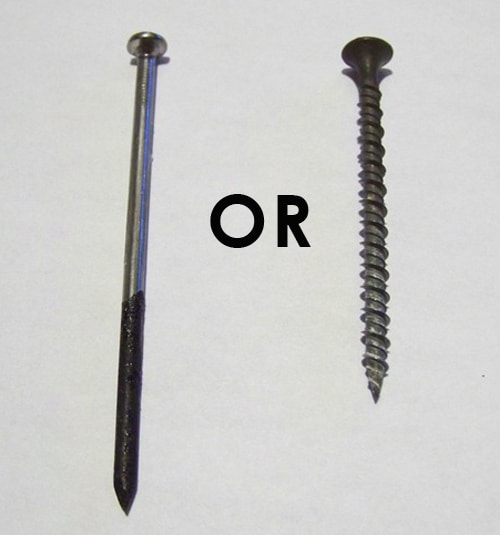
- Nails are smooth or slightly ridged metal pins. Builders drive them with hammers or nail guns. Nails are quick to install and are flexible under force.
- Screws have spiral threads. You drive them with a screwdriver or drill. Screws grip wood tightly and resist pulling out, but installation is slower.
Both come in various sizes and types, but their basic functions are similar: hold wood together.
Comparing Screws Vs Nails For Framing
Let’s look at how screws and nails perform in framing. Here’s a direct comparison:
| Feature | Screws | Nails |
|---|---|---|
| Holding Power | High | Medium |
| Shear Strength | Medium | High |
| Speed of Installation | Slow | Fast |
| Cost | Higher | Lower |
| Flexibility | Low | High |
| Removal | Easy | Difficult |
You can see that screws and nails each have advantages. The best choice depends on your needs.
Strength And Durability
Shear Strength
Shear strength means how well a fastener resists side-to-side forces. In framing, this matters because walls and floors move slightly as houses settle or during wind and earthquakes.
- Nails bend under stress but rarely snap. This flexibility protects the structure. For example, in hurricane zones, codes often require nails for wall and roof framing.
- Screws can break under extreme side force. Their grip is strong vertically, but their threads can snap if the wood moves side-to-side.
Pull-out Strength
Pull-out strength measures how well a fastener resists being pulled straight out.
- Screws are excellent here. Their threads lock into wood fibers.
- Nails are weaker in this area. They can loosen over time, especially if wood shrinks or warps.
For most framing, shear strength is more important than pull-out strength. That’s why nails are preferred for structural framing.
Real-world Data
A study from the American Wood Council found that 16d common nails have a shear strength of about 180 pounds, while typical wood screws have about 140 pounds. But screws can withstand double the pull-out force compared to nails.
Speed And Efficiency
Framing is a fast-paced job. Builders need to join hundreds or thousands of pieces quickly.
- Nails are faster. With a nail gun, you can drive 3–4 nails per second. Hammering is slower but still quicker than using screws.
- Screws require pre-drilling in some cases, then driving each screw with a drill. Even with power tools, it’s slower.
For large projects, time saved with nails can be significant. That’s why builders often use nails for framing and reserve screws for critical spots.
Cost Differences
Cost is a big factor, especially for homeowners and contractors on a budget.
- Nails are cheap. A box of framing nails costs less than half the price of the same number of screws.
- Screws are more expensive per piece. Add the cost of buying or maintaining drills and bits.
Let’s see a cost comparison for a typical 2,000 sq ft house:
| Fastener Type | Estimated Cost (USD) | Labor Hours |
|---|---|---|
| Nails | $350 | 80 |
| Screws | $750 | 110 |
This shows nails are not only cheaper, but also faster to install.
Flexibility And Movement
Wood expands and contracts with humidity and temperature. Houses move slightly as they settle.
- Nails flex and bend. This lets the frame “move” without breaking fasteners.
- Screws are rigid. If the wood shifts, screws can crack or snap.
For framing, flexibility is valuable. That’s another reason nails are popular.
Removal And Adjustments
Sometimes you need to remove a fastener to fix mistakes or make changes.
- Screws are easy to remove. Just reverse the drill.
- Nails require a pry bar or hammer. Removal can damage wood.
When accuracy matters, or you expect to adjust, screws are better. But for large framing jobs, builders usually don’t remove fasteners.
Building Codes And Standards
US building codes often require nails for structural framing. For example, the International Residential Code (IRC) specifies nail types and spacing for walls, floors, and roofs. Screws are allowed in some cases—especially for metal connectors or when extra hold is needed.
Before starting, check your local building codes. Some places may allow screws, but most prefer nails for main framing.
Where To Use Screws
While nails are standard for framing, screws have their place:
- Deck Framing: Screws resist pull-out and are ideal for outdoor decks.
- Subflooring: Screws prevent squeaks by holding flooring tightly.
- Temporary Structures: If you plan to disassemble, screws are easier to remove.
- Metal Connectors: For joining wood to metal brackets, screws are often required.
- Finish Work: Screws are good for trim or cabinetry, where precision matters.
Where To Use Nails
Nails remain the best choice for most structural framing:
- Wall Studs: Nails are fast and meet code requirements.
- Roof Trusses: Nails flex under wind loads.
- Floor Joists: Nails handle heavy loads and movement.
- Sheathing: Nails secure plywood or OSB panels quickly.
- Blocking and Bracing: Nails are cost-effective and strong.
Common Mistakes Beginners Make
Many people make errors when choosing fasteners for framing. Here are some to watch for:
- Using Screws for Main Framing: Screws may seem stronger, but lack the required flexibility and shear strength.
- Wrong Nail Type: Not all nails are equal. Framing needs 16d common nails or similar, not finishing nails.
- Overdriving Fasteners: Driving nails or screws too deep weakens the joint.
- Ignoring Building Codes: Always check local rules before starting.
- Mixing Fasteners: Using both screws and nails in the same joint can cause problems. Stick to one type per connection.
Non-obvious Insights
- Wood Shrinkage: Over time, wood shrinks and moves. Nails “ride” these changes, while screws can loosen or crack.
- Nail Gun Safety: Nail guns speed up work but can cause severe injuries. Always use proper safety gear and training.
Most beginners don’t realize that building codes are strict for a reason. Using the wrong fastener can void warranties, cause structural failure, or lead to expensive repairs.
Environmental Factors
Humidity, temperature, and weather affect fasteners. In wet climates:
- Galvanized nails are best—they resist rust.
- Coated screws work for decks and outdoor framing.
Always choose fasteners rated for your climate. For example, coastal areas need corrosion-resistant fasteners to prevent rust.

Practical Tips For Choosing
When deciding between screws and nails for framing, keep these points in mind:
- For main structure, use nails—they’re fast, flexible, and meet code.
- For areas needing extra hold or removal, use screws.
- Buy quality fasteners. Cheap nails bend easily; low-quality screws break.
- Use the right tools: Nail guns for speed, drills for precision.
- Plan ahead—removing fasteners later can be difficult.
Expert Opinions
Most professional builders agree: nails are best for framing, except in special cases. The National Association of Home Builders recommends nails for speed and strength. Screws are better for decks, subfloors, and finishing work.
If you’re still unsure, ask local builders or inspectors. They know what works in your area.
Summary Table: When To Use Screws Vs Nails
Here’s a quick summary to help you decide:
| Application | Best Fastener | Why |
|---|---|---|
| Main Framing (walls, floors, roof) | Nails | Speed, flexibility, code-compliant |
| Deck Framing | Screws | Pull-out resistance, weatherproof |
| Subflooring | Screws | Prevents squeaks |
| Temporary structures | Screws | Easy removal |
| Blocking/Bracing | Nails | Strong and fast |
Frequently Asked Questions
Can I Use Screws Instead Of Nails For Wall Framing?
Most building codes require nails for wall framing. Screws lack the flexibility and shear strength needed for structural walls. Using screws may violate code and reduce strength.
Are Screws Stronger Than Nails?
Screws have higher pull-out strength, but nails have better shear strength and flexibility. For framing, nails are usually stronger where it matters most.
What Type Of Nail Is Best For Framing?
Use 16d common nails for most framing. They are about 3.5 inches long and offer good strength and flexibility. Avoid finishing or brad nails—they’re too weak.
Can I Mix Screws And Nails In The Same Joint?
It’s not recommended. Mixing fasteners can cause uneven stress and weaken the joint. Choose one type for each connection.
What’s The Best Fastener For Outdoor Framing?
For decks and outdoor structures, use galvanized or coated screws. They resist rust and hold wood tightly. For main house framing, galvanized nails are best.
Framing is the backbone of any structure. Choosing the right fastener—screws or nails—can save time, money, and headaches. For most jobs, nails are the preferred choice: they’re fast, flexible, and meet building codes. Screws are valuable for special situations, like decks or areas needing tight hold or easy removal. Remember to check local codes, use quality fasteners, and work safely. If you want more technical details, visit the American Wood Council for trusted research and guidelines. With the right knowledge, your framing will be strong, safe, and built to last.