
A puddle of water under your Samsung refrigerator can quickly ruin your day. You might worry about floor damage, food safety, or even expensive repairs. But a leaking Samsung fridge is actually a common problem—and most of the time, it’s easy to fix without calling a professional.
By understanding the possible causes and solutions, you can keep your kitchen dry and your fridge running smoothly.
This guide explains why your Samsung refrigerator might be leaking water, how to diagnose the problem, and what steps you can take to stop the leak. You’ll also learn how to prevent future leaks, when to call for help, and answers to the most common questions about Samsung fridge leaks.
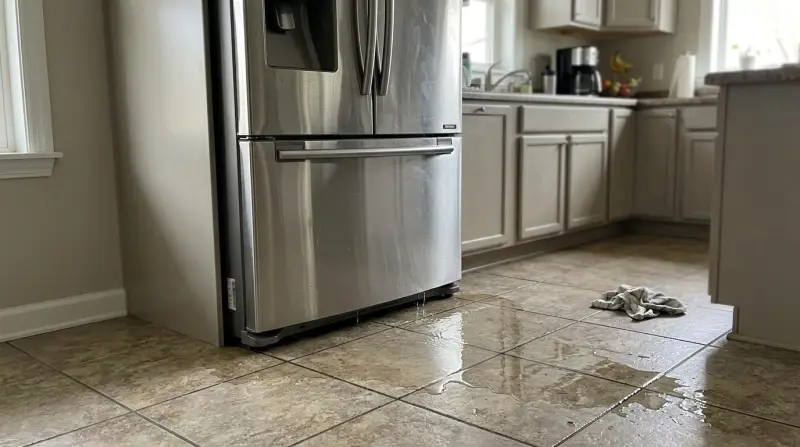
Why Is My Samsung Refrigerator Leaking Water?
A refrigerator is supposed to keep things cold and fresh, not create puddles. When you see water under or around your Samsung fridge, it’s usually because of one of a few key reasons. Here are the most frequent causes:
- Clogged defrost drain: The most common reason for leaks.
- Damaged or loose water supply line: Often happens in refrigerators with water dispensers or ice makers.
- Faulty or blocked drain pan: If the pan is cracked, missing, or overflowing.
- Door seal problems: Warm air getting in causes excess condensation.
- Overfilled or misaligned water filter: Can cause leaks inside or outside.
- Incorrect fridge level: Water may not drain as designed.
Each of these issues can lead to water pooling under the fridge or inside the compartments. Fixing the leak starts with identifying which of these is the real cause.
How To Diagnose The Source Of The Leak
Before you fix a leaking Samsung refrigerator, you need to know where the water is coming from. Here’s a step-by-step way to diagnose the problem:
- Check inside the fridge: Is there water under the drawers or on shelves? This often points to a clogged defrost drain.
- Look under the fridge: Water directly below could be from a cracked drain pan or a water line leak.
- Inspect the back: If you have a water dispenser or ice maker, look for drips or wet spots around the supply line.
- Check the door seals: Close the doors and look for gaps. Feel for cold air escaping.
- Look at the water filter: Is it installed tightly? Is water dripping around it?
If you see ice buildup inside the freezer or fridge, this is a key clue that the defrost drain is blocked.

Credit: www.youtube.com
Common Causes And Solutions
Clogged Defrost Drain
A clogged defrost drain is the number one reason Samsung refrigerators leak. The defrost system melts ice from the freezer coils. Water from this melt flows down a small drain hole at the back of the freezer. If the drain gets blocked with food, ice, or debris, water backs up and leaks into the fridge or onto your kitchen floor.
How to Fix:
- Unplug the fridge.
- Remove food from the freezer.
- Find the drain hole (usually at the back, near the bottom).
- Use warm water (a turkey baster works well) to flush out the drain.
- If ice is blocking the drain, let it melt or use a hair dryer on a low setting (don’t overheat plastic parts).
- Once clear, plug the fridge back in and check after a few hours.
Some Samsung models are known for this issue. Cleaning the drain every 6-12 months helps prevent clogs.
Damaged Or Loose Water Supply Line
If your Samsung fridge has a water dispenser or ice maker, a leaking water supply line is another likely source. The line may loosen, crack, or disconnect, causing leaks at the back or underneath.
How to Fix:
- Pull the fridge away from the wall.
- Inspect the water line for cracks, kinks, or loose connections.
- Tighten any loose fittings with a wrench (not too tight).
- Replace damaged lines with a new tube from your hardware store.
- Make sure the line is routed smoothly, not pinched.
Non-obvious insight: Even a tiny crack in the line can leak a surprising amount of water. Check for dampness, not just obvious drips.
Faulty Or Blocked Drain Pan
All refrigerators have a drain pan underneath to collect condensation. The pan allows water to evaporate slowly. In rare cases, the pan can crack, shift out of position, or get blocked by dust and dirt. When this happens, water may spill out onto the floor.
How to Fix:
- Unplug the fridge.
- Remove the bottom grill or kick plate.
- Carefully slide out the drain pan.
- Empty and clean the pan.
- Check for cracks. If cracked, replace the pan.
- Slide it back into place securely.
Practical tip: Clean the drain pan and the area around it every few months to prevent odors and mold.
Door Seal (gasket) Problems
A damaged or dirty door seal (gasket) allows warm air into the fridge. This causes extra condensation, which can drip and pool inside or outside the fridge.
How to Fix:
- Inspect the seal for cracks, gaps, or food debris.
- Clean the seal with warm soapy water and a soft cloth.
- If the gasket is damaged, order a replacement.
- Install the new gasket by pressing it into the groove around the door.
Pro insight: Even a small gap in the seal can raise humidity inside the fridge, leading to leaks and higher energy use.
Water Filter Issues
Samsung refrigerators with water filters can leak if the filter is installed incorrectly, overfilled, or expired.
How to Fix:
- Remove the filter and reinstall it, making sure it clicks into place.
- If the filter is old or damaged, replace it with a Samsung-approved filter.
- Check the filter housing for cracks.
Example: Many users buy cheap third-party filters, which sometimes don’t fit well and can cause leaks. Stick to official filters for best results.
Incorrect Fridge Level
A refrigerator must sit level and balanced so water drains correctly. If it tilts forward or to the side, water can pool inside or leak out.
How to Fix:
- Place a bubble level on a fridge shelf.
- Adjust the front leveling legs until the fridge is slightly tilted back (about 1/4 inch or 6 mm).
- Make sure doors close by themselves.
Common mistake: Many people forget to check the level after moving or cleaning their fridge.
Quick Reference: Troubleshooting Different Leak Locations
Here’s a helpful chart to match leak location with likely causes and solutions:
| Leak Location | Most Likely Cause | First Thing to Check |
|---|---|---|
| Inside fridge, under drawers | Clogged defrost drain | Flush drain with warm water |
| Back or under fridge | Water line or drain pan | Inspect water line, clean pan |
| Near water filter | Filter not seated, cracked housing | Reinstall or replace filter |
| Front, around doors | Gasket/seal problem | Clean or replace gasket |

How To Prevent Future Leaks
Prevention is easier than repair. Here are practical steps to keep your Samsung refrigerator leak-free:
- Clean the defrost drain twice a year.
- Check water supply lines during regular cleaning.
- Replace door gaskets if they feel loose or cracked.
- Change water filters every 6 months, or as recommended.
- Vacuum around the drain pan to prevent dust buildup.
- Level your fridge after moving it.
Write the filter change and drain cleaning dates on your calendar. Regular reminders make leaks much less likely.
When To Call A Professional
Most Samsung fridge leaks can be fixed at home. But sometimes, it’s best to get expert help:
- You can’t find the source of the leak.
- Water continues leaking after trying all fixes.
- The compressor, main control board, or other internal parts are wet or noisy.
- There is mold or a strong odor that doesn’t go away.
- The appliance is still under warranty.
A certified Samsung repair tech can diagnose complex issues and handle electrical or sealed-system repairs safely.
Comparing Samsung Refrigerator Leak Issues With Other Brands
How does Samsung compare with other leading refrigerator brands when it comes to leaks? Here’s a side-by-side overview:
| Brand | Common Leak Issues | User-Reported Frequency* |
|---|---|---|
| Samsung | Defrost drain clogs, water line leaks, filter fit | Medium |
| LG | Defrost drain, ice maker overflows | Medium |
| Whirlpool | Drain pan overflow, filter leaks | Low |
| GE | Water line cracks, gasket gaps | Medium |
| Frigidaire | Drain pan, defrost drain | Low |
*Based on online reviews and consumer surveys from 2020–2023.
What If The Leak Causes Damage?
Sometimes, leaks go unnoticed for days or weeks. If you find water-damaged flooring, cabinets, or baseboards:
- Dry the area quickly with towels and fans.
- Disinfect to prevent mold.
- Check your fridge warranty and home insurance. Some policies cover water damage from appliances.
- Fix the leak before repairing floors or walls, or the problem will return.
Non-obvious insight: Many homeowners only discover hidden leaks after smelling mold or seeing warped wood. Regularly check behind and under your refrigerator for dampness.
Real-world Example
A Samsung French door fridge in a busy family kitchen started leaking under the crisper drawers. At first, the owners mopped up the water, thinking it was spilled ice. After a week, the leak got worse. They checked the defrost drain and found it was blocked with frozen peas and ice.
After flushing the drain with warm water and cleaning the area, the leak stopped completely.
This shows how a small, simple issue can cause big problems if ignored. Most leaks have easy solutions if you know what to look for.
Frequently Asked Questions
What Should I Do First If My Samsung Refrigerator Is Leaking?
Start by unplugging the fridge for safety. Check inside and under the fridge to see where the water is coming from. The most common cause is a clogged defrost drain, so look for water under drawers or shelves first.
How Do I Clean A Samsung Fridge Defrost Drain?
Remove all food from the freezer. Locate the drain hole at the back or bottom. Use a turkey baster or squeeze bottle to flush warm water through the drain. If ice blocks it, let it melt or use a hair dryer on low.
Can I Use Any Water Filter In My Samsung Refrigerator?
It’s best to use filters approved by Samsung. Some third-party filters don’t fit well and can cause leaks. Always check the filter type recommended in your user manual or on Samsung’s official website.
Is A Leaking Samsung Fridge Covered Under Warranty?
Leaks from manufacturer defects are usually covered in the first year. However, leaks from user error (like improper installation) may not be. Check your warranty terms or contact Samsung support.
Where Can I Get Official Repair Help?
You can schedule service through the official Samsung Support website. They can connect you with certified repair technicians in your area.
A leaking Samsung refrigerator is a hassle, but with the right steps, you can usually solve the problem quickly. Regular cleaning, checking seals, and using the right parts help keep your fridge—and your kitchen—dry and trouble-free. If you ever feel unsure, don’t hesitate to ask for professional help.