
If your car garage opener not working, a dead battery or blocked safety sensor is the most common cause. You can confirm this by checking if the wall-mounted button works or if the safety sensors near the floor are blinking. If the wall button works but the remote does not, the issue is likely the remote battery. If the wall button also fails, the problem lies with the power supply or logic board.
Why your car garage opener not working
| Cause | How common | How to confirm it | Fix it yourself? |
|---|---|---|---|
| Dead remote battery | Very common | Remote light stays off | Yes |
| Misaligned safety sensors | Common | Sensor light is blinking | Yes |
| Power supply failure | Common | No motor lights on | No |
| Remote signal interference | Occasional | Works only when close | Yes |
| Broken torsion spring | Occasional | Door won’t lift | No |
| Logic board failure | Rare | Motor makes no sound | No |
Most homeowners assume the motor is dead when the door fails to move. In reality, the safety sensors are the most frequent culprit. These sensors require a clear line of sight. If the green LED on either sensor is flickering rather than solid, the units are misaligned. Simply nudge them until the light stabilizes to allow the door to close.
Don’t ignore the torsion spring if you hear a loud bang in the garage. A snapped spring creates a dangerous imbalance. If the door feels heavy or refuses to budge even after pulling the manual release cord, stop immediately. Attempting to repair a spring yourself can lead to severe injury due to the high tension involved.
Finally, check for interference if your remote works only within five feet of the unit. LED bulbs installed in the opener housing often emit radio frequency noise. Swap them for shielded bulbs to see if your range returns.
Safety: Inside a mains-powered machine, the parts behind the outer cover can hold a dangerous electrical charge even after it has been unplugged — that’s why they sit behind a cover. Opening the housing, or testing or replacing anything behind it, is a job for a qualified technician, never a home repair.
Dead remote batteries and signal loss
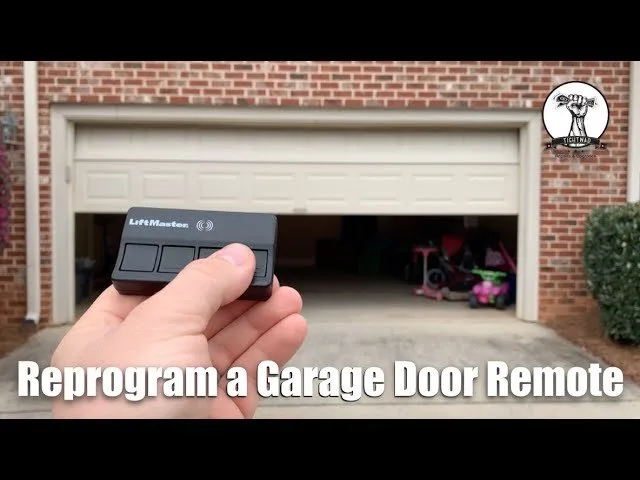
A dead battery is the most frequent culprit when a remote stops sending a signal to the garage motor. You can tell this is the issue if the small LED light on the remote fails to illuminate when you press the button. Most remotes use standard coin-cell batteries, such as the CR2032 or CR2016, which typically last through several years of daily usage. If the remote light flickers or stays dim, the battery doesn’t have enough voltage to send a clear signal to the receiver.
Replace the battery by sliding the cover off the back of the remote. Ensure you insert the new battery with the positive side facing the correct way as marked inside the plastic casing. If you replace the battery and it still doesn’t work, the remote may have lost its pairing with the motor. You must check the official Chamberlain garage door manual for your specific model to see the exact button sequence for re-syncing. This process usually takes about five minutes. If you have multiple remotes and only one fails, the issue is limited to that specific device. If all remotes fail, the problem is at the motor unit itself. Don’t attempt to open the motor housing or touch the internal wiring, as this can void your warranty or cause electrical injury. If the motor remains unresponsive after a battery change and re-pairing, you should contact a professional.
Safety sensor alignment issues
Safety sensors are small infrared devices mounted on both sides of the garage door frame near the floor. They must have a clear, unbroken line of sight between them to allow the motor to operate. If the green or amber LED on the sensor is blinking or off, the sensors are misaligned or blocked by an object. You can confirm this by checking the lights on both sensors; if they aren’t both solid, the motor will refuse to close the door as a safety precaution.
Clean the lenses with a soft, dry cloth to remove dust or spiderwebs that might block the beam. If the light remains blinking, gently nudge the sensor bracket until the light turns solid. If you have pets or kids, check if a toy or box is resting in the path of the beam. This fix usually takes less than five minutes and requires no tools. If you can’t get the lights to turn solid after cleaning and adjusting, the sensors may be faulty. This varies by model — check the label on the sensor for the part number before ordering a replacement. If you aren’t comfortable working with electrical components, call a technician to handle the repair.
Power supply and motor errors
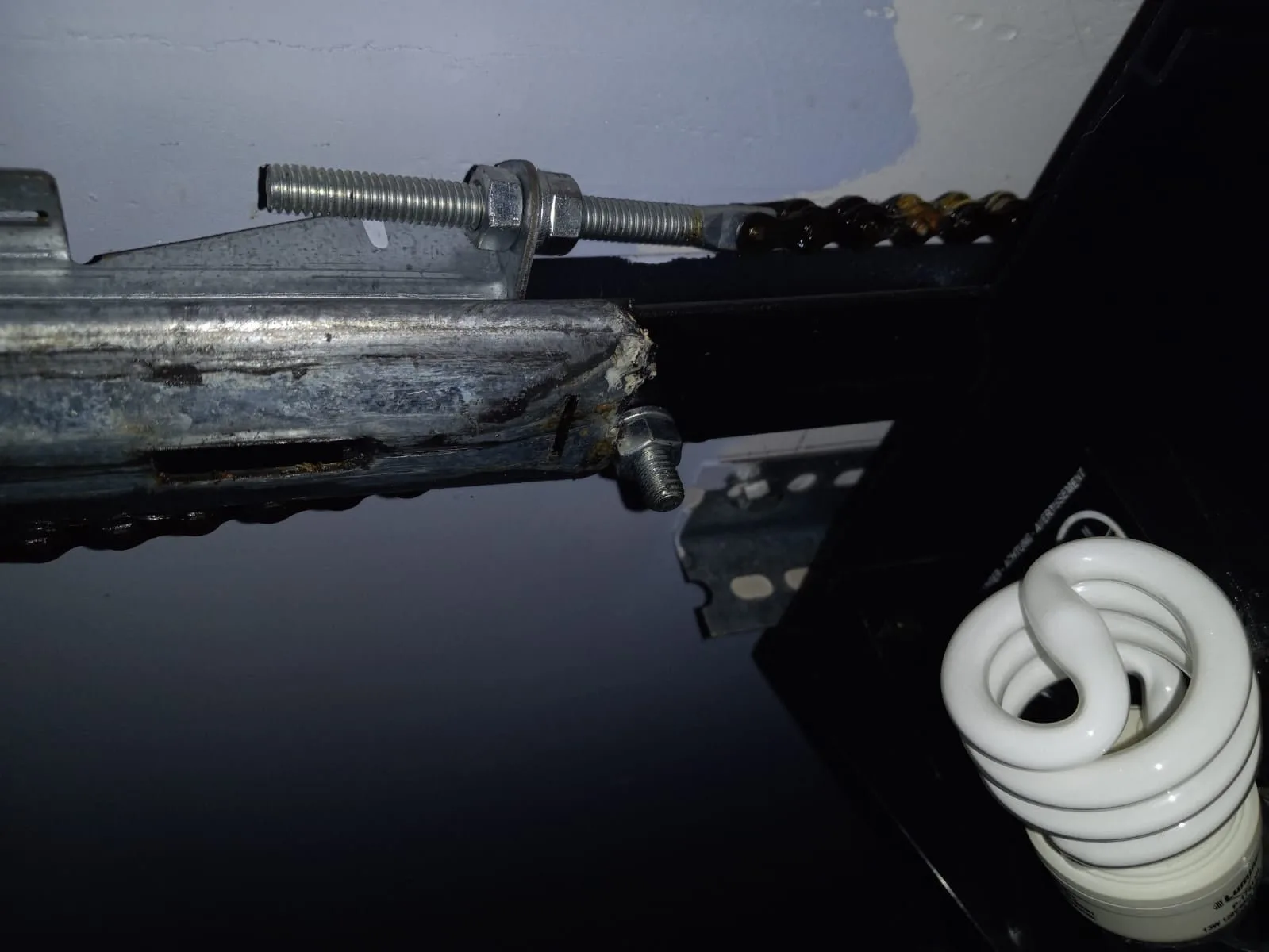
A lack of power to the motor unit is the primary reason the door doesn’t respond to any input, including the wall-mounted button. You can confirm this by checking if the light on the motor unit turns on when you press the wall button. If the motor light stays off, check your home’s circuit breaker panel to see if the garage outlet circuit has tripped, or if the light bulb itself is burned out. If the breaker is fine, plug a small lamp into the same outlet to see if it receives power.
If the outlet works but the motor does not, the internal fuse or the logic board has likely failed. This is a common issue after a power surge or a lightning strike. If the motor hums but the door doesn’t move, the internal drive gear may be stripped. If the chain is loose or the door feels heavy when you lift it manually, the issue is mechanical. In this case, the torsion spring above the door may have snapped. Never attempt to adjust or touch the springs, as they’re under extreme tension and can cause severe injury. This is a job for a professional garage door contractor who has the correct tools and training. If the motor is an older unit, the cost of a new logic board might be close to the price of a new unit.
The less likely causes
-
Wall button wire break: The wire connecting the wall console to the motor has a cut or loose connection. Check the terminals behind the wall unit for oxidation; a simple wiggle test often reveals a brittle copper strand that has snapped inside the insulation.
-
Locked mode: The “Lock” button on the wall console is active, which disables all remote signals for security. Press and hold the lock button for five seconds to restore remote functionality.
-
Gear degradation: The internal nylon gears have stripped, causing the motor to spin without moving the drive chain. You’ll hear the motor hum loudly for its usual duration, yet the door remains stationary. This failure is common in older units.
-
Frequency interference: LED light bulbs near the motor are emitting electronic noise that blocks the remote signal. If your remotes only work when you’re within five feet of the unit, replace the current bulbs with “garage door opener rated” LEDs. These are shielded to prevent the high-frequency noise that standard bulbs broadcast.
What a fix usually involves
Fixing these issues ranges from simple maintenance to professional repair. Replacing a remote battery costs the price of a small battery and takes just a few minutes of your time. Cleaning or aligning sensors is free and requires only a cloth and your hands.
If the issue is a broken torsion spring or a failed logic board, you’ll need a professional. The cost for these repairs is a significant portion of the price of a new opener.
When you need a professional, always ask for a written quote before they begin work. A reputable technician will check the entire system, including the safety features and the balance of the door. Never agree to a “lifetime” repair promise that isn’t backed by a local, established company.
You can check the manufacturer’s website for a list of authorized service providers in your area. If the quote for parts and labor is high, compare it against the cost of a full unit replacement, as modern openers often include better safety features and smartphone connectivity.
Frequently asked questions
Can I fix a garage door that won’t close?
Yes, you can often fix it by clearing the path between the safety sensors. If the sensors are blocked, the door won’t move. Check that the sensors are clean and aligned so their lights are solid. If the sensors are working and the door still won’t close, check the wall button to see if it flashes a code, which can help you identify a specific mechanical error.
Why does my garage door open by itself?
It usually happens because of a signal conflict or a faulty wall button. Check if a neighbor’s remote is accidentally triggering your door by clearing the memory on your motor. If that doesn’t solve it, inspect the wall button for a stuck switch or damaged wiring. If you can’t find the cause, the logic board may be sending false signals and needs a professional inspection.
Is it safe to operate the door manually?
Yes, it’s safe as long as you use the emergency release cord. Pull the red handle to disengage the motor and lift the door by hand. If the door feels extremely heavy or falls back down, the springs are damaged. Don’t try to lift a heavy door alone, and never touch the springs, as they’re under high tension and can snap without warning.
What happens if I ignore a blinking sensor light?
The door won’t close because the safety system is active. The manufacturer designed this to prevent the door from hitting people or objects in its path. You should fix the alignment or clear the obstruction before using the door again. Ignoring this safety feature means the door will only operate if you hold the wall button down continuously, which isn’t a permanent solution.
How long does a garage door motor last?
Most motors last for a significant period with regular maintenance. This varies by model — check the label on the motor for the production date. If your motor is an older unit, you may find that replacement parts are no longer available. If you experience frequent failures, it’s often more cost-effective to replace the entire system with a newer, safer model.
Final Thoughts
If these simple checks don’t get your door moving again, don’t hesitate to call a local repair technician. They’ll quickly identify any complex wiring faults or mechanical wear you can’t see. It’s worth the small investment to ensure your home stays secure and your daily routine runs smoothly once more.