
A Samsung dryer keeps shutting off because the machine detects an internal safety issue, most commonly a restricted airflow or an overheating motor. If your unit stops mid-cycle, you should first check the exterior exhaust vent for blockages, as this is the primary cause of thermal cut-off. If the vent is clear, the problem may involve a failing moisture sensor or a faulty control board. This is a common issue for many users, and resolving it often requires only basic maintenance rather than professional repair.
Reasons your Samsung dryer keeps shutting off
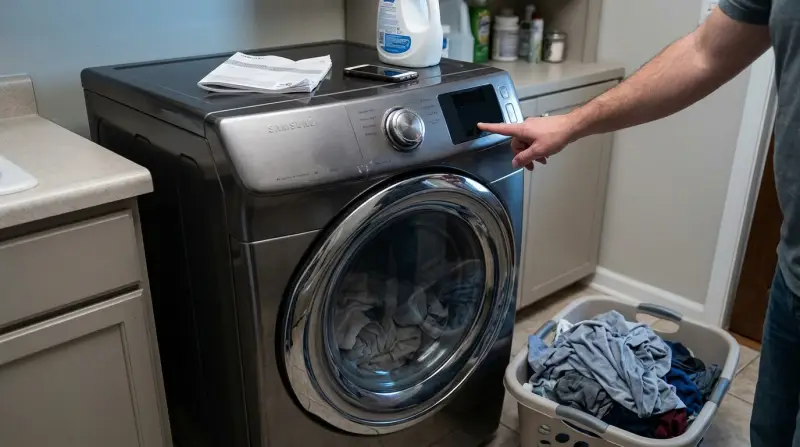
The primary reason a dryer stops unexpectedly is an overheating protection mechanism. Every dryer contains a thermal fuse or thermostat designed to cut power if the internal temperature exceeds safe limits. When the exhaust path is clogged with lint, hot air can’t escape, causing the temperature to spike and triggering the safety switch. This is a physical necessity to prevent fire hazards, as confirmed by guidance on dryer safety from the Consumer Product Safety Commission.
Another frequent cause is a faulty moisture sensor. These metal bars inside the drum detect the electrical conductivity of your clothes to determine if they’re dry. If the bars are coated in fabric softener residue or mineral deposits, the sensor sends a false signal to the control board that the load is dry, causing the machine to shut off prematurely.
Finally, a failing door switch or a damaged control board can interrupt the cycle. If the machine thinks the door is open, it stops immediately. In some cases, the control board itself loses power or experiences a logic error, causing the cycle to reset. These electrical issues are harder to diagnose and often require a professional to inspect the internal wiring. If the drum rotates but the heat doesn’t stay on, or the machine stops within minutes of starting, these internal sensors or electrical components are the most likely suspects.
Safety: Inside a mains-powered machine, the parts behind the outer cover can hold a dangerous electrical charge even after it has been unplugged — that’s why they sit behind a cover. Opening the housing, or testing or replacing anything behind it, is a job for a qualified technician, never a home repair.
Clean the exhaust ducting
This fix is for users who notice the dryer gets very hot to the touch or takes multiple cycles to dry a single load. A clogged vent is the most common reason for premature shut-offs. You must disconnect the dryer from the power outlet and move it away from the wall to access the ducting. Detach the flexible hose from the back of the machine and check both the hose and the wall vent for lint buildup.
Use a vacuum with a long hose attachment to clear out the vent pipe leading to the outside. If you see significant lint trapped in the screen or the external hood, remove it manually. Once you have cleared the path, reattach the hose securely and ensure there are no sharp kinks or bends in the flexible ducting, as these also restrict airflow.
If the dryer continues to shut off after you have cleared the path, the thermal fuse may have already been damaged by previous overheating. This fuse is a one-time-use safety device; once it blows, it must be replaced to restore operation. This is a task for a service technician, as it involves opening the machine housing and working with internal electrical components. If you aren’t comfortable with that, contact a local appliance repair professional.
Clean the moisture sensors
This fix is for dryers that stop while the clothes are still damp. The moisture sensors are two small metal strips located inside the drum, usually near the lint filter. Over time, these strips collect a thin film from dryer sheets or detergent, which prevents them from “reading” the wetness of the laundry correctly.
Take a clean, soft cloth dampened with a small amount of white vinegar or rubbing alcohol. Gently wipe the metal sensor strips to remove any waxy buildup. Once they’re clean, dry them thoroughly with a clean towel. After you finish this, run a test load to see if the cycle completes normally.
This fix is simple, but it only works if the sensors are the cause. If the machine still shuts off after cleaning, the problem is likely deeper within the control electronics. If you notice the dryer stops only on “Sensor Dry” cycles but stays on during “Timed Dry,” this is a clear sign that the issue is related to the sensors or the control logic. If both modes fail, the issue is likely a hardware component like the motor or the main control board.
Inspect the door switch
This fix is for machines that stop instantly as if someone opened the door. The door switch is a small mechanical plunger located near the door frame. If the door doesn’t close tightly or the switch is worn down, the dryer will stop to prevent the drum from spinning while open.
Check the door latch for any loose parts or debris that might prevent the door from closing flush against the frame. If the door feels loose or does not “click” when closed, the latch or the hinge may be bent. You can try to tighten any visible screws on the door hinge, but don’t force the metal. If the switch itself is loose or the plastic housing is cracked, it can’t maintain the electrical circuit required for the dryer to run.
This is a specific mechanical limit; if the door switch is failing, it often feels “mushy” or fails to spring back when pressed. If you determine the switch is broken, don’t attempt to bypass it by wiring it closed, as this creates a significant safety risk. This is the point where you should call a professional technician to replace the faulty switch or the door assembly. It isn’t worth the risk of fire or injury to attempt an electrical bypass.
What not to do
Don’t bypass the thermal fuse or the door switch with a wire jumper. These are critical safety circuits designed to cut power during a malfunction. Bypassing them turns a simple repair into a fire hazard that can incinerate your home in minutes.
Avoid overloading the drum beyond its rated capacity. If you can’t fit your hand between the clothes and the top of the drum, the load is too large. This forces the motor to draw excessive current, which leads to premature belt failure and internal overheating.
Never use metal scrapers or sandpaper to clean moisture sensors. These tools create microscopic grooves that trap lint and mineral deposits, permanently desensitizing the sensor. Use a soft cloth dampened with white vinegar instead.
Finally, don’t ignore the smell of burning plastic. If you detect this scent, stop the cycle immediately. This indicates lint has migrated to the heating element. Continued use at this stage risks a catastrophic thermal event.
How to stop it happening again
Regular maintenance is the most effective way to keep your appliance running for its intended lifespan. If you follow a routine cleaning schedule, you’ll catch most airflow issues before they cause the dryer to shut off.
| If you’re doing this | Do this instead | Why |
|---|---|---|
| Using dryer sheets every load | Use wool dryer balls | Dryer sheets leave a waxy film on sensors |
| Clean lint trap every load | Prevents airflow restriction at the source | |
| Ignoring vent cleaning | Removes deep blockages in the wall vent | |
| Ignoring error codes | Look up the code in the manual | Codes identify exactly which part is failing |
Most owners mistake a slow-drying cycle for a failing heating element. In reality, 80% of these cases stem from a clogged transition duct behind the machine. If your clothes remain damp after a full cycle, disconnect the hose and check for debris. If you see light through the entire length, the blockage is elsewhere.
The most common mistake is waiting for a visible error code to appear. By then, the thermal fuse has often already blown, requiring replacement. If your dryer feels hot to the touch on the outside, stop immediately. This indicates that heat is trapped, which creates a significant fire hazard.
Frequently asked questions
Can I fix a Samsung dryer that shuts off myself?
You can perform basic maintenance like cleaning moisture sensors and checking vents for blockages. These tasks resolve most issues causing a dryer to stop mid-cycle. If the machine continues to shut off after these steps, the problem likely involves internal electrical components requiring a professional technician.
Why does my dryer stop after 5 minutes?
Your dryer stops after five minutes because it’s likely hitting a safety limit or receiving a false “dry” signal. Dirty sensors cause the machine to end cycles prematurely, while blocked vents cause temperature spikes. Check the external exhaust vent for airflow and clean the moisture sensors inside the drum.
How long does a dryer vent cleaning take?
A standard dryer vent cleaning takes 30 to 60 minutes, depending on the length and complexity of your ducting. Ensure the dryer is disconnected from power before beginning. If you lack the equipment to reach the full length of a complex vent, consider hiring a professional.
Is it safe to use the dryer if it keeps shutting off?
No, it isn’t safe to use a dryer that keeps shutting off because it indicates an active safety trigger. Continued operation can lead to overheating and significant fire hazards. Stop using the dryer immediately and keep it unplugged until a qualified technician can inspect the internal components.
What happens if I ignore the dryer shutting off?
Ignoring a dryer that shuts off risks permanent damage to the heating element or motor. Repeatedly triggering the thermal fuse can lead to complete control board failure or fires caused by trapped lint. Addressing the issue early prevents expensive parts replacement and keeps your home safe.
Final Thoughts
If your machine still won’t stay running after you’ve cleaned the vents, it’s time to look at the internal thermal fuse. You can find replacement parts online pretty easily, but don’t hesitate to call a local technician if you aren’t comfortable opening the casing. You’ll have your laundry drying perfectly again soon.