
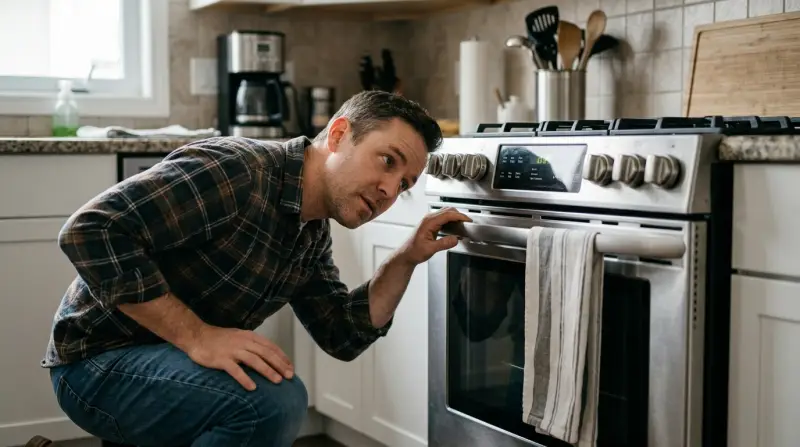
Thermal expansion of the oven’s metal components is the most common cause of an Oven Making Clicking Noise during the preheating or cooling phases. This sound is generally harmless and doesn’t indicate a defect or safety risk. You can confirm this by listening to see if the clicking stops once the oven reaches the target temperature or returns to room temperature after use. If the noise persists while the oven is idle or happens every few seconds during cooking, it suggests a mechanical issue with the igniter or the control board.
Troubleshooting an Oven Making Clicking Noise
| What you notice | What it usually means | What to do first |
|---|---|---|
| Clicking during preheating | Normal metal expansion | Wait for temperature stability |
| Rapid clicking while off | Faulty control board relay | Unplug the power cord |
| Clicking with faint gas smell | Failed igniter or valve | Shut off gas supply |
| Clicking only when fan runs | Loose convection fan blade | Inspect fan for debris |
| Clicking from the control panel | Stuck touch pad button | Clean the control panel |
| Clicking after oven turns off | Cooling metal contraction | Let the oven cool |
Most owners mistake the rapid, rhythmic clicking of a failing control board relay for the slower, irregular pop of cooling metal. This mistake costs you a blown thermal fuse or a scorched heating element.
If you smell gas, don’t wait for the cycle to finish. A failed igniter will continue to click as it attempts to spark, but if the valve remains stuck open, gas is leaking into your kitchen. If the clicking stops immediately after you turn off the main gas line, the igniter is the culprit. If the clicking persists despite the gas being off, the issue is strictly electrical.
Metal expansion and contraction cycles
The clicking sound you hear is often the result of the metal panels and racks shifting as they change temperature. As the heating elements warm up, the steel oven cavity expands. This movement causes the metal to rub against fasteners or frame supports, producing short, sharp, metallic clicks. This process is entirely normal and expected for both gas and electric ranges.
You can determine if thermal expansion is the cause by observing the timing. If the clicking starts immediately when you turn on the heat and fades away as the oven stabilizes at its set temperature, it’s simply the material reacting to the heat. If you hear the same noise in reverse as the oven cools down, it confirms the metal is contracting back to its resting state.
Most homeowners mistake these sounds for electrical arcing or a failing igniter. You can tell the difference by the rhythm. Arcing produces a rapid, erratic staccato, while thermal expansion follows a slow, rhythmic pattern that matches the oven’s heating cycle. If the clicking persists long after the oven reaches the target temperature, the noise is likely not thermal expansion. In that case, check your convection fan for debris or a loose housing.
If the noise seems excessive, check that your oven is level. A unit that isn’t perfectly balanced can put uneven pressure on the frame, which makes the clicking louder as the metal flexes. You can check the level by placing a spirit level on the center rack. If the bubble isn’t centered, adjust the feet at the bottom of the unit until the oven is stable. If the clicking continues despite the unit being level, no repairs are necessary. This is a common characteristic of high-heat appliances and doesn’t change the safety or efficiency of your cooking.
Electrical relay and control board issues
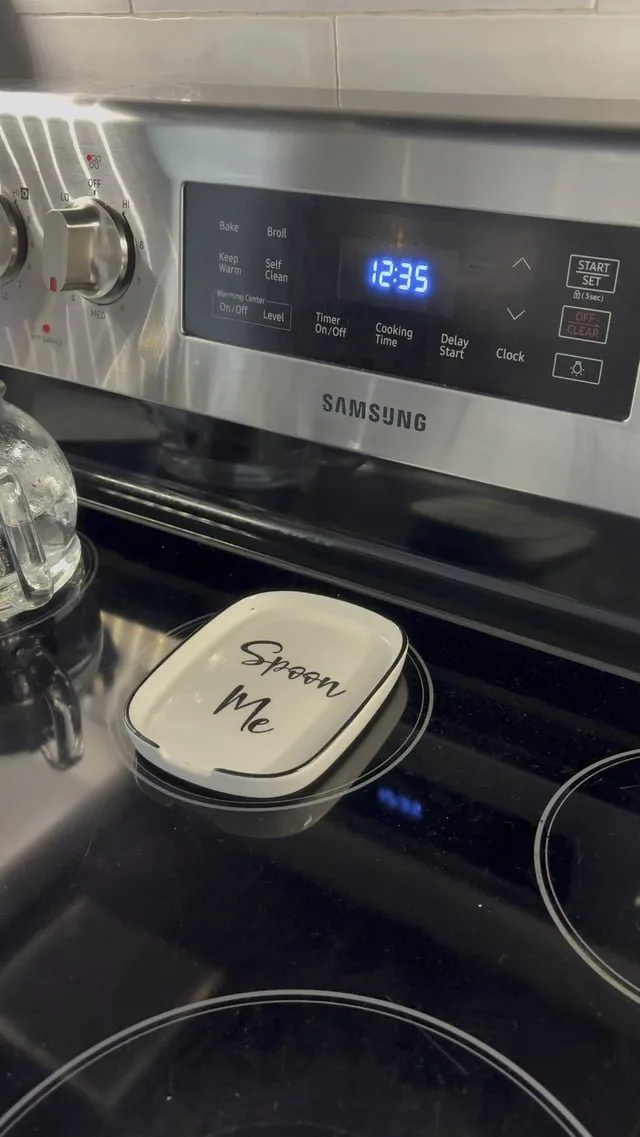
A persistent, rapid clicking sound coming specifically from the electronic display or the back of the control panel usually points to a failing relay on the control board. These relays act as switches that open and close to send power to the heating elements. When a relay begins to fail, it may chatter or click repeatedly because it can’t hold a closed position.
This condition is different from thermal expansion because the sound is often accompanied by the display flickering, the oven failing to hold a steady temperature, or the unit resetting itself unexpectedly. You can confirm this by observing if the clicking happens independently of the oven’s temperature. If the clicking occurs while the oven is completely cold and not in use, the control board is likely at fault.
If you suspect the control board, you must stop using the oven. This isn’t a task for a DIY repair, as internal circuitry involves components that can hold a dangerous electrical charge even when the unit is unplugged. According to the Electrical Safety Foundation International guidelines for appliance maintenance, any persistent clicking or sparking within the control housing should be inspected by a qualified service technician to prevent a potential fire hazard. If the board is faulty, the technician will replace the module to restore proper switching function. Don’t attempt to open the control panel housing yourself, as this can void your warranty and poses a risk of electric shock.
Igniter failure in gas ovens
Gas ovens rely on an electric igniter to open the gas valve and light the burner. If you hear a steady, rhythmic clicking during the preheating phase that never stops, the igniter may be struggling to draw enough current to open the gas valve. The clicking you hear is the spark module attempting to ignite the gas.
You can distinguish this from thermal expansion by the presence of a faint gas smell or the fact that the oven takes much longer than usual to reach the set temperature. If the oven fails to heat up at all, the igniter has likely burned out. This is a common maintenance item, as igniters are designed to wear out over time. A healthy igniter should draw the correct current to trigger the safety valve; if you suspect a fault, you must have a technician test the electrical draw, as this isn’t a task for a homeowner.
The fix for this is a replacement of the igniter assembly. This is a mechanical repair that requires access to the burner area. If you’re comfortable with basic tools, you can replace the igniter by following the specific model’s service manual. If the oven is gas-powered, always turn off the gas supply line before touching any internal components.
A common mistake is touching the new igniter element with bare hands. Oils from your skin create hot spots that cause the delicate carbide element to crack prematurely. Use clean gloves or a cloth during installation to ensure longevity. If the burner still doesn’t light after the igniter is replaced, the issue may lie with the gas valve itself. If you aren’t confident in handling gas lines or electrical connections, contact a professional appliance repair service. They have the tools to test the current draw of the igniter and verify if the valve is receiving the correct signal to operate safely.
When to stop and get help
-
Persistent clicking while the oven is unplugged: This indicates a short circuit in the wiring harness that requires immediate professional electrical assessment. If you hear this sound, don’t attempt to plug the unit back in, as the internal relay may have welded shut.
-
A strong, persistent smell of gas: This means the gas valve may be stuck open or failing to seal, requiring a licensed gas technician to secure the supply. If you smell gas, leave the home immediately and call your provider from outside.
-
Visible sparks or smoke from the control panel: This is an active fire hazard. Cut power at the circuit breaker immediately. Don’t use a fire extinguisher until the power is confirmed off to avoid electrical shock.
-
The oven fails to reach a safe internal temperature: If the burner doesn’t ignite, you can’t cook food to the required levels to prevent foodborne illness. If your thermometer shows the oven is 25 degrees below the set point for more than 20 minutes, stop using the appliance.
Contact the manufacturer’s authorized service center. Don’t bypass safety interlocks or repair high-voltage components yourself, as this carries a risk of permanent injury.
Frequently asked questions
Can I fix a clicking oven myself?
Yes, you can fix it if the issue is a simple matter of leveling the oven or if the clicking is just normal metal expansion. However, if the clicking comes from a faulty control board or a malfunctioning gas igniter, you should only attempt the repair if you have experience with appliance maintenance. If you’re ever unsure about electrical or gas components, it’s safer to hire a professional technician.
Why does my oven click when it’s off?
If your oven clicks while it’s completely off, it’s likely a sign that a relay on the control board is failing. These electrical switches can become stuck or chatter when they’re near the end of their lifespan. You should unplug the oven from the wall outlet to stop the clicking and prevent any potential electrical damage or fire risk until you can have it inspected.
Is it safe to use an oven that’s clicking?
It’s generally safe to use if the clicking is purely the sound of metal expanding or contracting during the heating process. However, if the clicking is rapid, constant, or accompanied by a gas odor, it isn’t safe. In those cases, the clicking suggests a mechanical or electrical failure that needs to be addressed before you use the oven for cooking again.
How long does thermal expansion last?
Thermal expansion usually lasts for the first 15 to 30 minutes of the preheating cycle. The duration depends on the size of the oven and the thickness of the metal panels used in the construction. Once the oven reaches your set temperature and the internal components stabilize, the clicking should stop completely until you turn the oven off and it begins to cool down.
Does the clicking mean my igniter is broken?
No, clicking is a normal part of the ignition process in gas ovens. You should only worry if the clicking continues indefinitely without the burner lighting or if the oven fails to heat up. If the burner lights and the clicking stops within a few seconds, the system is working exactly as it should. If the clicking persists for several minutes, the igniter may be weak.
What happens if I ignore the clicking?
If the clicking is caused by thermal expansion, nothing happens, and your oven will continue to work normally for years. If the clicking is caused by a failing control board or a bad igniter, ignoring it will eventually lead to the oven failing to turn on or failing to heat to the correct temperature. This could leave you with an appliance that can’t cook your food safely.
Final Thoughts
If the sound continues even when your appliance is turned off, don’t ignore it. It’s best to contact a qualified technician to inspect the internal wiring or gas valves. They’ll quickly determine if a part needs replacing, so you won’t have to worry about your kitchen’s safety any longer.