
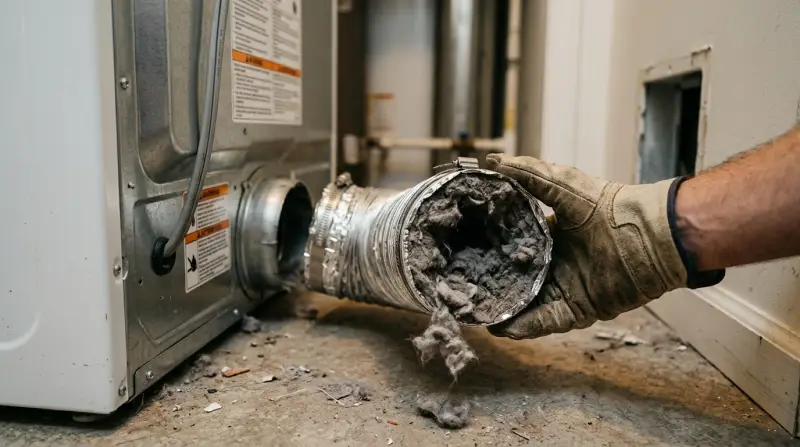
Dryer Air Flow Problems happen when lint or debris blocks the vent, forcing the machine to run longer cycles or fail to heat properly. Most of the time, this issue stems from a clogged exhaust pipe or a blocked exterior vent cover. You can confirm this by checking if the clothes remain damp after a standard cycle or if the dryer chassis feels hot to the touch. If you notice these symptoms, inspect the venting system immediately to prevent overheating risks.
Primary reasons for restricted dryer air flow
| Cause | How common | How to confirm it | Fix it yourself? |
|---|---|---|---|
| Lint in vent | Very common | Check exterior hood | Yes |
| Blocked vent hood | Common | Look for debris outside | Yes |
| Long, bent duct | Common | Measure duct length | Yes |
| Collapsed hose | Occasional | Inspect behind machine | Yes with care |
| Blower wheel clog | Rare | Listen for noise | No |
| Internal sensor fault | Rare | Check error code | No |
Lint buildup is the primary culprit in 80% of dryer failures. If your clothes remain damp after a standard cycle, verify the exterior flap. If it stays shut while the dryer runs, the duct is choked.
Most homeowners fail by using flexible white plastic hoses. These trap lint in their ridges, creating a fire hazard. Replace these with rigid or semi-rigid metal venting.
Distinguish between a blower clog and a sensor fault by listening to the motor. A blower clog produces a rhythmic, grinding vibration. Conversely, a sensor fault usually triggers a specific error code on your digital display, such as “F01” or “E6.” If the machine runs for ten minutes then stops cold, the sensor is likely misreading the moisture levels. Don’t attempt to bypass the sensor, as this often leads to overheating the heating element.
Clogged vent pipes and ducts
Lint buildup inside the exhaust duct is the primary source of restricted airflow. As air exits the dryer, it carries small fibers that settle along the walls of the pipe, eventually forming a thick, insulating layer. This layer traps moisture and heat, which forces your dryer to work significantly harder than it should.
To test for this, disconnect the flexible hose from the back of the dryer and run the machine for five minutes on an air-fluff setting. If air blows strongly from the back of the unit, the blockage lies further down the line in the wall or roof vent. If the air is still weak, the issue might be inside the machine itself. Use a specialized dryer vent cleaning brush to push through the pipe from the exterior wall inward. If you have a rigid metal duct, you can often reach deep enough to clear the majority of the obstruction.
If your duct run exceeds 25 feet, the dryer will struggle to push air out regardless of how clean it is. This 25-foot maximum must be reduced by 5 feet for every 90-degree elbow in your setup. If your setup exceeds these limits, the dryer will never perform at peak efficiency. This is a common mistake that leads to longer drying times and premature wear on the heating element. You must keep the path as short and straight as possible to maintain proper airflow.
Obstructed exterior vent covers
The exterior hood is the final exit point for moist air, and it’s a common spot for physical blockages. When the louvers or flaps on the hood get stuck, air can’t escape, causing a pressure backup that mimics a clogged pipe.
You can tell if this is your problem by simply walking outside while the dryer is running. If you see very little air movement or the flaps remain shut even when the dryer is on, the hood is likely jammed. Inspect the opening for bird nests, dry leaves, or thick lint mats that have glued the flaps shut. If the flaps are damaged or missing, replace the cover with a model that has a wide-opening design.
For safety, avoid using long metal screws to attach the hood, as they can protrude into the duct and snag lint. Use aluminum tape instead to create a smooth, airtight seal that doesn’t catch debris. Note that this varies by model—check the label on your specific vent hood for installation guidance. If the vent is located high on a wall or on the roof, don’t attempt to reach it yourself. Falling from a ladder is a major risk, so call a professional if you can’t reach the exterior vent safely from the ground.
Improper duct material and bends

Flexible plastic or foil hoses are a frequent cause of poor performance because their thin, ribbed walls create high resistance. These materials are also a significant fire hazard because they crush easily and allow lint to build up in the ridges. The U.S. Consumer Product Safety Commission warns that these materials can catch fire if the dryer overheats due to restricted airflow.
If your dryer uses a flexible plastic hose, replace it immediately with rigid or semi-rigid metal ducting. The rigid pipe provides a smooth surface that prevents lint from grabbing onto the walls. When installing, ensure the pipe segments overlap in the direction of the airflow, not against it. This prevents the edges from catching lint as it moves toward the exit.
If you must use a flexible transition hose for the short distance between the dryer and the wall, keep it as short as possible. Never allow this hose to kink or sag behind the machine. If you find the hose is constantly getting crushed against the wall, install a periscope-style vent box. This allows you to push the dryer closer to the wall without pinching the duct. This trade-off is necessary: you lose a small amount of floor space, but you gain a reliable, fire-safe path for exhaust air that will last for years.
The less likely causes
-
Blower wheel debris: Small items like coins or buttons can fall into the blower housing and jam the fan. If you hear a rhythmic metallic clicking or a high-pitched scraping sound while the drum turns, stop the unit immediately to prevent motor burnout. This requires a professional to disassemble the unit.
-
Internal lint buildup: If the dryer hasn’t been serviced in many years, the cabinet interior may be coated in lint. This creates a significant fire hazard that a standard vent cleaning can’t reach. You must hire a certified technician to vacuum the interior safely.
-
Sensor failure: If the moisture sensor is dirty or faulty, the dryer may stop early. You can test this by running a load on a timed-dry cycle. If the clothes dry normally on a timed setting but fail on auto-dry, the sensor is the culprit rather than an airflow restriction.
-
Collapsed wall duct: If the pipe inside your wall has crushed due to age or structural settling, it will need to be replaced by a professional contractor. If your dryer vent hood outside shows no airflow despite a clean hose, this structural failure is the likely cause.
What a fix usually involves
Fixing airflow issues usually involves physical cleaning or replacing cheap parts like the transition hose or the exterior vent hood. A basic cleaning kit, which includes a brush and a long flexible rod, is a small expense that pays for itself by reducing your energy bills through shorter cycle times. Replacing a damaged vent hood is also a low-cost repair, requiring only basic hand tools and a roll of aluminum duct tape.
If the blockage is deep inside a wall or roof duct, you might need to hire a professional vent cleaning service. This cost depends on the complexity of your home’s layout and how high the vent is from the ground. You should always ask for a quote that includes a camera inspection to confirm the pipe is actually clear before they finish the job. Avoid services that only use air pressure without a physical brush, as they often fail to remove thick, packed lint. Check your dryer’s manual for the manufacturer’s recommended cleaning schedule to keep it running well.
Frequently asked questions

Can I clean the dryer vent from the inside?
Yes, you can clean the majority of the duct from the inside using a brush kit, but you must still verify the exit point. Start by disconnecting the hose at the rear of the machine. Use the brush to scrub the interior walls of the pipe while pulling the lint toward you. Always finish by checking the outside hood to ensure the debris has actually cleared the entire system.
How often should I clean my dryer vent?
Regular maintenance is the standard recommendation for most households. If you do large amounts of laundry or notice that clothes take two cycles to dry, you should check the vent more often. This varies by model—check the label or the owner’s manual for specific maintenance intervals, as some high-efficiency units require more frequent inspections to prevent overheating.
Is it safe to run a dryer with a clogged vent?
No, it isn’t safe to run a dryer if you suspect a major clog in the ventilation system. The heat can’t escape, which causes the internal temperature to rise rapidly and increases the risk of a fire. If you notice the clothes are very hot or the top of the dryer feels warm to the touch, stop using the machine until you have cleared the obstruction.
Why does my dryer take so long to dry?
The most common reason for long cycle times is a restriction in the airflow that prevents moist air from leaving the drum. When the air can’t move, the moisture stays in the clothes, forcing the dryer to run longer. Check your vent hose for kinks, crushed sections, or a blockage at the exterior exit point to improve your drying times significantly.
What happens if I ignore dryer air flow problems?
If you ignore the issue, you’ll see a sharp rise in your energy bills and a high risk of mechanical failure. The heating element will burn out faster because it’s constantly working against trapped heat, and the buildup of lint creates a fire hazard. Address the blockage as soon as you notice that clothes remain damp after a standard cycle to avoid these costly outcomes.
How do I know if my dryer vent is blocked?
The easiest way to tell is to check the exterior vent hood while the dryer is running. If the flaps aren’t opening or you feel only a faint breeze, the path is blocked. You can also monitor your clothes; if they’re still damp or steaming hot at the end of a cycle, the moisture isn’t being pulled out of the machine properly.
Final Thoughts
Keeping your vents clear is the best way to protect your home and keep your laundry routine running smoothly. If you aren’t sure how to reach the exterior vent, it’s a good idea to hire a professional cleaner once a year. They’ll ensure everything’s clear so you don’t have to worry.