
If you own a GE ice maker and notice water leaking into the bin, it can be worrying. Your ice machine should give you clean, solid ice cubes—not pools of water. This problem can ruin drinks, waste energy, and even damage your appliance over time. Many owners face this issue, but few know exactly why it happens or how to fix it. In this article, you’ll learn why your GE ice maker leaks water into the bin, how to diagnose the cause, and what steps to take to solve it. You’ll also see useful comparisons, practical tips, and answers to common questions.
Understanding The Ge Ice Maker System
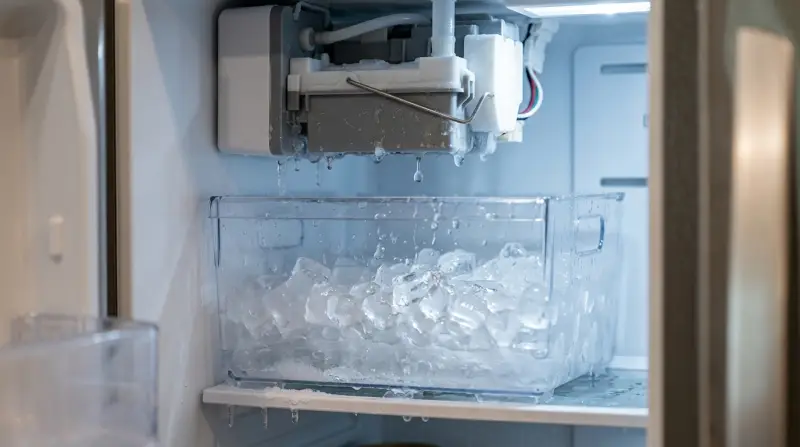
Before exploring the causes of leaks, it’s helpful to know how GE ice makers work. Most GE ice makers use an automatic system that fills a tray with water, freezes it, and then ejects the ice into the bin. The water supply line, control valve, ice mold, and bin sensors all play important roles.
Key Parts Involved
- Water inlet valve: Controls water flow into the ice maker.
- Ice mold/tray: Where water is frozen into ice cubes.
- Ice bin: Collects ice after it is made.
- Drain system: Removes excess water from the unit.
If any of these parts fail, water can leak into the bin or onto the floor.
Common Causes Of Water Leaks In Ge Ice Makers
There are several reasons your GE ice maker might leak water into the bin. Let’s look at the most frequent causes.
1. Faulty Water Inlet Valve
The water inlet valve controls how much water enters the ice maker. If it’s stuck open or damaged, too much water may fill the tray, overflowing into the bin. In many cases, sediment or mineral buildup can prevent the valve from closing fully.
2. Ice Maker Level Out Of Adjustment
GE ice makers must be level to work correctly. If your unit is tilted, water can spill out of the mold before it freezes. This is a simple but often overlooked cause.
3. Frozen Or Blocked Drain
Some GE models have a drain to remove extra water. If this drain is blocked (by ice, food, or debris), water backs up and leaks into the bin.
4. Cracked Ice Mold Or Tray
A cracked ice mold lets water escape before freezing. This usually happens after years of use or if the tray is damaged during cleaning.
5. Incorrect Water Pressure
GE ice makers require the right water pressure (typically 20–120 psi). If pressure is too high, water can spray or overflow into the bin. If too low, the unit may not make ice properly.
6. Faulty Control Board Or Sensors
If the control board or sensors fail, they may send wrong signals. For example, the sensor might not detect water level correctly, causing overflow.
7. Improper Installation
Improperly connected hoses or fittings can cause leaks. Always check if the unit was installed according to the manufacturer’s instructions.
8. Ice Build-up Causing Overflow
When ice builds up and blocks the ejection path, new cubes may push water into the bin.

Diagnosing The Source Of The Leak
Identifying the exact cause is key to fixing your GE ice maker. Here’s how you can diagnose the problem step by step.
Step 1: Inspect The Water Inlet Valve
Check for dripping or signs of water around the valve. If you see water dripping when the machine is off, the valve may be faulty.
Step 2: Check Leveling
Use a spirit level to check if the ice maker sits flat. If it’s tilted, adjust the feet or mounting.
Step 3: Examine The Ice Mold
Look for cracks or damage in the ice tray. If you see water escaping or ice cubes stuck, consider replacing the tray.
Step 4: Inspect The Drain
Clear any blockages from the drain. Run warm water through the drain tube to melt ice and remove debris.
Step 5: Measure Water Pressure
Use a water pressure gauge at the supply line. If pressure is too high, install a pressure regulator.
Step 6: Check Control Board And Sensors
If your ice maker is newer, run a self-diagnostic or check for error codes. Faulty sensors can cause misfilling.
Step 7: Review Installation
Double-check all connections and hoses for leaks. Tighten or replace faulty fittings.
How To Fix A Ge Ice Maker Leaking Water Into Bin
Once you’ve found the cause, here’s how to fix it.
Fixing A Faulty Water Inlet Valve
- Turn off the water supply.
- Remove the back panel or access cover.
- Locate the inlet valve and disconnect it.
- Inspect for mineral buildup or damage.
- Replace the valve if needed.
Leveling Your Ice Maker
- Use a level tool to check the unit’s position.
- Adjust the feet or mounting brackets.
- Check again after adjustment.
Clearing The Drain
- Unplug the ice maker.
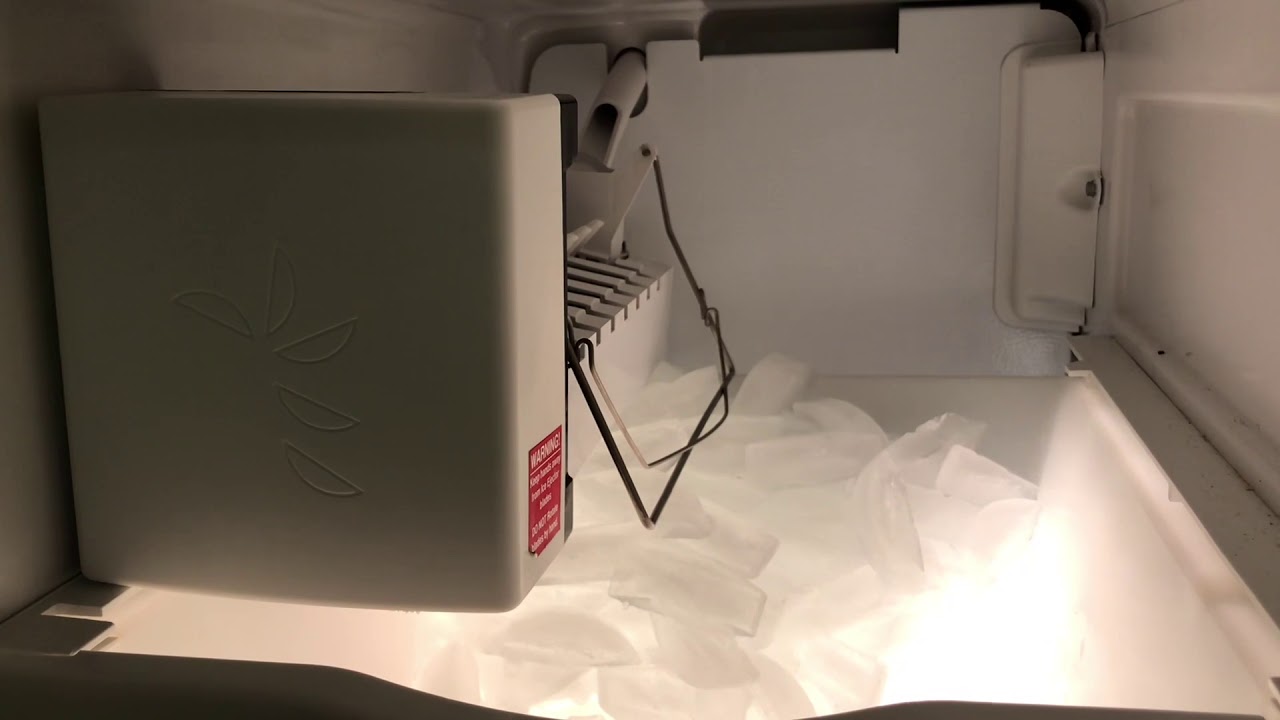
- Locate the drain tube.
- Flush with warm water.
- Remove any visible debris.
Repairing Or Replacing The Ice Mold
If the tray is cracked, order a replacement from GE or an authorized dealer. Installing a new tray is usually simple—just remove the old one and slide in the new part.
Adjusting Water Pressure
Install a pressure regulator if the supply is too strong. This is often a small device fitted to the supply line.
Sensor And Control Board Issues
If sensors or the control board fail, consult the manual or call a technician. Many newer GE ice makers have digital displays that show error codes.
Correcting Installation Mistakes
Ensure all hoses and fittings are tight and properly connected. Use Teflon tape on threaded connections to prevent leaks.
Credit: www.youtube.com
Comparison Of Ge Ice Maker Models
Different GE models can have unique features and problems. Here’s a quick comparison of three popular GE ice makers:
| Model | Drain System | Water Pressure Range | Sensor Type |
|---|---|---|---|
| GE Profile Opal | Gravity Drain | 20–120 psi | Optical Sensor |
| GE Monogram | Pump Drain | 30–100 psi | Mechanical Sensor |
| GE Cafe | Gravity Drain | 25–120 psi | Electronic Sensor |
Knowing your model helps you find the right fix.
Preventing Future Leaks: Practical Tips
Fixing a leak is good, but preventing future problems saves time and money.
Regular Maintenance
- Clean the ice maker every 3–6 months
- Check and clear the drain regularly
- Inspect hoses and connections for signs of wear
Water Quality
Hard water causes mineral buildup. Use a water filter to reduce this risk.
Professional Service
Schedule annual service if your unit is high-end or used often.
Avoid Common Mistakes
Many owners ignore leaks until major damage happens. Always address leaks right away to avoid mold or electrical issues.
Signs That You Need Professional Help
Some leaks are easy to fix, but others require a technician.
- Water leaks after all DIY steps
- Electrical issues or error codes
- Cracked internal parts
If you see these signs, call a GE-certified technician.
Real Data: Ice Maker Leaks And Repairs
According to appliance repair statistics, leaking water is among the top 3 reasons for ice maker service calls. The average repair cost for a leaking GE ice maker is $150–$300 if parts are needed. Most leaks are fixed within 1–2 hours by a professional.
Here’s a comparison of repair costs for common causes:
| Cause | Average Repair Cost | Time to Fix |
|---|---|---|
| Faulty Inlet Valve | $120–$200 | 45 minutes |
| Blocked Drain | $80–$150 | 30 minutes |
| Cracked Ice Tray | $50–$100 | 15 minutes |
Two Non-obvious Insights
- Many leaks are caused by hidden mineral buildup inside the valve, not just visible cracks or loose hoses. Even if all parts seem fine, a deep cleaning may solve the problem.
- Temperature fluctuations in the freezer can cause expansion and contraction, leading to cracks in the tray or mold. If your freezer is set too high or low, this can shorten part lifespan.
When To Replace Vs. Repair
If your GE ice maker is older than 7 years and leaks keep coming back, consider replacing it. Newer models are more efficient and less prone to leaks. If repairs cost more than half the price of a new unit, replacement makes sense.
Here’s a quick comparison:
| Situation | Repair | Replace |
|---|---|---|
| Minor leak, parts available | ✔️ | ❌ |
| Major crack, old unit | ❌ | ✔️ |
| Repeated leaks | ❌ | ✔️ |
Frequently Asked Questions
What Causes Water To Leak Into The Bin Instead Of Freezing?
Most leaks happen when the water inlet valve malfunctions, when the ice maker is not level, or when the drain is blocked. Water escapes before freezing and ends up in the bin.
Is It Safe To Use Ice From A Leaking Ge Ice Maker?
No, leaking water can mix with contaminants or cleaning chemicals. It’s best to fix the leak and clean the bin before using the ice.
How Often Should I Clean My Ge Ice Maker To Prevent Leaks?
Clean your ice maker every 3–6 months and check the drain monthly. This removes mineral buildup and prevents blockages.
What Is The Ideal Water Pressure For Ge Ice Makers?
Most GE ice makers require 20–120 psi. Too high or too low pressure can cause leaks or poor ice production.
Where Can I Find Official Ge Troubleshooting Guides?
For official troubleshooting, visit the GE Appliances Support website.
If your GE ice maker is leaking water into the bin, you’re not alone. With careful diagnosis and the right steps, most leaks can be fixed quickly. Stay vigilant, follow the tips above, and your ice maker will give you clean, solid ice for years to come.