
A lack of propane or a tripped breaker is usually why you have a camper water heater not working. In most cases, this happens because the fuel supply is empty or the electrical switch is off, which you can confirm by checking your gas levels or your main circuit panel. If those are fine, the issue might be a blown thermal fuse or a faulty control board. Always check your owner’s manual for the specific reset procedures for your brand, as these vary by model — check the label inside the heater cover.
Why your camper water heater not working

| Cause | How common | How to confirm it | Fix it yourself? |
|---|---|---|---|
| Empty propane tank | Very common | Check tank gauge level | Yes |
| Tripped circuit breaker | Common | Check main power panel | Yes |
| Blown thermal fuse | Occasional | Inspect for continuity | Yes with care |
| Dirty burner tube | Occasional | Look for spider webs | Yes |
| Faulty control board | Rare | Check error light codes | No |
| Failed heating element | Rare | Inspect for burn marks | No |
A common mistake is replacing the heating element before testing the thermal fuse. If the fuse shows no continuity, replace it. However, if the fuse is intact but the dryer still fails to heat, inspect the burner tube. Spider webs often block the gas orifice, causing a yellow flame rather than the required blue one. If you see a yellow flame, clean the tube with a pipe cleaner. If the flame remains yellow or nonexistent, call a technician to check the gas valve solenoids.
Safety: Inside a mains-powered machine, the parts behind the outer cover can hold a dangerous electrical charge even after it has been unplugged — that’s why they sit behind a cover. Opening the housing, or testing or replacing anything behind it, is a job for a qualified technician, never a home repair.
Fuel and power supply issues
The most frequent reason for a cold shower is a simple lack of energy reaching the unit. If your heater uses propane, the tank may be empty, or the regulator might have trapped air inside the lines. If you have an electric model, the breaker in your power distribution center often trips due to a temporary surge or overload.
Test your propane by lighting the stove burners first. If the stove flame is weak or nonexistent, your tank is likely empty or the valve is closed. For electric models, locate your converter box and look for a switch that has moved to the “off” or middle position. Flip it all the way to the ‘off’ position and then back to ‘on’ to reset it. If you have a hybrid unit, ensure both the gas switch and the electric switch are in the correct positions.
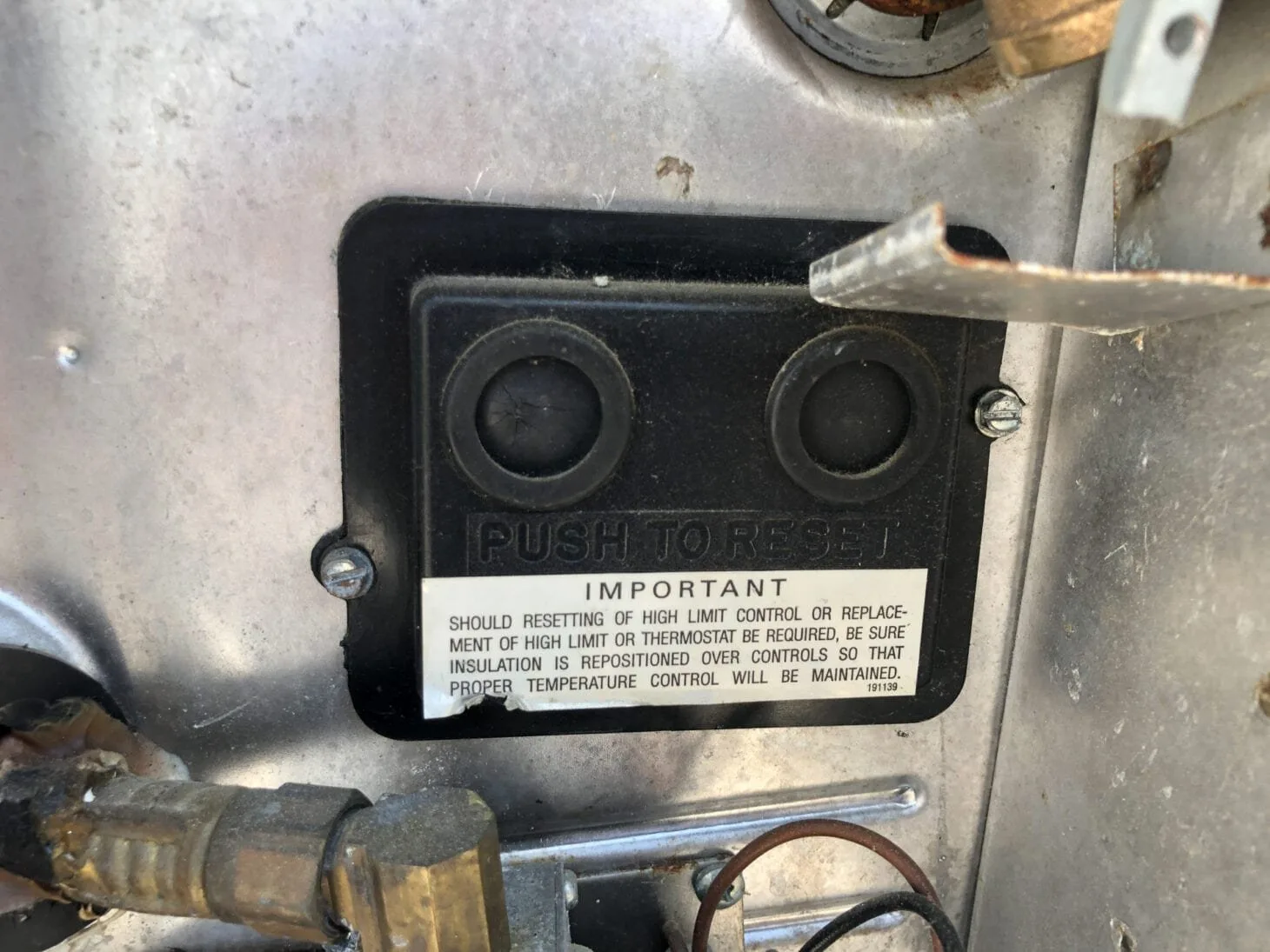
This assumes a standard setup where the water heater has a dedicated breaker; if you’re on a smaller system, your microwave or air conditioner might share the same circuit. If you have power and gas but the water stays cold, check the exterior access panel for an “eco” or reset button. This button is often hidden under a rubber cover near the top of the tank. Pressing it once can reset the unit if it reached a high-temperature lockout. If you smell gas at any point, stop immediately and contact a certified RV technician to avoid fire risks.
Thermal fuse and airflow blockages
If your heater has power and gas but won’t ignite, a blown thermal fuse is the next likely culprit. This safety device is designed to melt if the burner area gets too hot, protecting your camper from fire. You can tell this is the cause if the heater doesn’t make any clicking or humming sounds when you turn it on.
Inspect the burner assembly for debris. Insects, especially spiders, often build webs inside the burner tube, which blocks the flow of gas and prevents ignition. Use a flashlight to look into the tube for any obstructions. If you see webs, use a soft brush or compressed air to clean it out gently. Never use a metal wire or sharp object that could scratch the burner surface, as this changes how the gas mixes with air.
If the burner is clear, look for the thermal fuse located near the gas valve. It’s a small component connected by two wires. You can’t repair a thermal fuse; if it has failed, it must be replaced with an identical part specified by the manufacturer. If you replace the fuse and it blows again immediately, this indicates a deeper problem with the heat exchanger that requires a professional inspection. The cost of a new fuse is minimal, but the time spent diagnosing the heat buildup can take an hour or more.
Control board and element failure

A failure in the electronic control board or the electric heating element is less common but usually prevents the heater from operating entirely. You can distinguish this from a fuel issue because the unit will likely show a “fault” light on your interior control panel, or it will remain completely unresponsive even when the reset button is pressed.
If the control board is the problem, the heater will not “hear” your command to turn on. This often happens after a power spike or due to moisture getting into the exterior compartment. A failed heating element, on the other hand, only affects the electric side of a hybrid unit. If you can still get hot water using propane but not electricity, the element is the primary suspect.
These components are internal and require specialized knowledge to test. If you aren’t comfortable working with electrical connections, don’t attempt to replace these parts yourself. A technician will confirm whether the part has failed or if the board is sending the correct voltage to the igniter. If you choose to hire someone, ask them to check the wiring connections for corrosion as well, as loose or rusty terminals are a frequent cause of intermittent performance. This varies by model — check the label on the board for the exact part number before ordering a replacement.
The less likely causes
-
Corroded tank anode rod: If your water emits a sulfurous, rotten-egg odor, the sacrificial anode rod has likely dissolved entirely. This rod protects your tank from rust; if you ignore this, the tank walls will begin to corrode, leading to a permanent leak. Replace it regularly regardless of smell.
-
Faulty thermostat: When water temperatures swing between scalding and lukewarm, the thermostat is likely stuck. A professional swap is required here. If you’re handy, ensure the power is cut at the breaker before testing the high-limit switch, which often trips to prevent overheating.
-
Water bypass valve: If you recently winterized, verify the valves are set to “normal.” If you leave them in “bypass” mode, you’ll trap cold water in the heater, preventing it from ever warming up.
-
Air in the water lines: After filling the tank, run the hot tap until the sputtering stops. This purges trapped air pockets.
What a fix usually involves
When you need a new control board or heating element, the price increases because these parts are more complex. You can find the exact part numbers by looking at the manufacturer’s sticker inside your exterior heater door. If you’re unsure about the repair, ask a local RV service center for a quote based on your heater’s make and model. Always check the official website of your heater’s manufacturer to confirm which parts are compatible with your specific serial number before you buy anything.
Frequently asked questions
Can I fix a camper water heater myself?
Yes, you can fix many common issues like empty propane tanks, tripped breakers, or dirty burner tubes without professional help. These tasks only require basic tools and a bit of patience. However, if the problem involves the gas valve, the control board, or internal electrical wiring, you should stop and call a professional to avoid damaging your camper or risking a fire.
How long does a camper water heater take to heat up?
About 20 to 30 minutes is the average time for a standard six-gallon tank to reach full temperature. This assumes you’re using propane, which heats water faster than the electric setting. If you’re using electricity only, allow for about 45 to 60 minutes for a full recovery, depending on the outside temperature and the starting temperature of your water.
Is it safe to leave the water heater on all the time?
Yes, it’s generally safe to leave your water heater on while you’re using the camper, provided the unit is in good condition. Most modern RV heaters have built-in safety sensors that shut off the gas or electricity if the temperature gets too high. If you’re leaving the camper for a long time, turn the unit off to save fuel and electricity.
Why does my water heater make a clicking sound?
The clicking sound is the electronic igniter trying to light the propane burner. If you hear this repeatedly without the burner staying lit, your unit is failing to sense a flame. This often points to a dirty burner tube, a blocked gas orifice, or a faulty flame sensor that needs cleaning or replacement by a qualified service technician.
Does it matter if I use the electric or gas setting?
Yes, the setting matters for your efficiency and recovery speed. Propane is best for quick recovery when you have multiple people taking showers back-to-back. The electric setting is better for maintaining a steady temperature over a long period when you’re plugged into shore power at a campsite. You can often run both at the same time for the fastest possible heating.
What happens if I run the heater without water in the tank?
Running the heater without water will almost certainly burn out the electric heating element within seconds. This happens because the element can’t dissipate its heat into the water and will melt itself. If you accidentally did this, turn off the power immediately and don’t turn it back on until you have verified that the tank is full and the element is intact.
Final Thoughts
If you still can’t get hot water after trying these fixes, don’t hesitate to contact a certified RV technician. They’ll have the right tools to diagnose hidden wiring issues or damaged heating elements. It’s better to be safe than sorry, so reach out for help if you’re feeling stuck.
Related guides
- Rinnai Water Heater Error Code 12
- Tall Vs Short Hot Water Heaters: Which Is Best for Your Home?
- How to Fix Rheem Tankless Water Heater Code 12 Quickly