
Cold water or blocked dispensers are the most common reasons why Dishwasher Pods Not Dissolving happens in your kitchen. If your water isn’t hot enough, the chemical shell of the pod can’t melt properly during the wash cycle. You should check the temperature of your water supply first, as most manufacturers suggest a minimum of 120°F for optimal performance. If your water is cooler than this, the tablet will likely remain stuck in the dispenser or sit at the bottom of the tub as a hard, partially melted lump.
Why Dishwasher Pods Not Dissolving Happens
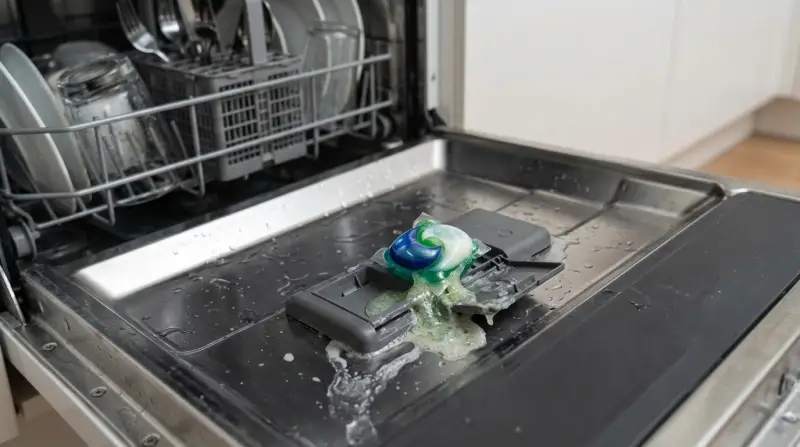
The primary reason for this issue is a lack of heat during the main wash phase. Modern dishwashers rely on specific water temperatures to break down the polyvinyl alcohol film used in most detergent pods. If your water heater is set too low, or if the machine is located far from your boiler, the water entering the tub may be lukewarm. This prevents the physical dissolution needed to release the cleaning agents.
Another common cause involves physical obstruction. If you pack your dishes too tightly near the dispenser door, it can’t swing open fully. When the door remains partially closed, the pod gets trapped against the plastic housing. It doesn’t get enough water circulation to dissolve, and it often ends up stuck in the tray or wedged between a plate and the door.
Finally, moisture inside the dispenser tray before you start the cycle can cause premature melting. If the tray is damp from a previous run or if your hands were wet when you placed the pod, the film starts to get sticky. It then glues itself to the plastic before the cycle even begins. This is a common mistake that ruins the timing of the release. Always ensure the dispenser is bone-dry before you load a new pod.
Check your water temperature
This fix is for those who notice the pod is still solid or only slightly soft after the cycle ends. If you suspect your water is too cold, you must verify the temperature at your kitchen faucet. Run the tap closest to your dishwasher until the water is as hot as it gets. Fill a glass and use a meat thermometer to check the reading. If it’s below 120°F, you should adjust your water heater settings.
For many newer models, this is the only way to ensure the detergent releases correctly. If you live in a climate where the incoming water is naturally very cold, you can also run the hot water at the sink for a minute before you press start on the machine. This clears the cold water from the pipes. If you’re unable to reach this temperature, or if you have a high-efficiency model that limits water usage, you might need to switch to a powder detergent that dissolves more easily in cooler water. This varies by model — check the label on your detergent packaging for specific temperature requirements. If you still have trouble after checking your heater, the issue might be a faulty heating element inside the dishwasher. This requires a professional technician to test the circuit, as the dishwasher’s internal wiring and components should be handled with caution.
Clear the dispenser path
This fix is for users who find the pod stuck in the dispenser door or the tray itself. You must ensure that no large plates or cutting boards block the dispenser door. Open the door manually and look at the swing path. If a large item is placed in the bottom rack directly in front of the dispenser, the door will hit it and stop. This happens more often than people realize, and it costs them a full cycle of wasted detergent and dirty dishes.
If you have a tall item, place it on the sides or the back of the bottom rack instead. Additionally, check the dispenser for any sticky residue from old detergent. If the hinge is coated in old soap, it may not spring open with enough force. Use a damp cloth to wipe out the tray and the rubber seal around the door. If the door spring feels weak or doesn’t snap open when you push the release, it may be worn out. You can test this by running an empty cycle with the dispenser empty to see if it pops open smoothly. If it does not, you may need a replacement part. This is a simple mechanical check, but if the latch is broken, don’t attempt to force it open with metal tools, as this can damage the plastic housing and void your warranty.
Use the pre-rinse cycle

If you have tried the steps above and still face issues, consider running a short hot-water rinse cycle before you load your main wash. This is worth the extra time if you live in a house where the dishwasher is a long distance from the water heater. By running a “rinse only” or “pre-rinse” cycle, you pull hot water into the pipes and warm up the internal components of the dishwasher.
Running a pre-rinse cycle creates a better environment for the detergent to dissolve once the main wash begins. Note that this adds to your total water consumption, which may not be ideal for water-saving machines. If dishes remain unclean, check your machine’s heating element or thermostat for potential faults.
What not to do
- Don’t put the pod in the cutlery basket. The pod is designed to release in the main dispenser tray at a specific time; putting it elsewhere means it will dissolve too early or get washed away before the main cycle.
- Don’t overload the dishwasher. Packing too many items prevents water from circulating, which means the pod can’t get the consistent flow of water it needs to melt the film completely.
- Don’t use two pods for one load. Using extra detergent doesn’t help if the machine can’t dissolve one; it only creates more soap scum and residue that clogs the dispenser door.
- Don’t use pods in a dishwasher with a broken dispenser door. If the door is already stuck, adding a pod will just result in a messy, undissolved lump every single time.
How to stop it happening again
To keep your dishwasher running smoothly, follow a consistent loading and maintenance routine.
| If you’re doing this | Do this instead | Why |
|---|---|---|
| Loading large items near the door | Place tall items on the sides | Allows the door to open fully |
| Using the dishwasher with cold pipes | Run the sink tap until hot | Ensures hot water enters the tub |
| Handling pods with wet hands | Dry your hands thoroughly | Prevents the film from sticking |
| Leaving the dispenser tray damp | Wipe it dry before adding a pod | Stops the pod from melting early |
Many users mistakenly assume the machine heats its own water instantly. If your pipes are cold, the first rinse cycle will use tepid water, which fails to dissolve grease. Run the kitchen faucet for thirty seconds until the water feels hot to the touch before pressing start.
If you notice soap residue on your dishes, check the spray arm nozzles for mineral buildup. Use a toothpick to clear any debris regularly. If the arms spin freely but you still see white film, you likely have hard water and should add a dedicated rinse aid to every load.
Frequently asked questions

Can I put the pod directly in the bottom of the dishwasher?
No, don’t place the pod directly in the bottom of the tub. The pod must be released from the dispenser at the correct point in the wash cycle to function properly. Placing it at the bottom causes it to dissolve prematurely during the rinse, leaving your dishes unwashed.
Why does my dishwasher leave a film on the dishes?
Film is usually caused by using too much detergent or water that’s too cold to dissolve the pod. When the pod fails to dissolve, it leaves a waxy residue on your dishes. Ensure your water heater is set to 120°F to help the pod break down completely.
How long does a dishwasher pod take to dissolve?
This process requires water temperatures of at least 120°F and a properly functioning dispenser door. If the pod remains intact after a cycle, your water temperature is likely too low.
Is it safe to use a broken dishwasher dispenser?
No, don’t attempt to force a broken dispenser door open with tools. You risk damaging the delicate plastic latch or internal door wiring. Contact the manufacturer or a professional repair technician to have the door fixed properly to avoid further damage to the locking mechanism.
What happens if I use the wrong detergent?
Using the wrong type of detergent can cause excessive sudsing or leave a thick, white residue on your dishes. Regular dish soap, for example, is far too foamy and can cause the dishwasher to leak or overflow. Always use products specifically labeled for automatic dishwashers. If you accidentally use the wrong soap, run a rinse-only cycle to clear the suds before attempting to wash your dishes again with the correct detergent.
Final Thoughts
If you’ve checked these basics and still find a messy residue, it’s worth trying a different brand or a liquid detergent for a few cycles. Sometimes, a simple switch is all it takes to keep your dishes sparkling clean. You’ll find that your machine runs much more efficiently once you’ve cleared these hurdles.
Related guides
- Dishwasher Soap Not Dissolving? Quick Fixes and Solutions
- How to Clean GE Dishwasher: Easy Steps for Sparkling Results
- Bosch Dishwasher Soap Dispenser Not Opening: Quick Fix Guide