
If your Bosch dishwasher suddenly shows an E17 error, it can be frustrating—especially if you’re not sure what it means or how to fix it. Many people feel lost when their dishwasher stops working and flashes a code. But the E17 error is actually one of the simpler problems to handle, even for non-technical users. In this guide, you’ll learn what the E17 error means, why it happens, and how to fix it yourself without paying for a service call. You’ll also discover what to do if these steps don’t work, plus a few tips to prevent this problem in the future.
What Does Bosch Dishwasher E17 Mean?
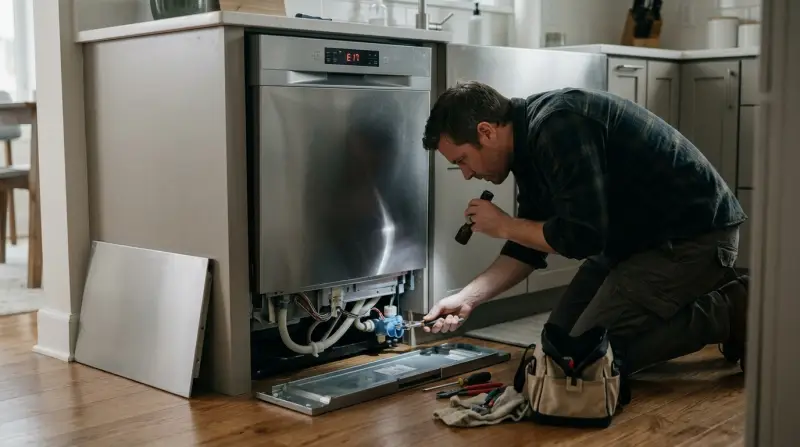
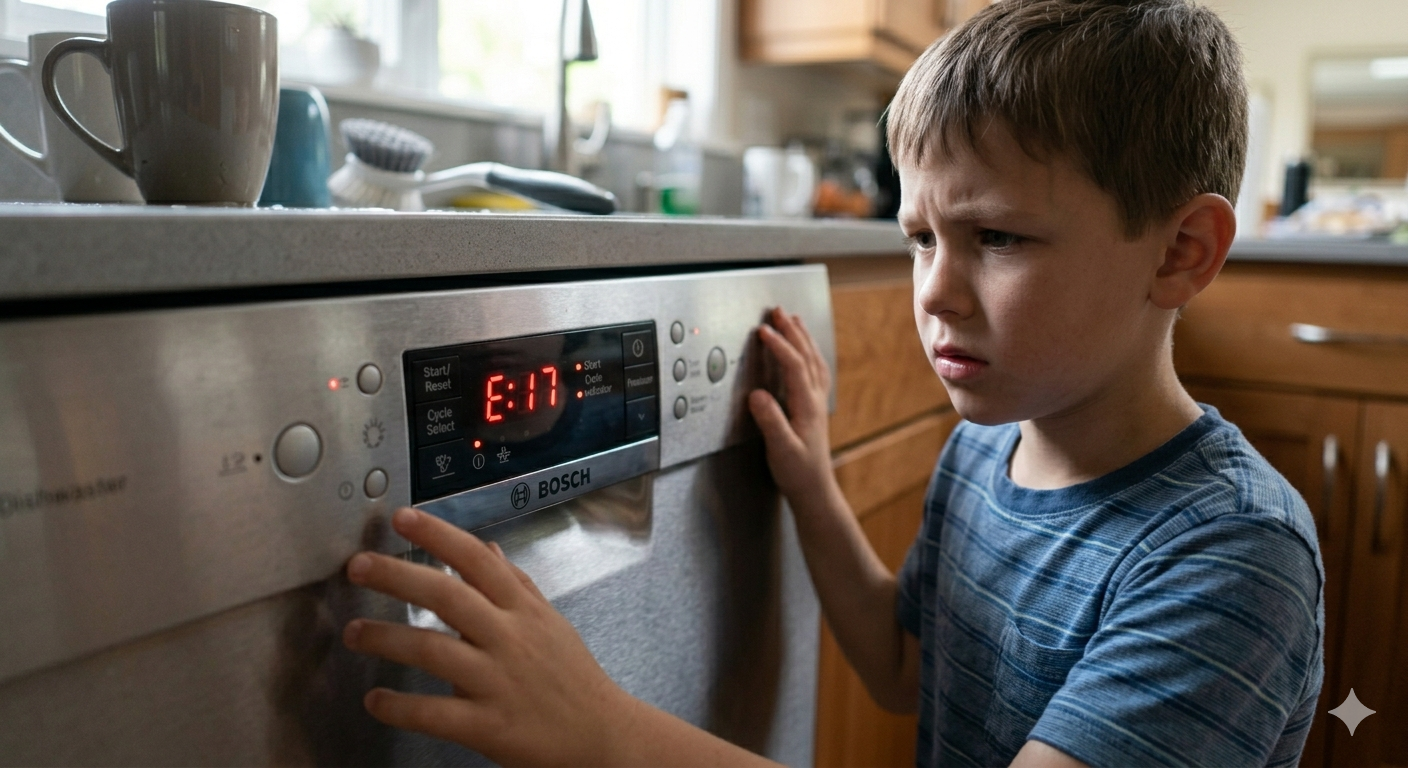
When you see E17 on your Bosch dishwasher, it means there is too much water entering the machine. This is usually caused by a problem with the water inlet system. The dishwasher is designed to take in only a certain amount of water—if the flow is higher than normal, the sensor triggers the E17 code. This error is more common in areas where water pressure is high, or if the machine’s inlet valve gets stuck.
Some beginners think that E17 is a general error, but it specifically points to overfilling caused by excess water entering. If you ignore it, you risk water leaks or damage to your kitchen floor.
Main Causes Of E17 Error
Understanding why the E17 error happens is key to fixing it. Here are the most common reasons:
- High water pressure from your home’s water supply.
- Faulty water inlet valve that doesn’t close properly.
- Blocked or faulty flow meter inside the dishwasher.
- Incorrect hose installation or kinks in the hose.
- Electronic control board issues (rare).
Most E17 errors are caused by the first three reasons. It’s important to check these in order, starting from the simplest.
Safety First: What To Do Before Starting
Always think about safety before working with your dishwasher:
- Turn off the power at the wall or circuit breaker.
- Shut off the water supply to the dishwasher.
- Wait for the machine to cool down if it has just finished a cycle.
You don’t need many tools for this fix. A screwdriver, towel, and a small bucket are usually enough. If you’re not comfortable working with appliances, it’s best to ask for help.
Step-by-step Guide To Fix Bosch Dishwasher E17
Let’s go through the practical steps to solve the E17 error. You don’t have to do every step—sometimes the problem is fixed early. But if the error comes back, continue to the next step.
1. Reset The Dishwasher
Sometimes, the E17 code appears by mistake or after a power surge.
- Turn off the dishwasher using the power button or unplug it.
- Wait 2–5 minutes.
- Turn it back on.
If the code disappears, you’re done. If not, move to the next step.
2. Check The Water Pressure
High water pressure is a top cause of E17. Bosch dishwashers work best with water pressure between 7 and 145 psi (pounds per square inch).
- Find the water supply valve under your sink.
- Close the valve slightly to reduce pressure, then run the dishwasher again.
If possible, use a water pressure gauge to measure the exact pressure. If it’s above 145 psi, you may need a pressure reducing valve. Most homes have normal pressure, but new installations or renovations can change this.
Water Pressure Comparison Table
| Pressure (psi) | Result |
|---|---|
| Below 7 | Dishwasher may not fill |
| 7–145 | Normal operation |
| Over 145 | Risk of E17 error |
3. Inspect The Water Inlet Valve
The inlet valve is like a gatekeeper for water entering your dishwasher. If it’s stuck open, too much water will flow inside.
- Pull out the dishwasher (if possible) or access the bottom front panel.
- Find the inlet valve (usually where the hose meets the dishwasher).
- Look for signs of leaks or corrosion.
- Unplug the wiring harness from the valve.
- Use a multimeter to check for electrical continuity (if you have one). No continuity means the valve is bad.
If you find any problem or the valve looks damaged, replace the inlet valve. Most hardware stores sell Bosch-compatible valves, or you can order online.
4. Check The Flow Meter
The flow meter counts how much water enters. If it’s dirty or faulty, it can give wrong readings to the control board.
- The flow meter is usually inside, near the inlet area.
- Remove the side panel (if your model allows) to access it.
- Look for debris, hard water buildup, or broken parts.
- Clean any dirt with a soft brush and water.
Some Bosch models have the flow meter combined with the inlet valve. Check your manual or look up your model online.
5. Inspect The Water Hose
A kinked or wrongly installed hose can cause pressure changes that confuse the sensors.
- Check the entire water hose from the wall to the dishwasher.
- Straighten any kinks or bends.
- Make sure the hose is tightly connected and not leaking.
6. Examine The Control Board (advanced)
This step is rare and only needed if all else fails. The control board is the “brain” of your dishwasher. If it malfunctions, it can show false errors.
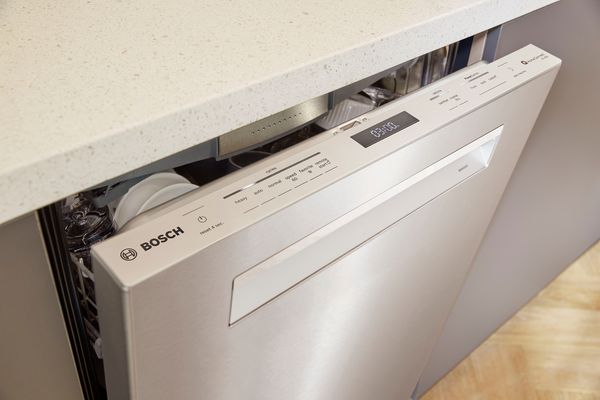
- Open the control panel (usually behind the door).
- Look for burn marks, broken wires, or loose connections.
- If you see damage, you may need to replace the board. This is best handled by a professional.
Credit: www.bosch-home.com
Preventing Future E17 Errors
Fixing the E17 error is important, but prevention saves time and money. Here’s how you can avoid this problem in the future:
- Check your water pressure yearly. If you have high water pressure in your home, install a pressure reducer.
- Clean the inlet filter every 6 months. This filter catches dirt and debris before water enters the machine.
- Avoid using hard water without a softener. Hard water increases buildup inside the flow meter and hose.
- Run the dishwasher empty with vinegar every few months. This keeps the inside clean and sensors working well.
Dishwasher Maintenance Comparison Table
| Action | How Often | Result |
|---|---|---|
| Check water pressure | Yearly | Prevents E17 and leaks |
| Clean inlet filter | Every 6 months | Reduces debris buildup |
| Run with vinegar | Every 3 months | Keeps sensors clean |
Insight: Many people forget the inlet filter exists. It’s a small mesh screen at the water connection. Cleaning this takes less than 5 minutes and prevents most E17 errors.
When To Call A Professional
If you’ve tried all the steps above and the E17 error still comes back, it’s time to get help. Here are signs you need a technician:
- Water leaks from under the dishwasher.
- The E17 code comes back even after replacing the inlet valve.
- Electrical burning smells or visible damage to wires or control board.
- You’re not comfortable opening the panels or handling parts.
A professional has tools to test parts quickly. They can also spot issues you might miss, like a hidden crack in the water tank.
Attempting to fix electrical parts yourself can void your warranty. If your Bosch dishwasher is still under warranty, contact Bosch service first.

Credit: www.youtube.com
Cost Of Repair: Diy Vs. Professional
It’s useful to know what you’re saving by fixing E17 yourself.
| Fix | DIY Cost | Professional Cost |
|---|---|---|
| Reset dishwasher | $0 | $80–$120 (service call) |
| Replace inlet valve | $20–$60 | $150–$250 |
| Install pressure reducer | $25–$60 | $120–$200 |
As you see, fixing the E17 error yourself can save over $100. But if you’re unsure, safety comes first.
Common Mistakes To Avoid
Even careful users can make errors when trying to fix E17. Avoid these:
- Ignoring the water pressure. Many assume their home’s water pressure is fine, but even new homes can have issues.
- Not unplugging the dishwasher before checking parts. This can be dangerous.
- Forcing the inlet valve or hose connections. If parts feel stuck, check for a hidden screw or clamp.
- Mixing up wires when reattaching them. Take a photo before disconnecting anything.
A smart move is to keep your dishwasher’s manual handy or download it from the Bosch website. Manuals often have diagrams to help you identify parts.
Credit: thedishwasherblog.com
Additional Resources
If you want to learn more about Bosch dishwasher errors or need replacement parts, the official Bosch website offers diagrams, troubleshooting tips, and user manuals. For more technical details on the E17 error, you can visit the Bosch Home Error Code Guide.
Frequently Asked Questions
What Is The Most Common Cause Of Bosch Dishwasher E17?
The most common cause is high water pressure or a faulty water inlet valve. Both problems let too much water into the dishwasher, which triggers the error.
Can I Use My Dishwasher If It Shows E17?
No. It’s not safe to use your dishwasher with the E17 error. The machine may overflow or leak, which can cause water damage to your kitchen.
How Do I Find The Water Inlet Valve On My Bosch Dishwasher?
The water inlet valve is usually located at the bottom front of the dishwasher, where the water hose connects. Check your user manual for a diagram specific to your model.
How Often Should I Clean The Inlet Filter?
It’s best to clean the inlet filter every 6 months. If your water is hard or you notice slow filling, check it more often.
What If The E17 Error Comes Back After All Fixes?
If the error returns after you’ve checked pressure, the inlet valve, and the flow meter, you should call a Bosch-certified technician. There may be a deeper problem with the electronic control board or sensors.
Solving the Bosch dishwasher E17 error is possible for most people with simple tools and clear steps. By understanding what causes the problem and taking action, you can keep your dishwasher running smoothly and avoid expensive repairs.