
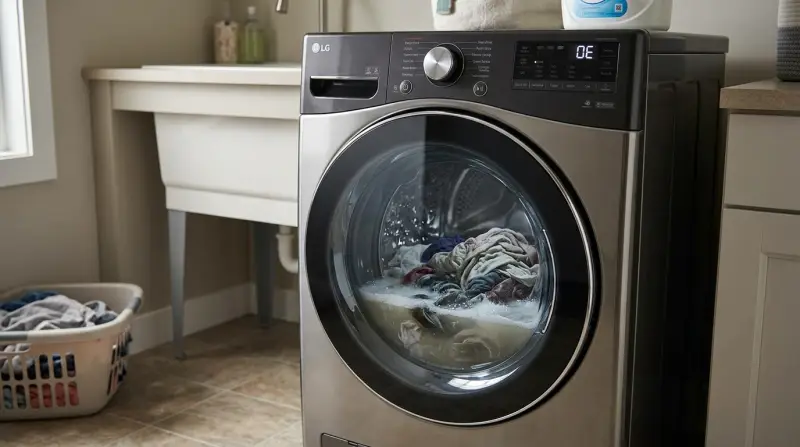
The LG Washing Machine OE error code indicates the appliance can’t drain water due to a blockage or pump failure. You don’t need a technician, as most causes involve simple obstructions. Check the drain hose for kinks or clogs first. If the hose is clear, inspect the drain filter for debris preventing the pump from spinning.
What the sign is telling you
| What you notice | What it usually means | What to do first |
|---|---|---|
| Water sits in drum | Clogged drain hose | Straighten the hose |
| Loud grinding noise | Debris in pump | Clean drain filter |
| Error appears instantly | Blocked drain pipe | Check house plumbing |
| Machine hums only | Pump motor failure | Call for service |
| Slow drainage speed | Lint trap buildup | Clear the filter |
| Hose vibrates hard | Kinked hose line | Adjust hose position |
If the machine hums but stays full, check if the drain hose sits higher than the pump outlet. If the hose rises above 96 inches, the pump lacks the pressure to push water out, forcing it to stall.
Distinguish between a pump failure and a blockage by listening closely. A rhythmic clicking suggests a foreign object like a coin or hair clip is trapped in the impeller. If you hear a steady, strained drone, the motor has likely burned out from overheating.
Never ignore a persistent vibration. If the hose shakes violently during the spin cycle, it’s usually hitting the back panel. This contact can puncture the plastic, leading to a slow leak that rots your floorboards. If the hose feels rigid or brittle, replace it immediately to prevent a burst.
Obstructions in the drain path
The primary reason for a drainage failure is an object blocking the flow of water through the system. Small items like coins, hairpins, or buttons often escape the drum and settle in the drain filter or the corrugated hose. This blockage creates a physical wall that the pump can’t push water past, triggering the sensor to stop the cycle for safety.
Confirm this cause by opening the small door at the bottom front of your machine. Place a shallow pan or a large towel on the floor to catch the residual water, then slowly unscrew the drain filter cap. If you see debris when you remove the filter, you have found the problem. Clean the filter under warm running water to remove all lint and residue.
Before replacing it, look into the pump housing with a flashlight to ensure no small items are wedged against the impeller blades. If you can move the blades with your finger, the pump is likely not broken. A common mistake is failing to check the impeller; if a small object is wedged there, the pump will hum loudly but fail to move water, potentially burning out the motor.
Once you have cleared the debris, screw the filter cap back on tightly to prevent leaks. Run a rinse-and-spin cycle to verify the fix. If the water drains quickly and the error code disappears, the obstruction was the sole cause. This process usually takes about ten minutes.
If the machine still shows the error, the blockage might be further down the house plumbing. If the water drains fine into a bucket but not into your wall pipe, the issue is your home’s plumbing, not the appliance. If the pump makes a grinding noise despite being clean, the impeller or motor bearings are likely damaged and require professional repair.
Kinks and airlocks in the hose
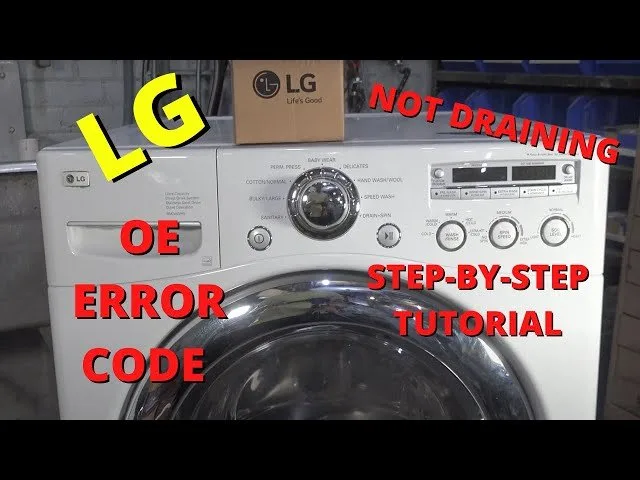
A physical bend in the drain hose often prevents water from exiting the machine, causing the pressure sensor to misread the drum state. This is especially common if you recently moved the machine or if the hose is pushed too far into the standpipe. When the hose is bent at a sharp angle, the pump can’t overcome the resistance, and the water stays trapped inside.
To check for this, pull the machine away from the wall carefully and inspect the entire length of the grey or black corrugated hose. Ensure there are no sharp bends, kinks, or heavy objects resting on top of it. If the hose is connected to a standpipe, make sure it isn’t inserted deeper than four inches into the pipe, as this can create an airlock or a siphon effect.
If you insert the hose too deep, the pipe creates a vacuum that pulls water back into the drum. You can identify this by a “gurgling” sound coming from the drain during the spin cycle. If you hear this, pull the hose back until the end is exposed to open air.
According to the LG official support guide, you should verify that the height of the drain hose is between 39 and 96 inches from the floor to prevent siphoning.
If you find a kink, straighten it out and secure the hose with a clamp if necessary to keep it straight. If the hose is clear but the machine still struggles, check the house drain pipe. If your sink or nearby drain is also slow to empty, the issue is with your home plumbing, not the machine.
Pump failure or electrical fault
A faulty drain pump motor is the least likely but most serious cause of a persistent error. If you have already cleaned the filter and confirmed the hose is straight, the pump motor might have burned out or lost its ability to spin under load. You can often tell the pump is the issue if you hear a faint buzzing or humming sound coming from the base of the machine, but the water level doesn’t drop at all.
To confirm this, listen closely to the machine during the drain phase. If the pump makes a grinding noise or remains completely silent while the machine is in drain mode, the motor has likely reached its limit. This varies by model — check the label on the back of your washer for the specific pump assembly part number. If the pump is damaged, you’ll need to replace the assembly.
Who this isn’t for: if you aren’t comfortable working with water lines or if the machine is still under a manufacturer’s warranty, don’t attempt to disassemble the pump housing. Opening the internal components of a washer can void your warranty or cause water damage if not sealed correctly. If the pump is the culprit, contact an authorized service technician to handle the replacement. A common mistake is attempting to force the machine to run multiple drain cycles when the pump is seized; this can cause the motor to overheat and potentially damage the control board.
When to stop and get help
If the machine is leaking water from beneath the cabinet, stop immediately to prevent floor damage and electrical shorts. A steady drip indicates a failed pump seal, while a puddle suggests a ruptured internal hose.
If you see smoke or smell burning plastic, unplug the machine from the wall and don’t attempt to restart it. This smell often signals a failing motor winding or a shorted wire harness, which poses a fire risk.
If the drain pump is seized and you don’t have the proper tools to remove the housing, leave the repair to a qualified technician. Forcing a stuck impeller with pliers often cracks the plastic housing, turning a simple blockage into a total pump replacement.
If the error persists after you have verified the filter is clean and the hose is clear, there may be a fault in the main control board. Don’t attempt to bypass sensors or jump wires to force a cycle.
If you aren’t comfortable handling water-connected appliances or if you suspect a plumbing leak behind the wall, call a professional plumber.
Working on internal electrical components requires specific training. The capacitor can hold a lethal charge even when the unit is unplugged. Never attempt to test the motor with a multimeter or modify the wiring unless you’re a certified technician. If you lack a voltage tester to verify the charge is gone, stop now.
Frequently asked questions
Can I just bypass the error code?
No, you can’t bypass the error code because it’s a safety feature designed to prevent the machine from flooding your floor. The system stops the cycle to protect the motor and the internal sensors from damage. You must clear the physical obstruction causing the drainage delay before the machine will allow you to resume normal operation.
Why does the error happen only during long cycles?
The error happens during long cycles because the pump may be overheating due to a partial clog that only becomes restrictive after extended use. As lint builds up in the filter over the course of a wash, the flow rate drops. Check the filter for small debris that might be floating into the path only when the water is agitated.
Is it safe to keep using the machine?
No, it isn’t safe to keep using the machine while it shows an error, as continuing to run cycles with a blocked pump can damage the motor. Repeatedly forcing the cycle to start will put extra stress on the pump assembly. You should resolve the drainage issue before attempting to wash another load of laundry.
How long does it take to clean the drain filter?
Cleaning the drain filter usually takes about 10 to 15 minutes, depending on how much water is trapped in the drum. You’ll need a shallow bowl and some towels to manage the water that spills out when you unscrew the cap. If you keep the filter clean regularly, the process becomes much faster.
What happens if I ignore the error?
If you ignore the error, the water will remain in the drum and can lead to musty odors, mold growth, or even water damage if the machine overflows. Persistent drainage failures also shorten the lifespan of your pump motor. It’s much cheaper to clear a small blockage now than to replace a burnt-out pump later.
Does it matter if I use too much detergent?
Yes, using too much detergent can lead to excessive suds, which can trigger the sensor and cause drainage issues. Excess soap creates a thick foam that the pump struggles to move through the drain hose. Follow the manufacturer’s recommendation for detergent amounts found in your owner’s manual to prevent these suds from interfering with the drain cycle.
Final Thoughts
If the machine still doesn’t drain after you’ve cleared the debris, there might be a deeper mechanical issue with the pump itself. Don’t worry if you can’t fix it on your own; it’s best to contact a professional who can safely replace the part so you’re back to laundry day soon.