
A Samsung Washer 4E Code indicates that your machine isn’t receiving enough water to complete its cycle. This error usually stems from a kinked hose, a clogged inlet filter, or low water pressure from your home supply. To fix this, you must check your water supply lines immediately to ensure they’re fully open and free of blockages. If the error persists after checking the lines, the inlet valves may be failing, which requires professional attention to prevent potential water damage or electrical hazards.
Causes for the Samsung Washer 4E Code
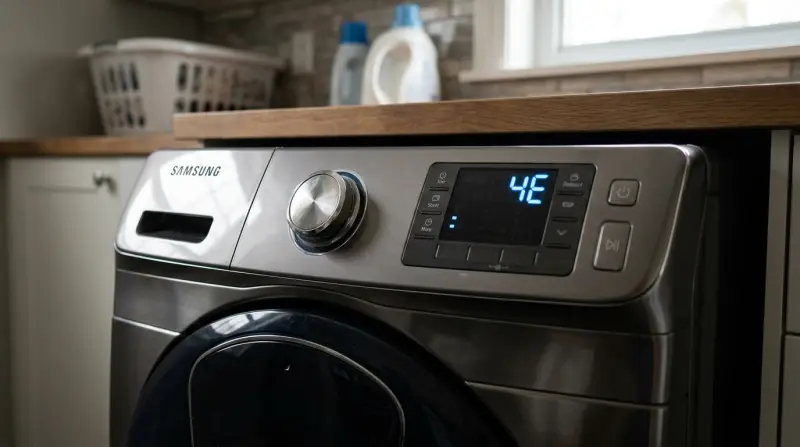
The primary cause for this error is a disruption in the water intake process. Your washing machine monitors the time it takes for the drum to fill to a specific level; if the sensors don’t detect enough water within the allotted timeframe, the system halts the cycle to protect the heating element and the pump. This occurs most often when the inlet screens—the small mesh filters inside the hose connections—become blocked by mineral deposits or sediment from your home plumbing.
Another common reason is a physical restriction in the supply lines. If a hose is bent, kinked, or pinched behind the unit, the flow rate drops significantly. This is especially common if the machine has been moved recently for cleaning or floor maintenance. Occasionally, the issue is external to the machine, such as a partially closed shut-off valve or a broader issue with your home’s water pressure.
This error is distinct from drainage issues. If your machine can’t empty, it will display a different code, such as 5E or ND. You should verify that the water is flowing freely from the wall taps before assuming the machine itself is broken. If you live in an area with “hard” water, mineral buildup is the most likely culprit, as these deposits act like a dam inside the narrow openings of the inlet valves.
Clear the inlet filters
Before you start, you must turn off the water supply taps behind the washer and unplug the power cord. This fix is for users who have basic tools, such as pliers and a bucket. If you aren’t comfortable working with plumbing connections, contact a licensed plumber or a professional appliance technician.
- Turn both the hot and cold water taps to the fully closed position.
- Place a small bucket under the hose connections to catch any residual water.
- Unscrew the water supply hoses from the back of the washer.
- Use needle-nose pliers to gently pull the small mesh filter screens out of the inlet ports.
- Rinse these screens under a faucet to remove sand, rust, or mineral deposits.
- Check the inside of the hose ends for any debris and clear it out.
- Reinsert the filters and screw the hoses back on firmly, but don’t overtighten them, as this can crack the plastic threads.
- Slowly turn the water taps back on and check for leaks before plugging the machine back in.
If the machine fills correctly after this, you have cleared the blockage. This varies by model — check the label on the back of your unit for specific water pressure requirements, as some units need at least 20 PSI to operate correctly.
Check for hose restrictions
If the filters are clean but the error remains, the hoses themselves might be the problem. This fix is for those who can safely pull the washer away from the wall to inspect the rear. If the unit is heavy or you have physical limitations, ask for help moving it to avoid injury or damage to your flooring.
- Carefully pull the washer away from the wall until you have enough space to see the back.
- Inspect the hoses for any sharp bends or kinks, especially near the wall connections.
- If a hose is bent, straighten it out and ensure it has a gentle curve rather than a sharp angle.
- Ensure the hoses aren’t being crushed against the wall by the machine’s own weight.
- If the hoses are old, brittle, or show signs of bulging, replace them with new, high-quality stainless steel braided hoses.
You can find the official Samsung appliance support page to verify if your specific model requires a particular type of hose. If you find the hoses are in good condition and aren’t kinked, but the water still fails to enter, the electronic inlet valve inside the machine is likely faulty. Because these valves are connected to high-voltage components, don’t attempt to replace them yourself.
Reset the water pressure system
Sometimes, the washer’s internal computer needs a hard reset to clear the error state after you have addressed a mechanical issue. This is worth trying if you have already cleaned the filters and confirmed the hoses are straight.
- Unplug the washing machine from the wall outlet.
- Leave the machine unplugged for at least 10 minutes to allow the control board to discharge fully.
- While waiting, ensure both the hot and cold water taps are turned fully counter-clockwise to the open position.
- Plug the machine back into the wall and turn it on.
- Select a “Rinse and Spin” cycle to test the water intake without a full load of laundry.
If the machine begins to fill and completes the cycle, the reset worked. If the error returns immediately, the issue is likely a failed sensor or a damaged inlet valve.
A common mistake is failing to verify the water pressure at the source before resetting. If your home’s main water valve is partially closed, the machine will trigger the same error regardless of the reset. Check your home’s main shut-off valve; if it isn’t fully open, the washer lacks the pressure required to engage the intake solenoid.
This process isn’t for those who lack the patience to wait for the power discharge. Rushing the process won’t clear the memory. If you have done all these steps and the 4E code persists, it’s time to call a professional. Don’t try to bypass the error by adding water manually, as this can confuse the sensors and lead to overflowing during the cycle.
What not to do
Don’t force water taps open if they feel stuck. You might snap the handle or break the pipe behind the wall, which often requires opening the drywall to fix. If the valve resists, apply a light penetrating oil and wait ten minutes before trying again.
Don’t use harsh chemicals or drain cleaners in the water inlet ports. These substances degrade rubber seals and brittle internal plastic components, leading to leaks that are difficult to trace. Use only a mild vinegar solution if you suspect mineral buildup.
Don’t open the top or back panel to “look around.” You risk voiding your warranty and exposing yourself to live electrical parts. If you see a loose wire, stop immediately and call a professional.
Don’t ignore an error code and keep restarting the cycle. This puts unnecessary strain on the pump and can cause the motor to burn out, turning a simple sensor reset into a costly mechanical repair.
How to stop it happening again
Regular maintenance is the best way to prevent water intake errors. If you have hard water, you should check your inlet filters regularly to prevent mineral buildup.
| If you’re doing this | Do this instead | Why |
|---|---|---|
| Leaving hoses tucked tight | Keep a 4-inch gap from the wall | Prevents kinks and sharp bends |
| Ignoring slow fill times | Clean inlet filters annually | Prevents sediment from blocking flow |
| Using old rubber hoses | Use steel-braided hoses | Reduces the risk of leaks and bursts |
| Forcing the washer back | Move it slowly and check lines | Protects the hoses from being crushed |
Why is my washer not filling with water?
Your washer isn’t filling because the water supply is restricted or the machine’s inlet valve is blocked. Start by checking that your home’s water taps are fully open and that no hoses are kinked behind the unit. If the supply is fine, the small mesh filters at the back of the washer are likely clogged with debris. Cleaning these filters usually restores normal water flow and clears the error code immediately.
Can I fix a 4E code without calling a plumber?
Yes, you can fix this code yourself if the issue is a clogged filter or a kinked hose. Most owners can resolve this by turning off the water, disconnecting the hoses, and cleaning the mesh screens with a soft brush. However, if the hoses are clear and the machine still fails to fill, you should stop. Internal valve failures require a professional technician to ensure the repair is safe and the electronics are handled correctly.
How long does a washer inlet valve last?
This varies by model — check the manufacturer’s documentation for your specific unit’s expected service life. If you have very hard water, the minerals can damage the valve seals earlier than expected. Using a water softener or simply cleaning the inlet filters regularly can help extend the life of these components significantly.
Is it safe to use the washer with a 4E error?
No, it isn’t safe or effective to use the machine while it’s displaying a 4E code. Running the machine without adequate water can cause the internal pump to overheat and fail. Always resolve the water supply issue before attempting to run another wash cycle.
What happens if I ignore the 4E code?
If you ignore the code, the machine will fail to start the cycle, leaving your clothes unwashed. Prolonged use of a machine that’s struggling to fill can cause the water inlet valve to burn out or the main control board to trigger a permanent lockout. At that point, a simple filter cleaning becomes a costly repair that requires a professional service visit.
How do I know if my water pressure is too low?
You can test your water pressure by timing how long it takes to fill a one-gallon bucket from your laundry tap. If it takes longer than 30 seconds to fill the bucket, your home’s water pressure is likely too low for the washer to function properly. If your home has a pressure regulator, it may need adjustment by a licensed plumber to meet the minimum requirements for your specific washing machine model.
Final Thoughts
If your machine still won’t fill properly after you’ve checked the connections, don’t hesitate to reach out to a local repair expert. It’s better to get a professional’s help early on so you don’t risk further damage. Getting it fixed quickly will ensure your laundry day stays stress-free and simple.