
The most frequent reason for an iTouchless garbage can lid not working is depleted batteries that no longer provide enough voltage to trigger the motorized hinge. You can confirm this by swapping in a fresh set and observing if the motor engages. If the lid remains closed, the issue likely resides in the sensor or gear assembly. Always check your manual for the required battery type to ensure proper performance.
Why your touchless garbage can stopped working
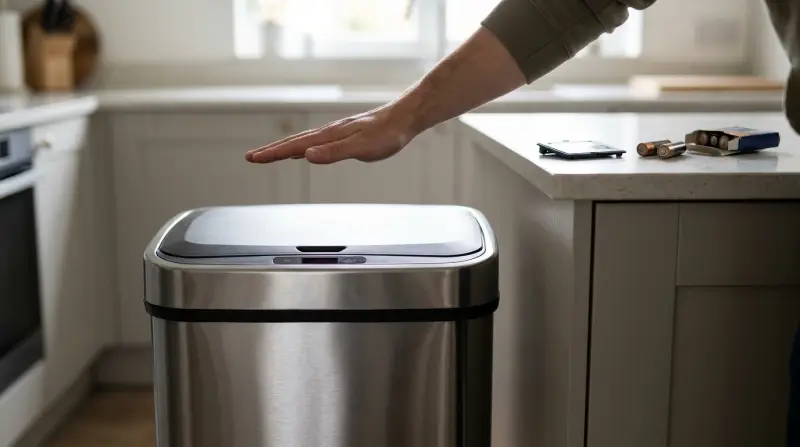
| Cause | How common | How to confirm it | Fix it yourself? |
|---|---|---|---|
| Dead batteries | Very common | Replace with fresh set | Yes |
| Dirty sensor lens | Common | Wipe with dry cloth | Yes |
| Obstructed hinge | Common | Check for debris | Yes |
| Misaligned lid | Occasional | Re-seat the lid | Yes |
| Motor failure | Rare | Listen for motor hum | No |
| Sensor malfunction | Rare | Test in dark room | No |
Most users assume a total unit failure when the lid stops moving, but 80% of issues stem from the power supply or debris. Start by checking the battery contacts for corrosion. If you see white or blue powder, the battery acid has likely compromised the terminal.
If the lid moves halfway then stalls, the hinge is usually the culprit. Check for small bits of food or paper wedged in the pivot point. If the motor hums but the lid remains stationary, the internal gear train has likely stripped. This is a permanent mechanical failure that requires a full unit replacement.
When testing the sensor in a dark room, watch for the red indicator light. If the light blinks but the lid stays shut, the sensor is functional, but the motor is dead. If the light never illuminates, the sensor board has failed.
Power depletion in the battery compartment
A drained power supply is the primary culprit because the motor requires a consistent flow of electricity to overcome the initial friction of the lid’s hinge. When batteries lose their charge, they might still power the small LED indicator light while lacking the current needed to activate the motor. You can confirm this by checking the battery contacts for any white or green powdery buildup, which is a sign of corrosion. If the terminals are clean, replace the batteries with a brand-new set from a reputable manufacturer.
If you use rechargeable batteries, keep in mind that they often hold a lower voltage than standard alkaline cells, which can lead to sluggish movement or early failure in some motorized units. This varies by model — check the label inside the battery box for the recommended battery chemistry. A common mistake is mixing old and new batteries in the same tray. Doing this forces the fresh batteries to work harder and can cause them to leak, which permanently damages the internal circuit board. If the lid still doesn’t respond after you install fresh, high-quality batteries, ensure the battery tray is fully pushed into its housing. A loose connection often prevents the unit from completing the electrical circuit. If the unit remains unresponsive despite a solid connection, you have reached the limit of what can be safely addressed without specialized tools.
Sensor interference from environment or dust
The sensor lens works by emitting an infrared signal that bounces off your hand and returns to the detector. If this lens is covered in dust, kitchen grease, or water droplets, the signal can’t return to the sensor, and the lid won’t open. You can tell if the sensor is the issue by wiping the lens surface with a clean, dry, soft cloth. Avoid using harsh chemical cleaners, as these can cloud the plastic lens or damage the delicate electronic components behind it.
If the lid still fails to open after cleaning, verify that the unit isn’t placed in direct, bright sunlight or near a highly reflective surface. Keeping small electronics away from extreme heat and moisture is vital for long-term performance. Sunlight contains infrared radiation that can “blind” the sensor, making it think an object is constantly present or preventing it from detecting your hand. If the lid works perfectly in a dim room but fails in a bright kitchen, move the garbage can to a shaded spot. If it continues to fail regardless of the light levels, the internal sensor board has likely reached the end of its useful life. At this point, the repair often costs more than the price of a new unit.
Physical obstruction of the lid mechanism

A mechanical obstruction prevents the lid from opening even when the motor receives the correct signal. This usually happens when a piece of trash, a plastic bag, or food debris gets caught in the hinge or the track where the lid pivots. You can identify this cause by listening closely to the unit when you wave your hand over the sensor. If you hear the motor making a strained, grinding, or humming noise but the lid doesn’t move, the motor is trying to work but is being physically blocked.
Check the entire perimeter of the lid for any small items or sticky residues that might be acting like glue. If you find debris, clear it away with a soft brush or a damp cloth. Never force the lid open with your hands, as this can snap the plastic gears or strip the motor teeth. If the lid is stuck because the plastic frame has warped or the hinge pin is bent, the unit is effectively broken. This is a trade-off: you can attempt to lubricate the hinge with a tiny drop of silicone-based oil, but if the internal gears are stripped, there’s no way to replace these proprietary parts. If you find the gear housing is damaged, you’ll need to contact the manufacturer for a replacement lid assembly or prepare to replace the entire unit.
The less likely causes
-
Loose internal wiring: Repeated vibrations can shake a lead free from the motor housing. If the device rattles when you shake it gently, a wire has likely detached. You must open the casing and use a soldering iron to bridge the connection. If you lack soldering experience, don’t attempt this; you risk melting the plastic housing or causing a short circuit.
-
Corroded battery terminals: If you see white, powdery residue on the metal springs, battery acid has compromised the electrical path. Use a cotton swab dipped in white vinegar to neutralize the corrosion. If the metal has pitted or turned black, the conductive plating is gone, and no amount of cleaning will restore power.
-
Faulty lid switch: This micro-switch acts as a safety interlock. If the device remains silent despite a closed lid, press the switch manually with a toothpick. If it clicks but provides no power, the internal spring is broken. This is a non-serviceable component failure.
-
Circuit board damage: Humidity causes microscopic oxidation on the board. If the device was stored in a garage or basement, the board is likely dead. This is a total loss; replacement parts are rarely manufactured for these units.
What a fix usually involves
Fixing a touchless lid depends entirely on whether the problem is a simple user error or a component failure. Most of the time, the fix is free and takes only a few minutes of your time, such as replacing batteries or cleaning the sensor. If you need a replacement part like a new battery door or a lid hinge, the cost is typically a small part of the price of a new unit. However, if the motor or the main circuit board has failed, the repair is rarely worth the effort.
The exact cost of parts varies by model and manufacturer, so look at the bottom of your unit or the inside of the battery compartment for a model number. You can then search the manufacturer’s official website to see if they sell individual replacement lids. If they don’t offer spare parts, the cost of a professional repair will almost certainly exceed the price of a new garbage can. Always check the warranty documentation provided with your specific unit before attempting any repair that involves removing screws, as this often voids your coverage.
Frequently asked questions

Can I use rechargeable batteries in my trash can?
Yes, but you should choose high-capacity rechargeable batteries to ensure the unit receives enough voltage. Standard rechargeable cells often provide slightly less power than alkaline batteries, which can result in slow lid movement or a shorter time between charges. Always check the manual for your specific model to confirm if it supports rechargeable chemistry before you make the switch.
Why does my lid open and close on its own?
This usually happens because the sensor is dirty or placed too close to a reflective surface that’s tricking the infrared signal. Wipe the lens with a soft, dry cloth to remove dust or grease. If the problem persists, move the can away from mirrors, glass, or direct sunlight, which can interfere with the sensor’s ability to detect movement accurately.
How long should the batteries last?
Battery life varies by model and daily usage; replace them when the lid movement becomes sluggish or the unit stops responding. Always use fresh, alkaline batteries of the same brand and age to get the longest life out of each set.
Is it safe to clean the sensor with water?
No, never use water or liquid cleaners directly on the sensor lens because moisture can seep into the electronic housing and short out the circuit board. Always use a dry, lint-free cloth to wipe the surface. If the lens is very sticky, dampen the cloth only slightly with a tiny amount of mild soap and water, then dry it immediately.
What happens if I force the lid open?
You risk breaking the internal plastic gears or stripping the motor assembly, which are usually not replaceable. The motor is designed to move the lid at a specific speed and torque; forcing it manually puts stress on the delicate teeth of the gear system. If the lid is stuck, look for a physical obstruction in the hinge area instead of pulling it.
Does it matter if I mix battery brands?
Yes, you should never mix brands or battery types because they have different discharge rates and internal resistances. This creates an uneven power flow that can cause the unit to behave erratically or lead to battery leakage inside the compartment. Always replace the entire set at once with identical batteries to ensure the motor receives a consistent and stable power supply.
Final Thoughts
If these simple fixes don’t get the lid moving, reach out to the manufacturer’s support team for further assistance. They’ll help you determine if a replacement part is needed or if your warranty covers a full exchange. It’s worth checking their website today so you don’t have to struggle with it anymore.
Related guides
- Brumate Rotera Lid Not Working? Easy Fixes and Tips
- How to Open a Ninja Blender Lid: Quick and Easy Tips
- Ninestars Trash Can Lid Not Working? Easy Fixes That Work