
If you’ve ever looked under a sink or tried to fix a drain, you may have noticed a curved piece of pipe. It’s easy to assume all plumbing bends are the same, but the J Bend and P Trap are two designs with different purposes, advantages, and installation needs. Understanding their differences can help homeowners, plumbers, and DIY enthusiasts make better choices for their kitchens and bathrooms. Let’s explore these two essential plumbing parts, compare them side-by-side, and discover which is best for your needs.
What Is A J Bend?
A J Bend is a simple, curved pipe that resembles the letter “J.” It’s most often used in older plumbing systems or in places where space is limited. The main job of a J Bend is to connect the drain outlet of a fixture, like a sink, to the rest of the drainage system.
J Bends are usually made from:
- PVC (plastic)
- Brass
- Chrome-plated steel
Unlike the P Trap, the J Bend does not have a removable cleaning section. Instead, it’s a single curve that directs wastewater away. This design is sometimes called an S Trap when used vertically, but a true J Bend is usually horizontal.
Common Uses
You’ll often find J Bends in:
- Old homes with original plumbing
- Simple utility sinks
- Spaces where a standard trap won’t fit
J Bends are less common in modern installations because they don’t always meet current plumbing codes.
What Is A P Trap?
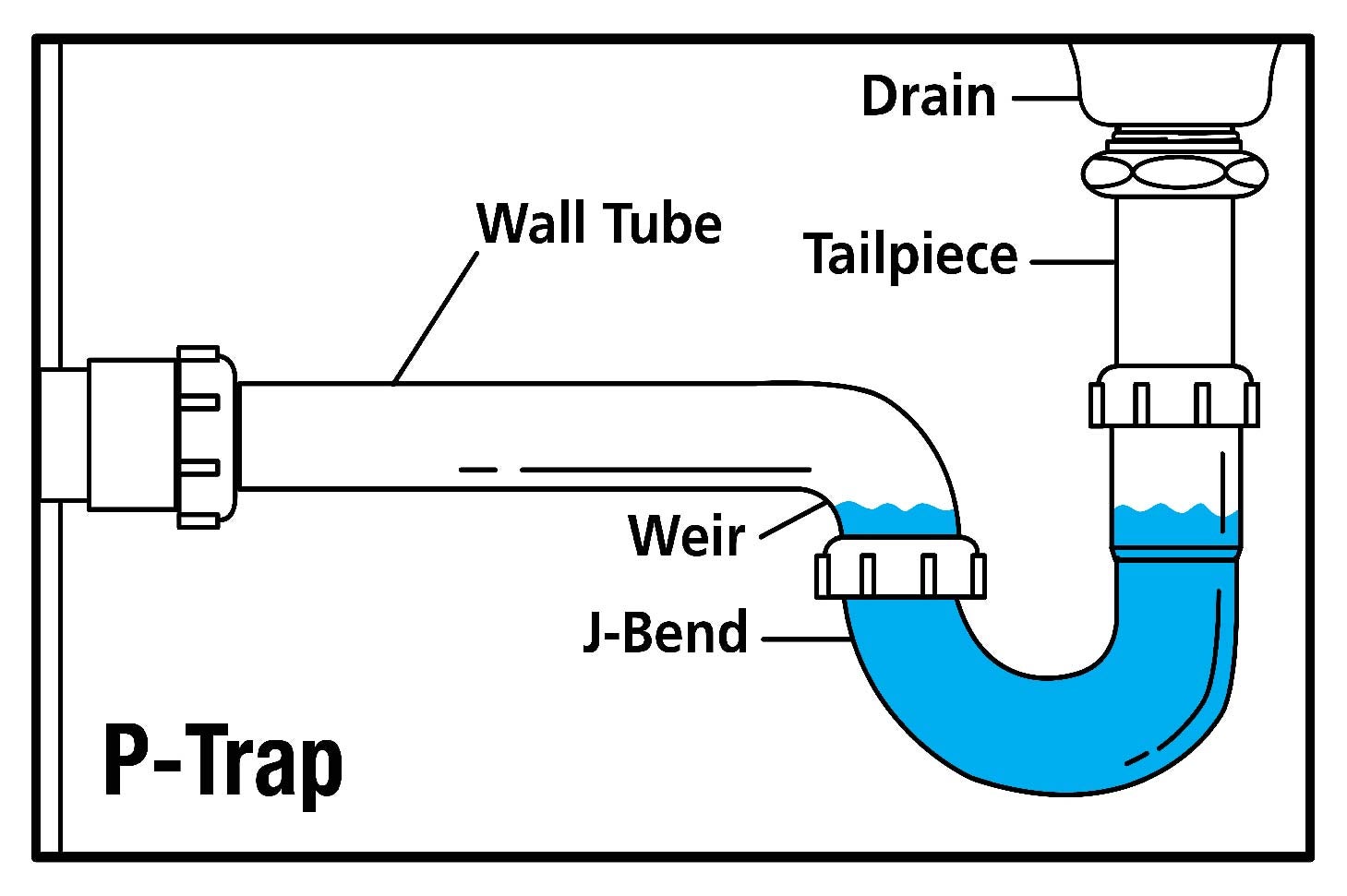
The P Trap is a plumbing fixture shaped like the letter “P.” It consists of two main parts:
- The curved section (the “trap”)
- The straight tailpiece that connects to the wall drain
The purpose of a P Trap is not only to redirect wastewater, but also to create a water seal. This seal stops sewer gases from coming back into your home. P Traps are required by building codes in most modern homes.
P Traps are usually made from:
- PVC
- ABS plastic
- Brass
- Chrome-plated metal
They include a threaded union or slip joint, making them easy to remove for cleaning or replacement.
Key Functions
A P Trap:
- Prevents bad smells by blocking sewer gases
- Makes cleaning easier with a removable section
- Meets most modern plumbing codes
P Traps are found in nearly every bathroom and kitchen sink in new homes.
Comparing J Bend And P Trap: Design And Function
Let’s look at how the J Bend and P Trap compare in terms of design and function.
| Feature | J Bend | P Trap |
|---|---|---|
| Shape | Single curved (J-shaped) | Double curved (P-shaped) |
| Water Seal | Weak or none | Strong water seal |
| Cleaning | Hard to clean (not removable) | Easy to clean (removable section) |
| Code Compliance | Rarely meets code | Usually meets code |
| Installation | Simple, fewer parts | More parts, more secure |
Design Insight: The P Trap’s water seal is what makes it effective against odors. The J Bend, because of its simple curve, can’t always keep gases out. This is a key reason why P Traps are standard today.
Installation Differences
Installing a J Bend is straightforward. You only need to connect it from the sink’s drain to the outlet pipe. There are fewer parts, and it’s usually faster.
Installing a P Trap involves more steps:
- Connect the tailpiece to the sink’s drain.
- Attach the curved trap section.
- Secure the union or slip joint.
- Connect the trap to the wall or floor drain.
This extra step creates the water seal, but also makes it easier to clean out clogs.
Example: Under-sink Setup
- J Bend: Older homes with direct floor drains may use a J Bend for a quick connection.
- P Trap: Modern sinks with wall outlets nearly always use a P Trap, ensuring compliance and safety.
Performance And Maintenance
Let’s compare how each performs over time, and how easy they are to maintain.
| Performance Factor | J Bend | P Trap |
|---|---|---|
| Clog Resistance | Higher risk (no cleaning access) | Lower risk (easy to clean) |
| Odor Control | Weak (poor seal) | Strong (water seal blocks gases) |
| Longevity | Can last, but may need replacing if clogged | Long lasting, easy to maintain |
| Maintenance | Requires removing pipe for cleaning | Just unscrew and clean |
Maintenance Tip: If you ever drop something down the drain, a P Trap makes retrieval much easier. You can simply unscrew the trap and remove the item. With a J Bend, you may need to take out the entire pipe.
Code Compliance And Safety
Plumbing codes in the United States and many other countries require traps that prevent sewer gas from entering living spaces. The P Trap is designed for this, and most inspectors will look for it during renovations or new builds.
The J Bend often fails code because:
- It does not reliably create a water seal
- It may allow gases into the home
- It’s harder to clean
Some older buildings still use J Bends, but if you’re upgrading or installing new plumbing, a P Trap is almost always required.
Real Data
According to the International Residential Code (IRC), all plumbing fixtures must have a trap that maintains a water seal of at least 2 inches. The P Trap meets this requirement, while the J Bend often does not.

When To Use Each Trap
Choosing between a J Bend and a P Trap depends on your situation:
- J Bend: Only consider in rare cases, such as space-limited setups or non-living areas (like a garage sink).
- P Trap: Use for all sinks, bathtubs, and fixtures in living spaces.
Practical Example
A homeowner renovating a kitchen should always choose a P Trap, even if the original was a J Bend. This ensures compliance and prevents future problems with smells or clogs.
Materials And Durability
Both traps can be made from similar materials, but the way they handle waste and water affects their lifespan.
| Material | Common for J Bend | Common for P Trap |
|---|---|---|
| PVC | Yes | Yes |
| Brass | Occasionally | Often in higher-end setups |
| Chrome-plated Steel | Sometimes | Common in visible areas |
| ABS Plastic | Rare | Often in newer systems |
Durability Insight: P Traps made from brass or chrome can last decades if not damaged. PVC is popular for its low cost and resistance to corrosion.

Common Mistakes When Choosing Or Installing
Many beginners make errors when selecting or installing these traps:
- Using a J Bend in a living space: This can lead to bad odors and code violations.
- Not checking local codes: Always check your city or state requirements before installation.
- Wrong size trap: Using a trap with the incorrect diameter can cause leaks or poor drainage.
- Improper angle: Both traps must have proper slope to drain water efficiently.
- Forgetting the water seal: Without a water seal, sewer gases can escape.
Non-obvious Insight: Sometimes, DIYers try to adapt a J Bend to act as a trap by tilting or extending it. This rarely works and can create more problems.
Cost And Availability
J Bends are less expensive, usually costing $2–$5 per piece. P Traps range from $5–$20, depending on material and finish.
However, P Traps are more widely available in hardware stores and online.
Example Pricing
- J Bend PVC: $2–$3
- P Trap PVC: $5–$7
- P Trap Brass: $12–$20
Cost Insight: The small extra cost for a P Trap is worth it for safety, ease of cleaning, and code compliance.
Environmental And Health Impact
A properly installed P Trap protects your indoor air quality by stopping sewer gases like methane. These gases can cause headaches, nausea, or worse if allowed to enter the home.
J Bends, if dry or improperly sloped, may allow these gases in. That’s why health authorities and codes recommend P Traps.
For more about plumbing health standards, see the EPA Indoor Air Quality resource.
Summary Table: J Bend Vs P Trap
Here’s a quick summary to help you decide:
| Feature | J Bend | P Trap |
|---|---|---|
| Best for | Utility sinks, old systems | Kitchens, bathrooms, new installations |
| Code compliant | No | Yes |
| Odor prevention | Poor | Excellent |
| Maintenance | Hard | Easy |
| Cost | Lower | Higher |
| Availability | Limited | Wide |
Expert Advice: Which Should You Choose?
Unless you’re working on an old, non-living space where code isn’t a concern, always choose a P Trap. It’s safer, easier to clean, and meets modern standards. If you’re unsure, ask a local plumber or check your city’s plumbing regulations.
Non-obvious Insight: Even if you’re tempted to reuse a J Bend when upgrading, replacing it with a P Trap can save you trouble later. Sewer gas leaks are often invisible but harmful.
Frequently Asked Questions
What Is The Main Difference Between A J Bend And A P Trap?
The main difference is the water seal. A P Trap holds water to block sewer gases, while a J Bend often does not. The P Trap is also easier to clean and meets most plumbing codes.
Can I Use A J Bend In My Kitchen Sink?
You should not use a J Bend in a kitchen sink. It does not meet code and can cause bad smells. Always use a P Trap for kitchen and bathroom sinks.
How Do I Clean A P Trap?
To clean a P Trap, place a bucket under it, unscrew the slip joint or union, and remove the trap. Clean out any debris and reassemble. This is much easier than cleaning a J Bend, which usually requires removing the whole pipe.
Why Do Plumbing Codes Prefer P Traps?
Plumbing codes prefer P Traps because they reliably block sewer gases, are easy to maintain, and ensure health and safety in homes. The water seal is a key requirement in all modern codes.
What Materials Are Best For P Traps?
PVC is popular for its low cost and corrosion resistance. Brass and chrome-plated P Traps are best for durability and look good in visible areas. Choose based on your budget and installation needs.
Choosing the right trap may seem small, but it makes a big difference in safety, comfort, and code compliance. Whenever possible, upgrade to a P Trap and enjoy a cleaner, safer home.