
A Triangle Tube boiler is known for efficiency and modern design, but even the best systems can run into trouble. If you have one of these boilers or are considering buying, you may worry about possible breakdowns or issues. Understanding common problems, their causes, and practical solutions can help you keep your home warm and safe.
This article explains the typical Triangle Tube boiler problems, how to diagnose them, and what you can do to fix or prevent issues. Whether you’re a homeowner or a property manager, this guide will help you make smart decisions and avoid costly mistakes.
What Makes Triangle Tube Boilers Unique?
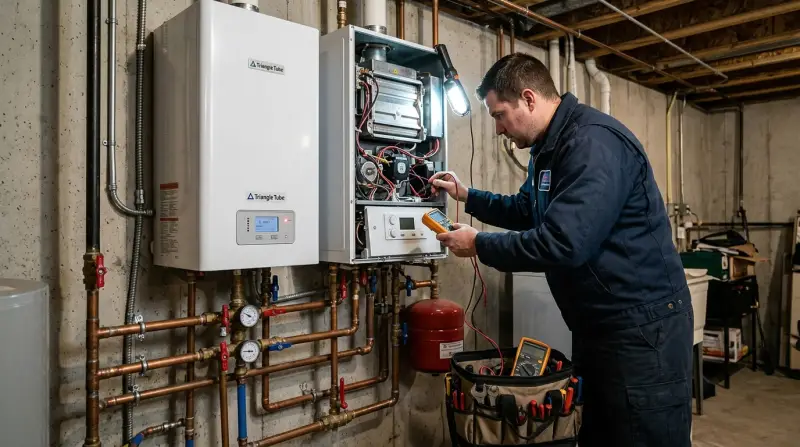
Triangle Tube boilers stand out for their condensing technology, compact size, and energy savings. They use stainless steel heat exchangers, which resist corrosion and increase lifespan. The most popular models—Prestige, Challenger, and Solo—offer reliable performance, but like any machine, they are not free from faults.
Compared to standard boilers, Triangle Tube models often need less floor space and use less gas. They also recover heat from exhaust gases, which saves energy. However, this advanced design means they are more sensitive to maintenance lapses and water quality.
Here’s a quick comparison between Triangle Tube boilers and standard boilers:
| Feature | Triangle Tube | Standard Boiler |
|---|---|---|
| Heat Exchanger Material | Stainless Steel | Copper/Steel |
| Efficiency | Up to 95% AFUE | 80-85% AFUE |
| Maintenance Needs | Medium/High | Low/Medium |
| Size | Compact | Bulky |
Common Triangle Tube Boiler Problems
Triangle Tube boilers have some unique problems. Knowing these issues can help you spot trouble early and avoid bigger repairs.
1. Ignition Failure
One of the most frequent complaints is ignition failure. This means the boiler fails to light and does not produce heat.
Causes:
- Faulty ignition electrode
- Gas supply interruption
- Dirty burner
Symptoms:
- Error code E04 or E01
- No hot water or heat
- Clicking sounds but no flame
Solutions:
- Clean the ignition electrode
- Check gas line for blockages
- Inspect burner for dirt or corrosion
2. Low Water Pressure
Low water pressure can stop your boiler from working or cause it to cycle on and off.
Causes:
- Leaks in the system
- Faulty pressure gauge
- Broken pressure relief valve
Symptoms:
- Error code E02
- Radiators cold at the top
- Boiler shuts down frequently
Solutions:
- Find and fix leaks
- Replace faulty gauge
- Top up water pressure using the filling loop
3. Heat Exchanger Issues
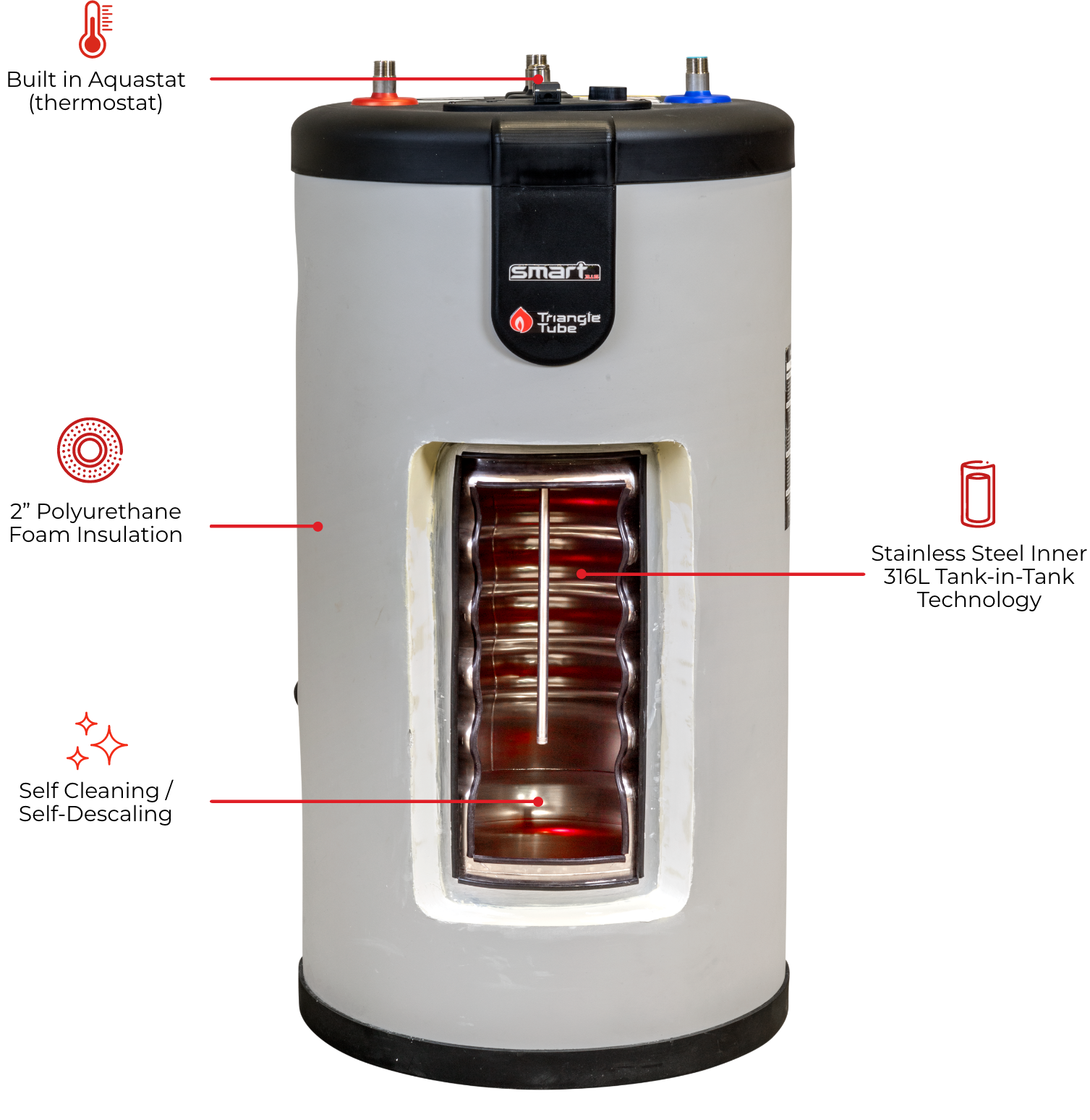
The heat exchanger is the heart of the boiler. Triangle Tube’s stainless steel exchanger is durable, but problems can develop.
Causes:
- Limescale buildup (especially in hard water areas)
- Corrosion from untreated water
- Blockages from debris
Symptoms:
- Strange noises (gurgling or banging)
- Poor heating performance
- Error codes E03 or E05
Solutions:
- Flush the system to remove scale
- Use water treatment chemicals
- Schedule regular maintenance
4. Pump Failure
The circulation pump moves hot water through your system. If it fails, you’ll notice uneven heating or no heat at all.
Causes:
- Air in the pipes
- Motor burnout
- Dirt or debris
Symptoms:
- Radiators not heating
- Pump making loud noises
- Error code E06
Solutions:
- Bleed air from system
- Replace pump if needed
- Clean pump and pipes
5. Sensor Problems
Triangle Tube boilers use multiple sensors for safety and performance. If a sensor fails, the boiler may shut down.
Common sensors:
- Temperature sensor
- Pressure sensor
- Flame sensor
Symptoms:
- Error codes specific to each sensor
- Boiler not responding to controls
- Overheating or shutting down
Solutions:
- Replace faulty sensors
- Check wiring connections
- Reset boiler after repairs
Error Codes And Their Meaning
Triangle Tube boilers have a digital display that shows error codes. These codes make diagnosis easier. Here are some of the most common codes:
| Error Code | Meaning | Possible Cause | Quick Fix |
|---|---|---|---|
| E01 | Ignition Failure | Electrode or gas issue | Clean electrode, check gas |
| E02 | Low Water Pressure | Leak or faulty gauge | Top up pressure |
| E03 | Heat Exchanger Fault | Scale or blockage | Flush system |
| E04 | Flame Detection Error | Sensor or gas supply | Replace sensor |
| E05 | Overheat | Blocked pipes, sensor failure | Check pipes, replace sensor |
| E06 | Pump Error | Pump failure or air lock | Bleed system, replace pump |
Diagnosing Triangle Tube Boiler Problems
When your Triangle Tube boiler stops working, the digital screen and error codes give clues. But not every problem is easy to solve. Here’s a step-by-step approach:
- Check Display: Look for error codes or warning lights.
- Inspect Water Pressure: Low pressure is a common reason for boiler shutdown.
- Listen for Sounds: Unusual noises can signal air in pipes, pump issues, or heat exchanger trouble.
- Test Heating: See if radiators are warm or cold.
- Check Gas Supply: Make sure the gas valve is open and the supply is steady.
- Look for Leaks: Even small leaks can lead to bigger failures.
Most problems can be spotted early if you know these signs. For example, if you hear banging noises, it could mean air in the system or a failing pump. If you see water under the boiler, a leak may be causing low pressure.

Preventing Boiler Problems
Prevention is always easier than repair. Triangle Tube boilers need regular maintenance to run smoothly. Here are some tips:
- Annual Service: Have a licensed technician check and clean your boiler once a year.
- Water Treatment: Use chemicals to prevent limescale and corrosion, especially if you have hard water.
- Bleed Radiators: Remove air from your heating system regularly.
- Check Pressure: Monitor water pressure monthly and top up when needed.
- Clean Filters: Some models have filters that should be cleaned every few months.
Neglecting maintenance can lead to expensive repairs. For example, failing to treat water can cause heat exchanger damage, which costs $500–$1,000 to fix. Regular servicing costs $100–$200 but can prevent these big bills.
Triangle Tube Vs Other Boiler Brands
Triangle Tube boilers are not the only option. Let’s compare them to some popular brands:
| Brand | Efficiency (AFUE) | Typical Warranty | Common Problems |
|---|---|---|---|
| Triangle Tube | 92–95% | 10 years (heat exchanger) | Ignition, pressure, sensor faults |
| Navien | 93–95% | 10–15 years | Heat exchanger leaks, error codes |
| Weil-McLain | 88–94% | 10 years | Pump failures, water leaks |
| Burnham | 82–90% | 5–10 years | Corrosion, control board faults |
Triangle Tube’s stainless steel exchanger is a big advantage. However, their boilers are more sensitive to water quality and regular maintenance. Navien and Weil-McLain also offer high efficiency but may have different common issues.
Real-world Examples And Non-obvious Insights
Many homeowners miss two important facts:
- Water Quality Matters: Hard water can destroy your boiler’s heat exchanger. Using a water softener or treatment can extend the boiler’s life by years.
- Proper Sizing Is Critical: If your boiler is too small for your home, it will run constantly and break down faster. Always check your home’s square footage before buying.
For example, a family in New Jersey installed a Triangle Tube Prestige but skipped water treatment. Within two years, the heat exchanger failed due to limescale. After replacing the exchanger and adding water treatment, their boiler ran smoothly.
Another common mistake: ignoring error codes. Many people reset their boiler without checking the cause. This can lead to repeated shutdowns and bigger damage.
When To Call A Professional
Some problems can be fixed with basic tools, but others need a licensed technician. You should call a pro if:
- You smell gas near the boiler
- Water is leaking from internal parts
- Error codes keep appearing after resets
- Boiler makes loud, strange noises
Triangle Tube boilers have complex electronics and safety controls. A qualified technician can diagnose issues quickly and prevent accidents.

Credit: amkglobalgroup.com
Frequently Asked Questions
What Does Error Code E01 Mean On My Triangle Tube Boiler?
E01 usually means ignition failure. The boiler tried to light but did not detect a flame. This could be caused by a dirty ignition electrode, gas supply interruption, or faulty wiring. Cleaning the electrode or checking the gas line can often fix the problem.
Why Does My Triangle Tube Boiler Lose Pressure Frequently?
Frequent pressure loss points to leaks in the system or a broken pressure relief valve. Check all pipes and radiators for water. If you find none, the internal valve may need replacement. Topping up the pressure is a temporary solution; finding and fixing the leak is critical.
How Often Should I Service My Triangle Tube Boiler?
Experts recommend annual servicing. This keeps the boiler efficient and safe. A technician will clean the heat exchanger, check sensors, and test safety controls. Skipping maintenance can void your warranty and cause expensive breakdowns.
Is It Safe To Reset My Boiler After An Error Code?
It’s usually safe to reset the boiler once after a minor error, like low pressure. But if the same code appears again, do not keep resetting. Repeated resets can hide bigger problems and risk damage. Always investigate the cause before resetting.
Are Triangle Tube Boilers Good For Hard Water Areas?
Triangle Tube boilers can work in hard water areas, but you must use water treatment chemicals or a softener. Hard water causes limescale, which damages the heat exchanger. Proper treatment will protect your boiler and keep it running longer.
Keeping your Triangle Tube boiler healthy means regular checks, quick responses to error codes, and smart prevention. If you want more details on boiler maintenance, visit the official Triangle Tube website for expert guidance.
A reliable boiler is key to comfort and safety at home. With the right knowledge and care, you can avoid most problems and enjoy worry-free heating for years.