
The most common reason for a Galanz mini fridge not working is a lack of power reaching the unit, which is usually resolved by resetting the circuit breaker or checking the wall outlet. Before you assume the cooling system has failed, inspect the plug and the power source. If the fridge is plugged in but the light is off and there’s no sound, the issue is almost always electrical.
Reasons your Galanz mini fridge stopped working
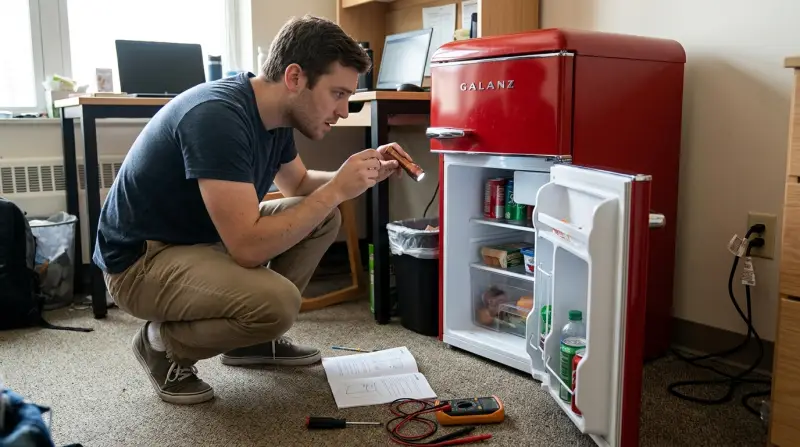
Mini fridges often stop cooling because of simple power interruptions or airflow issues rather than internal mechanical failure. The most frequent cause is a tripped GFCI outlet or a blown circuit breaker. If the power cord is loose or the outlet is faulty, the compressor won’t receive the electricity needed to start.
Another common cause involves the environment around the unit. If the fridge is pushed too close to a wall, heat can’t escape from the condenser coils. This causes the compressor to overheat and shut down to prevent permanent damage. You should ensure there’s at least four inches of space on all sides of the unit for proper ventilation.
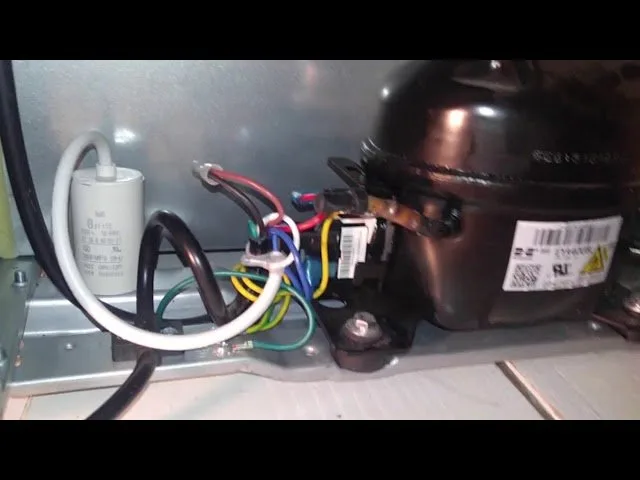
Finally, ice buildup on the cooling plate can block air circulation. If the internal temperature is set too low or the door seal is worn, moisture enters and freezes. This ice layer acts as an insulator, preventing the cold air from reaching the rest of the fridge. This varies by model — check the label for your specific temperature settings. If the unit is making a loud clicking sound, the start relay may be failing. This is a technical part that requires professional service. Never attempt to open the rear panel to access electrical components, as a capacitor can hold a lethal charge even when the unit is unplugged.
Check the power supply
This fix is for anyone whose unit shows no signs of life, such as no light or no hum from the compressor. First, verify that the outlet is working by plugging a small lamp or phone charger into the same socket. If the lamp doesn’t turn on, you have a power issue at the wall, not the fridge. Go to your home’s electrical panel and look for a flipped breaker switch. If you find one, flip it back to the “on” position.
If the outlet works, inspect the power cord for any signs of fraying or damage. Ensure the plug is pushed firmly into the socket. If you use an extension cord, remove it immediately. Extension cords often can’t handle the power draw of a compressor, which leads to voltage drops and prevents the motor from starting.
A common mistake is assuming the outlet is live just because a light turns on. Refrigerators require a dedicated circuit. If your outlet is a GFCI type, check if the “reset” button is popped out. Press it firmly until you hear a click. If the button refuses to stay in, the outlet itself is faulty and requires a licensed electrician to replace it.
If the fridge still fails to power on after these steps, the internal fuse or control board may be damaged. This is a job for a qualified appliance technician. Don’t attempt to repair internal wiring yourself, as this can void your warranty and poses a significant electrical risk. If the unit is still under warranty, contact the manufacturer for a repair center recommendation.
Improve the airflow
This fix is for fridges that have power but feel warm inside. Heat must move away from the back of the fridge for the cooling cycle to work. If your unit is in a tight corner or inside a cabinet, the heat gets trapped and the compressor will cycle off to protect itself. Pull the unit at least four to six inches away from the wall to allow air to flow freely over the condenser coils.
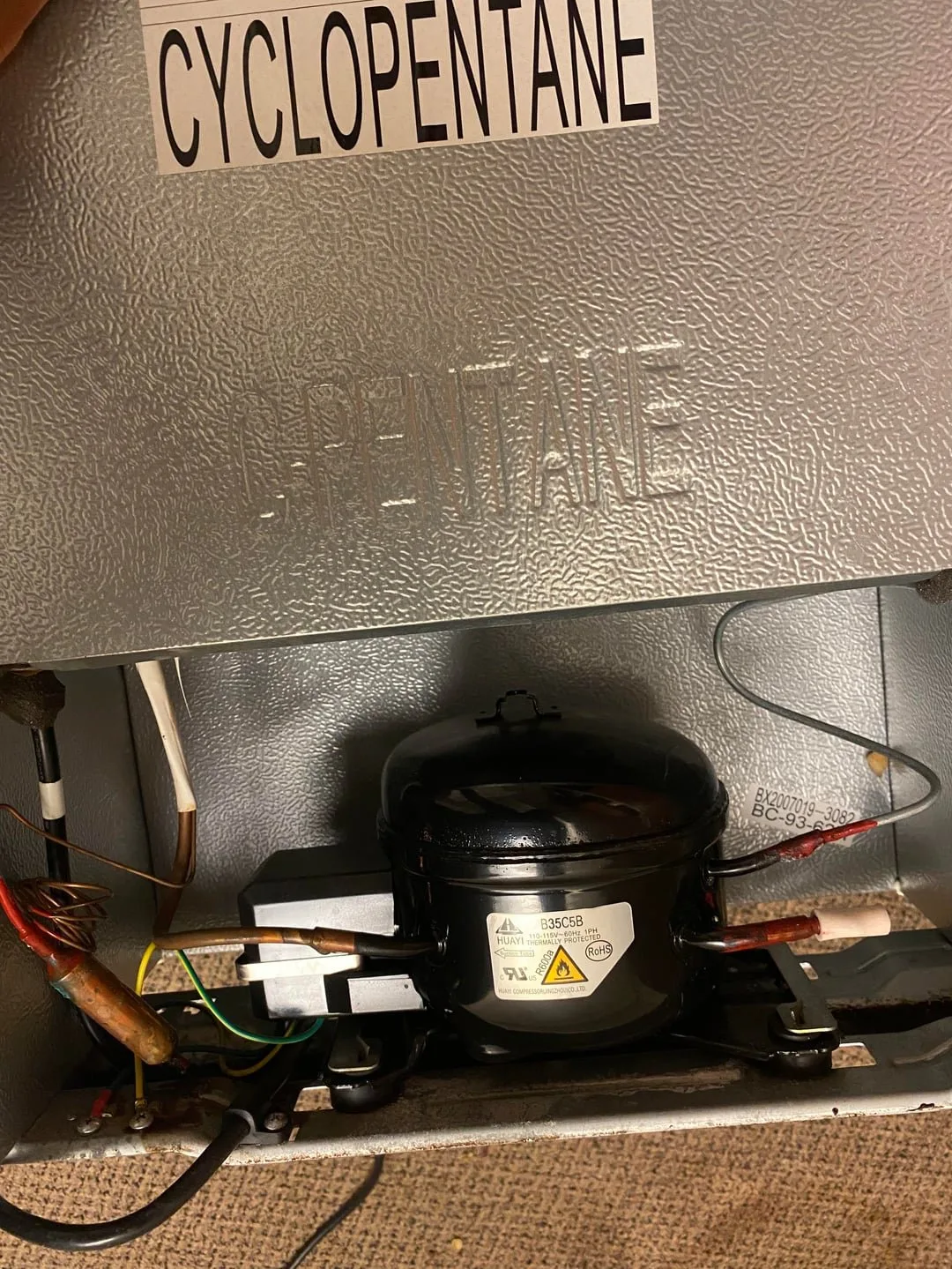
If the coils are covered in dust or pet hair, use a soft brush or a vacuum hose to gently clean them. A layer of dust works like a blanket, trapping heat inside the system. You should also check the door gasket. If the rubber seal is cracked or doesn’t stick to the frame, cold air leaks out and the compressor runs continuously, which leads to overheating. To test the seal, place a piece of paper in the door and close it; if you can pull the paper out with almost no resistance, the seal is loose and needs replacement. If the compressor is clean and the unit has space but still fails to cool, the coolant system may have a leak. Refrigerant leaks require a certified professional to fix according to EPA guidance on appliance disposal and repair.
Defrost the interior
This fix is for units that have ice buildup inside the cabinet. If the cooling plate is hidden under a layer of frost, the fridge can’t cool your food properly. Empty the fridge and turn the temperature dial to the “off” position or unplug the unit. Leave the door wide open and place a towel or tray at the bottom to catch the melting water.
Don’t use a knife, screwdriver, or any sharp tool to chip away the ice. This is a common mistake that often results in a punctured cooling line, which turns a simple fix into a total loss of the appliance. Let the ice melt naturally. This process can take several hours depending on the thickness of the ice and the room temperature. Once the ice is completely melted, wipe the interior dry with a soft cloth. When you turn the unit back on, check your manual for the correct temperature setting. If you set the dial too high, the compressor runs too much and moisture builds up again. If you find the fridge develops thick ice again within a few days, the temperature setting may be too low, the door seal is likely failing, or the door is being left open too often. If you aren’t sure how to replace a seal, contact the manufacturer’s support line for parts.
What not to do
-
Don’t use a hair dryer to melt ice: The concentrated heat can warp the plastic interior or melt the rubber door gaskets. Once a gasket loses its shape, it will never seal properly again, forcing the compressor to run nonstop until it burns out.
-
Don’t force the temperature dial: If the dial feels stuck, don’t use pliers for leverage. You’ll likely snap the fragile internal thermostat stem. This mistake turns a simple cleaning task into a permanent mechanical failure that requires a full control unit replacement.
-
Don’t bypass the thermostat: Some try to wire the compressor to run constantly to force a deep freeze. This always leads to motor burnout and creates a serious fire hazard.
-
Don’t store the fridge in a garage or shed: Most mini fridges lack the insulation for extreme environments. If the ambient temperature drops below 50°F or exceeds 90°F, the refrigerant cycle fails. If you must store it outside, ensure the space remains climate-controlled to prevent permanent system damage.
How to stop it happening again
Regular maintenance ensures your fridge runs efficiently and lasts longer. The following table outlines how to manage your unit for the best performance.
| If you’re doing this | Do this instead | Why |
|---|---|---|
| Leaving the door open | Close it immediately | Prevents moisture and ice build-up |
| Using an extension cord | Plug directly into the wall | Ensures consistent voltage for the motor |
| Pushing against the wall | Keep 4-6 inches of space | Allows heat to escape the coils |
| Storing hot leftovers | Cool food to room temp | Prevents the fridge from overworking |
Most owners fail by ignoring the condenser coils. If you own pets, vacuum these coils regularly to clear trapped hair. Dust buildup acts as an insulator, forcing the compressor to run longer per cycle.
Check your door seals using the dollar bill test. Close the door on a bill; if it slides out with zero resistance, your gasket is failing. A loose seal is a cheap part to replace and prevents wasted electricity.
If you hear a persistent clicking sound, unplug the unit immediately. This indicates a failing start relay, which requires professional service.
Frequently asked questions
Can I fix a Galanz mini fridge if it isn’t cooling?
You can fix minor cooling issues by cleaning the coils, removing ice, and ensuring proper airflow. If the compressor runs but the fridge stays warm, the thermostat or refrigerant may be faulty. Internal mechanical repairs require a professional technician, especially if the unit is under warranty.
Why is my mini fridge making a loud clicking sound?
A clicking sound usually indicates that the start relay is failing to engage the compressor motor. This is a common electrical component failure that prevents the unit from cooling. Because this involves high-voltage components, you should unplug the unit and contact a professional repair service.
How long should a mini fridge last?
Most mini fridges last between five and ten years with proper care. The lifespan depends on door usage and keeping the unit in a clean, temperature-controlled environment. If you maintain the coils and door seal, you can expect the unit to reach the upper end of that range.
Is it safe to use a mini fridge with a damaged seal?
You should replace a damaged fridge seal because it allows cold air to escape and warm air to enter. This causes the compressor to run constantly, leading to premature wear and higher electricity bills. Check the seal for cracks and order a replacement part from the manufacturer.
What happens if I puncture the cooling plate?
Puncturing the cooling plate causes refrigerant gas to leak, which renders the fridge permanently broken. There’s no simple patch for a punctured line, meaning the compressor will never produce cold air again. Never use sharp tools to remove ice to avoid this irreparable damage.
Final Thoughts
If your fridge still won’t cool after these checks, it’s likely time to contact the manufacturer’s support team for a professional assessment. They’ll help you determine if a specific part is faulty or if you’re eligible for a replacement. Don’t hesitate to reach out, as they’re there to assist you.