
A dirty condenser coil or blocked vent is the most common reason for a Galanz Mini Fridge Not Cooling, as airflow restriction prevents heat release. If the fridge runs but stays warm, check for dust buildup or ensure the sides have three inches of space for ventilation. If the unit is silent and the light is off, the issue is likely a power supply failure.
| Cause | How common | How to confirm it | Fix it yourself? |
|---|---|---|---|
| Dirty condenser coils | Very common | Visually inspect for dust | Yes |
| Blocked air vents | Common | Check for interior clutter | Yes |
| Faulty door gasket | Common | Paper test on seal | Yes |
| Thermostat setting | Frequent | Check dial for position | Yes |
| Compressor failure | Rare | Listen for clicking sound | No |
| Failed start relay | Rare | Shake for rattling noise | No |
Dirty coils preventing your fridge from cooling
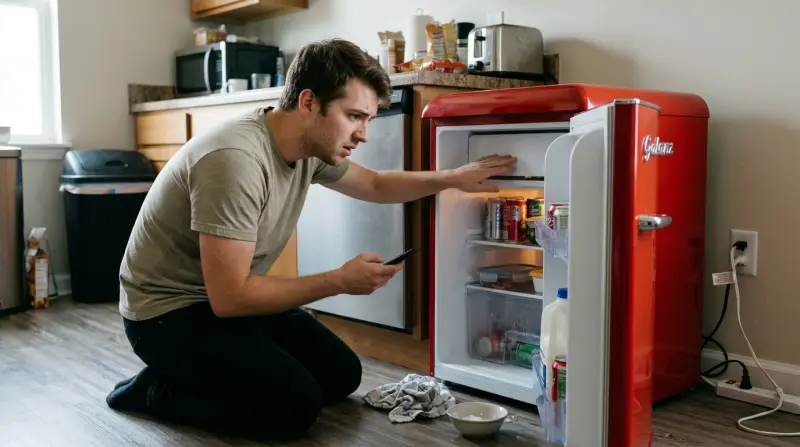
The condenser coils are responsible for releasing heat from inside the fridge into the room. When these coils get covered in a thick layer of dust or pet hair, they act like an insulated blanket, trapping heat inside the cooling system instead of letting it escape. The fridge will struggle to reach the set temperature, causing the compressor to run constantly while the interior remains warm.
To confirm this, unplug the unit and look at the back or bottom of the fridge. You’ll see a series of metal tubes or a grid. If you see a heavy grey layer of dust, this is your culprit. Use a soft brush or a vacuum attachment to gently clean the coils. Be extremely careful not to bend the delicate fins or tubes, as this can cause a coolant leak. This process usually takes about fifteen minutes and requires no parts. If you aren’t sure if the coils are clean enough, look for a clear view of the metal surface beneath the dust.
A common mistake is using a stiff wire brush, which can scratch the protective coating on the coils and lead to premature corrosion. Stick to soft nylon bristles or a vacuum hose with a brush head.
This isn’t for you if you have a built-in model where the coils are sealed behind a panel that requires tools to remove. If you have to unscrew a back plate, stop there; internal components like capacitors can hold a dangerous electrical charge even when the power is off. If your coils are clean but the fridge is still warm, the issue is likely a failed condenser fan rather than a maintenance problem.
Poor airflow around the exterior
A mini fridge needs space to breathe, and pushing it flush against a wall or into a tight cabinet prevents the heat exchange process from working. If the hot air can’t move away from the back of the appliance, it simply recirculates, making the cooling cycle ineffective. You can tell if this is the issue by placing your hand near the back of the fridge while it’s running; if the air feels stagnant or extremely hot, the unit is suffocating.
To fix this, pull the fridge away from the wall to provide at least three inches of clearance on all sides. Ensure that the top of the fridge isn’t covered by heavy items or decorative cloths that block the heat vents. If you have a model with a back-mounted cooling fan, ensure the fan blades aren’t obstructed by loose wires or debris. This fix takes about five minutes and costs nothing.
A common mistake is placing the unit on a thick carpet, which restricts airflow from the bottom. If your fridge has bottom-mounted intake vents, the carpet fibers act as insulation, trapping heat and forcing the compressor to run continuously. This leads to a premature burnout of the motor. If the floor is carpeted, place a rigid piece of plywood or a plastic mat under the unit to create a stable, open air gap.
If you move the unit and it still doesn’t cool after two hours, the issue isn’t airflow. This varies by model — check the label on the back or inside the door for the specific clearance requirements recommended by the manufacturer. If your manual specifies a larger gap for your particular version, follow those instructions instead of the general rule. If the unit continues to fail, you may be dealing with a mechanical fault that requires a professional.
Damaged door seal integrity

A rubber door gasket creates an airtight seal that keeps cold air inside and warm, humid air outside. When the gasket becomes cracked, warped, or loose, the compressor works overtime to fight the constant influx of heat. This inefficiency spikes your monthly electricity bill by as much as 10% and risks premature motor burnout.
You can confirm a bad seal by performing the paper test. Close the door on a single strip of paper; if you can pull the paper out with almost no resistance, the seal is weak. Test at six-inch intervals around the entire perimeter. If the paper slides out easily in one spot but holds firm elsewhere, you likely have a localized hinge alignment issue rather than a failed gasket.
To fix a loose gasket, try cleaning it with warm water and mild soap to remove sticky residue that might be preventing a tight fit. If the gasket is warped, use a hair dryer on a low setting to gently heat the rubber, then reshape it with your hands. This process takes about ten minutes.
If the seal is physically torn or brittle, it must be replaced. A common mistake is buying a universal seal; these rarely provide the necessary tension. Always order a replacement part specific to your exact model number.
If the door is misaligned, you must adjust the hinges before installing a new gasket. If the door hangs low, the new seal will fail within weeks due to uneven pressure. If you’re uncomfortable using tools on the door frame, contact a professional to avoid damaging the finish or the alignment.
Other reasons for a Galanz mini fridge not cooling
-
Incorrect thermostat setting: Check if the dial was accidentally bumped to a warmer position or the “off” setting during cleaning.
-
Overloading the shelves: Packing the fridge too tightly prevents cold air circulation. Remove excess items to allow for better airflow. If you can’t fit a hand between items, the unit is likely overstuffed.
-
Compressor relay failure: If you hear a faint clicking sound every few minutes but the motor never starts, the relay is likely broken. This is a cheap part that can often be replaced by the owner.
-
Refrigerant leak: If the fridge runs constantly but never cools and you hear a hissing noise, this indicates a sealed system leak. Most modern units aren’t worth the cost of a professional repair for this specific issue, as it often exceeds the value of the appliance.
What a fix usually involves
Most DIY fixes for a mini fridge, such as cleaning coils or adjusting the thermostat, require only basic household tools like a vacuum, a soft cloth, or a screwdriver. These fixes cost nothing but your time.
If a part is needed, such as a new door gasket or a start relay, the cost is usually a small part of the price of a new unit. To get an accurate estimate, find the model number on the sticker inside the fridge and search for the part on the official Galanz website.
A common mistake is assuming a warm fridge always needs a new compressor. Often, the issue is simply a buildup of dust on the condenser coils, which prevents heat dissipation. If the coils are clear but the unit still won’t cool, listen for a clicking sound. This usually points to a faulty start relay, a cheap part that takes ten minutes to swap.
If the problem involves the compressor or a refrigerant leak, the repair is often expensive and can approach the cost of a new mini fridge. In these cases, it’s more practical to replace the unit than to pay for a professional technician. Always check your warranty status first. If your unit is under coverage, contact support before attempting repairs that might void your rights.
Frequently asked questions
Can I leave my mini fridge on 24/7?
Yes, mini fridges are designed to run continuously to maintain a safe temperature for food and drinks. If your unit isn’t cooling properly, running it 24/7 will only increase your electricity bill without reaching the desired coldness. Ensure the unit has enough space around it to prevent the compressor from overheating during long periods of operation.
Why does my mini fridge make a clicking noise?
A clicking sound often indicates that the start relay is struggling to kick-start the compressor. This is a mechanical issue that can often be diagnosed and replaced by the owner. If the fridge remains warm while making this sound, stop using the unit and unplug it to prevent further damage to the compressor motor.
Is it safe to use a fridge that isn’t cooling?
No, a fridge that can’t maintain a temperature of 40°F or below isn’t safe for storing perishable food or medicine. Bacteria grow rapidly between 40°F and 140°F, which can lead to foodborne illness. If your fridge isn’t cooling, move all perishable items to a working refrigerator immediately and don’t store them in the broken unit.
How long should it take to cool down after plugging in?
It typically takes about four to six hours for a mini fridge to reach its target temperature after being plugged in for the first time. If you have recently moved the fridge, let it sit upright for at least twenty-four hours before plugging it in to allow the refrigerant oils to settle back into the compressor.
Does the environment temperature matter?
Yes, mini fridges are generally designed for indoor use in temperature-controlled rooms. If you place your fridge in a garage or shed where the ambient temperature is very high or very low, the internal cooling system will struggle to function correctly. Keep the unit in a cool, dry place to ensure it performs within its intended specifications.
What happens if I overfill the mini fridge?
Overfilling the fridge blocks the internal air vents, which prevents cold air from circulating evenly throughout the cabinet. This causes some areas to stay warm while others might freeze. To ensure proper cooling, keep items at least an inch away from the back wall and avoid blocking the small fan or vent located inside the unit.
Final Thoughts
If these simple fixes don’t bring back the chill, it’s time to look closer at the internal thermostat or the compressor. You shouldn’t hesitate to contact the manufacturer’s support team if the unit’s still under warranty. They’ll help you decide whether a professional repair is worth it or if it’s time for a replacement.