
A common reason for a Hotpoint freezer not freezing is a build-up of ice on the evaporator coils that prevents cold air from circulating properly. This often happens because the automatic defrost system isn’t working, or the door seal has a leak that lets warm, moist air enter the cabinet. You should check the door gasket for gaps first, as this is the simplest fix. If the door closes tightly, the issue might be a faulty defrost timer or heater, which requires a professional to diagnose safely.
Reasons your Hotpoint freezer stopped freezing
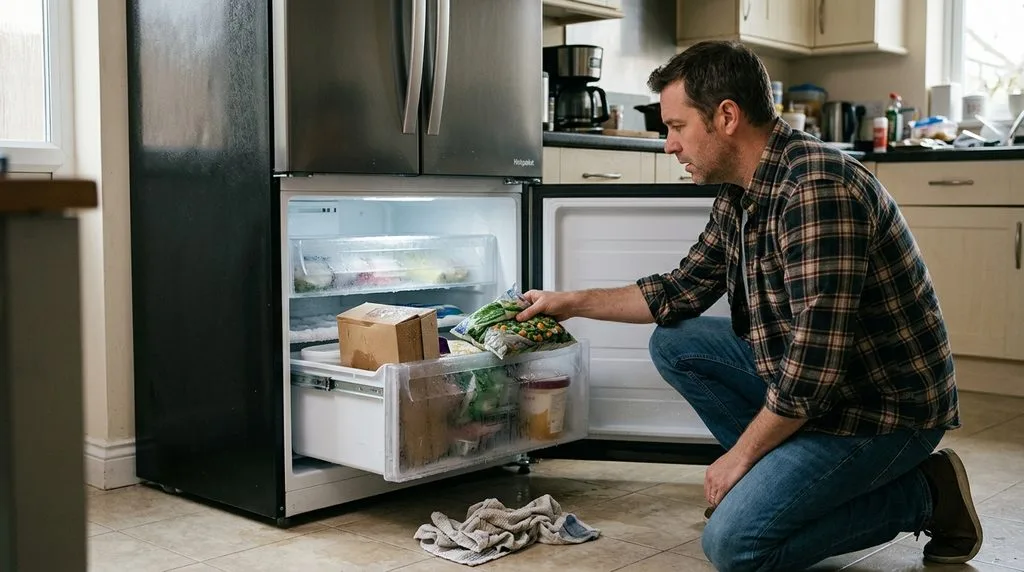
Freezers rely on a delicate balance of airflow and temperature control to keep items frozen. When this balance breaks, the temperature rises quickly. The most frequent cause is a failed defrost cycle. Inside your unit, an evaporator coil cools the air. Over time, frost naturally forms on these coils. A heating element is supposed to turn on at regular intervals to melt this ice. If that heater, the defrost thermostat, or the timer fails, ice builds up until it blocks the fan. When the fan can’t move air, the freezer warms up.
Another frequent cause is a bad door seal. Your freezer has a magnetic gasket that creates an airtight bond between the door and the frame. If this rubber strip becomes stiff, cracked, or misaligned, warm air from your kitchen leaks into the freezer. This forces the compressor to run constantly while simultaneously creating excess ice on the coils, which eventually chokes the cooling process.
Check your thermostat setting to ensure it’s correctly calibrated. If the control is set too high or has drifted, the compressor may not run long enough to maintain the required temperature. Manufacturers recommend keeping the freezer at 0°F to ensure food safety and quality.
Check the door seal integrity
If your freezer door doesn’t seal perfectly, cold air escapes and warm, humid air enters. This is a common point of failure. To check the seal, close the door on a single sheet of paper. Try to pull the paper out while the door is shut. If it slides out with no resistance, your gasket isn’t sealing properly.
If you find a gap, you can often fix it by cleaning the gasket with warm water and mild soap. Dirt and sticky residue can prevent a tight seal. If the rubber is cracked, torn, or permanently flattened, you must replace the gasket entirely. This is a DIY-friendly task on most models, but you need the exact part number from your unit’s serial plate. If you aren’t comfortable removing the door or the trim, contact a professional appliance technician.
This fix isn’t for you if the door hinges are bent or misaligned. If the door sits crooked on the cabinet, a new gasket won’t solve the air leak. In that case, you need to adjust the hinge screws to square the door. This varies by model — check the label inside your door for specific adjustment instructions.
Clear the airflow path
A freezer can’t function if the internal vents are blocked. People often pack their freezers too full, which prevents cold air from circulating between items. If you have boxes or bags pressed directly against the back wall or the air vents, the air can’t reach the rest of the cabinet.
Start by removing all items from the freezer. Look for the air vents, usually located on the back or side wall. If you see ice blocking these vents, you must defrost the unit. Turn the freezer off and leave the door open for at least 24 hours. Place towels on the floor to catch the melting water. Once all the ice is gone, dry the interior completely before turning it back on.
Maintain a two-inch gap between your food and the rear wall to ensure proper convection. If you notice frost buildup specifically near the vents, check the door gasket for cracks. A failing gasket lets warm, humid air inside, which immediately freezes upon contact with the cold vent.
If the freezer still doesn’t cool after a full defrost, the issue is likely internal. Don’t attempt to take off the back panel inside the freezer to reach the coils yourself. The evaporator fan and the coils are delicate, and the electrical components behind the panel are dangerous. A capacitor can hold a lethal charge even when the unit is unplugged. This is the point where you must call a qualified repair service to avoid injury or damage to the cooling system. Attempting a DIY repair here often voids your manufacturer warranty and risks a permanent compressor failure.
Test the temperature control

If the freezer is running but not getting cold enough, the thermostat might be faulty or set incorrectly. Start by ensuring the dial is in the recommended range. If it’s already set correctly, move it to the coldest setting for 12 hours. If the temperature drops, the thermostat is working, but it was just set too low.
If the freezer remains warm on the coldest setting, the thermostat might be broken. Verify this by listening for the compressor. If you hear the motor running constantly but the interior stays warm, the system is likely low on refrigerant or the compressor is failing. If the motor never turns on, the thermostat might not be sending the signal to start.
A common mistake is assuming a warm freezer always signals a mechanical failure. Check the door gasket first. If you can slide a piece of paper into the seal and pull it out with no resistance, the seal is compromised. This lets cold air escape, forcing the thermostat to run the compressor until it burns out.
This fix is for those comfortable using a basic multimeter to test for continuity, but you must be extremely cautious. If you don’t have experience with electrical repairs, don’t attempt to test the thermostat or the start relay. These parts involve mains voltage, and a mistake can cause a short circuit or personal injury. If you have any doubt, hire a licensed professional. They have the tools to test the system without risking a voided warranty or a safety hazard.
What not to do
Never use a hair dryer to melt ice on the coils. High heat can warp the plastic interior liners or melt the delicate wiring insulation, leading to permanent damage that’s impossible to reverse.
Don’t use a knife or sharp tool to chip away ice. You risk puncturing the hidden refrigerant lines, which causes the system to leak and fail completely. This mistake turns a simple maintenance task into a total loss of the appliance.
Never bypass the defrost timer or thermostat. These parts are critical safety devices. Bypassing them causes the heater to run indefinitely, which can melt the internal components or create a severe fire hazard.
Don’t keep the freezer running if you smell burning or notice smoke. Unplug the unit immediately and contact a professional. This indicates an electrical fault that’s far beyond a simple DIY fix. If the compressor is hot to the touch, you have already pushed the system too far. Always prioritize safety over saving a few hours of defrost time.
How to stop it happening again
Regular maintenance ensures your freezer runs efficiently and prevents the cooling system from overworking. You should aim to keep the unit at least 75% full for thermal mass, but never block the internal vents. If you can’t see the back wall, you have gone too far.
| If you’re doing this | Do this instead | Why |
|---|---|---|
| Overstuffing the freezer | Leave space for air | Airflow is required for cooling |
| Leaving the door open | Close it immediately | Warm air creates excess frost |
| Ignoring frost build-up | Defrost periodically | Ice acts as an insulator |
| Cleaning with harsh chemicals | Use warm, soapy water | Chemicals can damage the seal |
Most owners fail by ignoring the rubber gasket. If a dollar bill slides out easily when the door is closed, your seal is compromised. Replace the gasket immediately to prevent a permanent motor burnout.
Frequently asked questions

Can I fix a Hotpoint freezer not freezing myself?
You can perform basic checks like inspecting the door gasket, clearing blocked vents, and ensuring the unit isn’t overfilled. These steps often resolve common cooling issues. However, avoid attempting repairs on the electrical system, compressor, or sealed refrigeration unit, as these require specialized tools and carry significant safety risks.
Why is my freezer running but not freezing?
A freezer failing to cool is often caused by a blocked evaporator fan or dust-covered condenser coils. When airflow is restricted, the internal temperature rises even if the compressor runs. Check the door seal for leaks and inspect the back vents for ice buildup, which may indicate a failing defrost system.
How long should a freezer take to freeze after a defrost?
A freezer typically takes 12 to 24 hours to reach its target temperature after a manual defrost. This duration depends on ambient room temperature and the amount of food stored inside. Avoid adding warm items immediately, as this significantly delays cooling and prevents the freezer from reaching 0°F efficiently.
Is it safe to eat food if the freezer stopped freezing?
Perishable food is unsafe if the freezer temperature has exceeded 40°F for more than two hours. Bacteria grow rapidly between 40°F and 140°F, posing a significant health risk. You may refreeze items that still contain ice crystals, but discard any food that has thawed completely and feels warm to the touch.
What happens if I ignore the ice build-up?
Ignoring ice buildup allows frost to thicken until it obstructs the internal fan, preventing cold air circulation. Once the fan stops, internal temperatures rise and food begins to thaw. Persistent ice accumulation also strains the compressor, potentially leading to expensive mechanical failure that requires professional repair or unit replacement.
Final Thoughts
If your food still isn’t staying solid after checking the seal, don’t wait for things to spoil. It’s best to call a local repair technician who can test the internal components for you. They’ll quickly find the source of the problem so you won’t have to worry about your groceries anymore.