
The most common reason for a Hotpoint Washer Not Draining is a blockage in the drain pump filter or the drain hose. You can resolve this by clearing debris from the pump filter or straightening a kinked hose, which restores water flow to your home’s plumbing system. This issue often stems from small objects like coins or hairpins that bypass the drum and get stuck in the pump assembly.
Why your Hotpoint washer not draining occurs
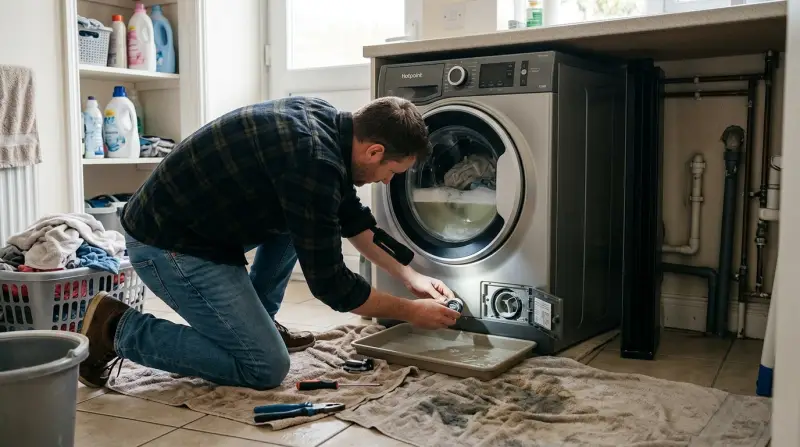
A washing machine stops draining when the path for water to exit is physically blocked or the pump itself can’t spin. When the pump is obstructed by small items like buttons, coins, or lint, the water remains trapped in the drum. This is a mechanical failure, not a software glitch.
Another frequent cause is a restriction in the drain hose. If the hose is bent, crushed, or pushed too far into the standpipe, the water can’t exit efficiently. A common mistake is inserting the hose too deep into the wall drain, which can cause siphoning if the hose end is lower than the water level in the drum. You should ensure the hose sits loosely in the pipe with an air gap around it.
In some cases, the problem is the drain pump motor. If the motor fails, it won’t move the water, regardless of whether the path is clear. You can distinguish a motor failure from a blockage by listening to the cycle. If the pump remains silent during the drain phase, the motor has likely burned out. If it hums or vibrates but the water stays put, you’re dealing with a physical obstruction.
You should also consider the height of your drain hose. If the hose exit is lower than the water level in the drum, the machine will siphon water out prematurely. If it’s higher than 96 inches, the pump lacks the pressure to push the water over the top. If you notice a loud grinding noise, stop the cycle immediately to prevent the motor from burning out.
Clear the drain pump filter
This fix is for users who notice water sitting in the bottom of the drum after a cycle. First, turn off the power at the wall outlet. Place a shallow tray or several towels on the floor in front of the machine, as water will spill out when you open the filter cover. Locate the small door at the bottom front of your washer. Open the door and slowly unscrew the filter cap by turning it counter-clockwise.
As the water drains into your tray, check for coins, hairpins, or fabric clumps. If the filter is stuck, don’t force it; gently wiggle it until it loosens. Once removed, rinse the filter under a tap to remove all gunk. Inspect the pump chamber inside the machine for any remaining debris that might prevent the impeller from spinning.
This isn’t for you if you can’t safely maneuver the machine or if you have a physical condition that makes lifting the heavy filter cap difficult. If you find the pump housing is cracked or the impeller is broken, you must call a professional technician. Never attempt to dismantle the motor assembly yourself. Once clean, screw the filter back in firmly to prevent leaks. If the machine drains after this, the blockage was the culprit.
Straighten and check the drain hose
A kinked or blocked hose is a common mistake that costs time and water damage. This fix is for when the filter is clean but the machine still holds water. Start by pulling the washer away from the wall to see the back. Check the corrugated gray drain hose for any sharp bends or heavy objects resting on top of it.
If the hose is kinked, straighten it out so the water has a clear path. Next, disconnect the end of the hose from your standpipe or sink drain. Look inside the hose for a blockage. If you can’t see through it, use a long, flexible brush to push out any built-up lint or debris.
A critical trade-off here is the height of the hose. If the hose is pushed too deep into the standpipe, it can create a siphoning effect that ruins the wash cycle. Ensure the hose end is inserted no more than 6 inches into the pipe. If you suspect the internal hose connecting the drum to the pump is blocked, this requires removing the front panel. Only a qualified technician should perform this, as it involves internal wiring and potential water exposure to electrical components. If the drain hose is damaged or split, it must be replaced with a manufacturer-approved part to avoid flooding your laundry room.
Inspect the drain pump motor
This fix is for when you have cleared the filter and hose but the machine still refuses to empty. You’ll need to listen closely to the machine during the drain cycle. If you hear a low humming sound but no water moves, the pump motor is likely seized or burnt out.
If you’re comfortable with basic tools, you can check if the pump impeller spins freely. This requires removing the lower front panel or the back access panel. If the impeller doesn’t turn when you push it with a screwdriver, the pump is jammed or broken. This is a clear limit: if the motor itself is dead, no amount of cleaning will fix it.
A common mistake is assuming the pump is fine because it hums. That sound often indicates the motor is receiving power but lacks the torque to turn the blades. If the impeller spins freely by hand but refuses to move under power, the internal windings have failed. You must replace the entire pump assembly in this case.
If you aren’t experienced with appliance repair, stop here. A capacitor can hold a lethal charge even when the machine is unplugged, and internal electrical work is dangerous. Contact a professional service technician to confirm if the pump needs a replacement. If the pump is spinning but still not draining, the issue might be a faulty pressure switch or a control board error, which also requires professional diagnostic tools. This isn’t for you if you have no experience with internal appliance parts or electrical safety protocols.
What not to do
Don’t pour harsh chemical drain cleaners into the washing machine drum. These caustic agents degrade rubber gaskets and melt plastic internal pump housings within minutes.
Never force a stuck drain pump filter cap with pliers. The plastic handle is brittle; snapping it renders the filter impossible to remove or seal, forcing a total pump replacement.
Don’t ignore a grinding sound. This noise indicates a hard object, such as a coin or screw, is striking the impeller. Running even one more cycle will shatter the plastic vanes and destroy the motor.
Never bypass the door lock mechanism to manually drain the machine while it remains plugged in. This creates a lethal risk of electrical shock, as water and live current often meet in the pump cavity.
Don’t assume the pump is broken before checking the drain hose for kinks or clogs. If the drain hose sits more than 96 inches above the floor, the pump lacks the head pressure to push water out. In this case, the machine will fail to drain despite having a perfectly functional motor.
Finally, avoid using excessive detergent. Oversudsing creates a ‘suds lock’ that prevents the pump from moving water effectively, often mimicking the symptoms of a mechanical failure.
How to stop it happening again
To keep your machine draining, check the filter periodically according to your owner’s manual. and ensure your laundry habits prevent small items from entering the pump.
| If you’re doing this | Do this instead | Why |
|---|---|---|
| Leaving coins in pockets | Empty pockets before washing | Prevents pump impeller jams |
| Overloading the machine | Wash smaller, balanced loads | Allows water to circulate freely |
| Using too much detergent | Use the recommended amount | Reduces soap scum buildup in hoses |
A common mistake is assuming a “clean” machine needs no maintenance. If your clothes emerge smelling musty or damp, the filter is likely already obstructed by trapped debris. Check the drain hose for kinks every time you pull the machine away from the wall. If the water drains slowly despite a clear filter, the blockage has moved deeper into the house plumbing. In that case, stop using the machine immediately to prevent a pump burnout.
Frequently asked questions
Can I run a wash cycle if the washer isn’t draining?
No, you shouldn’t run a cycle if the machine isn’t draining. Water sitting in the drum can lead to mold growth, foul odors, and potential leaks if the door seal is compromised by the standing water. Additionally, if the pump is already struggling, running it while blocked can overheat the motor and lead to a total pump failure, which is much more expensive to repair than a simple blockage.
How long does it take for a technician to fix a drain pump?
A professional technician typically replaces a drain pump in 30 to 60 minutes. This duration depends on the machine’s model and the accessibility of the pump. Simple blockage removals often take under 20 minutes.
Is it safe to unplug the washer while it’s full of water?
Yes, it’s safe to unplug the machine while it’s full of water, provided your hands are dry and the floor area isn’t flooded. In fact, you must unplug the machine before attempting to clear the drain pump filter to prevent any risk of electric shock. If the floor is wet, turn off the power at the main circuit breaker before you approach the machine to ensure your safety.
What happens if I keep using a washer that doesn’t drain?
Continuing to use a washer that doesn’t drain risks burning out the pump motor and causing water damage. Standing water creates stagnant odors and can ruin electrical components or flooring. Repairing a minor blockage is significantly cheaper than replacing a motor.
Why is my washer making a loud noise during the drain cycle?
A loud noise during the drain cycle is almost always caused by a foreign object, such as a coin or a paperclip, rattling inside the drain pump. The object is hitting the rotating impeller blades as the pump tries to push the water out. Stop the cycle immediately and clear the drain filter to prevent the object from damaging the internal plastic components of the pump housing.
Final Thoughts
If the water still won’t clear after you’ve checked these areas, there might be a deeper mechanical failure with the pump itself. Don’t hesitate to reach out to a professional technician if you’re unsure about the repair. They’ll get your machine running smoothly again so you can get back to your laundry.