
A Maytag washer is usually known for its reliability and quiet operation. But when your Maytag washer makes a loud noise during the spin cycle, it can be worrying and inconvenient. Loud noises can mean a small issue, or they might signal a bigger problem that needs fast attention. Understanding why this happens and how to fix it is important to keep your laundry routine smooth and avoid costly repairs later.
This article guides you through common causes, practical troubleshooting steps, repair options, and tips to prevent future noise. Whether you are a homeowner or a tenant, you’ll learn how to deal with loud noises during the spin cycle safely and confidently.
Common Causes Of Loud Noise During Spin Cycle
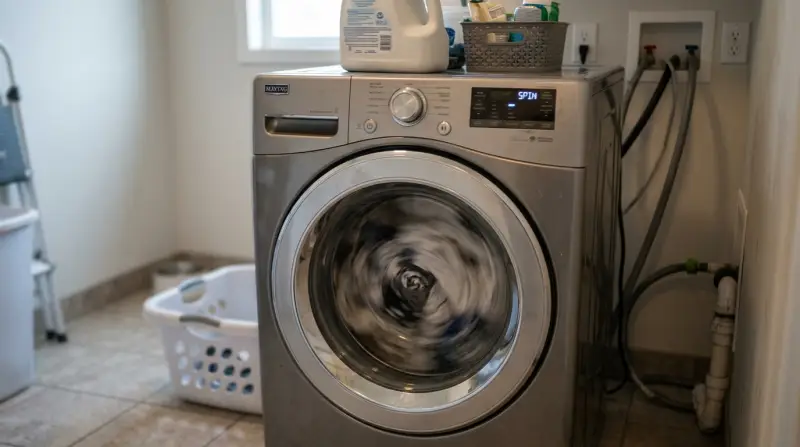
Loud noises during the spin cycle can come from different parts of the washer. Here are the main reasons your Maytag washer may be making strange sounds:
- Unbalanced Load: If clothes are not spread evenly, the washer can vibrate and bang loudly. Heavy items on one side can make the drum shake.
- Worn Drum Bearings: The drum bearings help the drum spin smoothly. When they wear out, you may hear grinding or rumbling sounds.
- Damaged Drive Belt: A broken or loose drive belt can cause squealing or thumping noises during spinning.
- Foreign Objects: Coins, keys, or small items left in pockets can get stuck between the drum and tub, causing rattling or scraping.
- Faulty Motor Coupling: The motor coupling connects the motor to the drum. If it breaks, you might hear a loud clunk or bang.
- Worn Suspension Rods Or Dampers: These parts absorb movement. When they wear out, the washer can bounce and make loud noises.
- Loose Parts: Screws, bolts, or panels inside can come loose, leading to vibrations and rattling.
- Faulty Pump: If the pump is blocked or damaged, it can make grinding or humming noises.
- Broken Spider Arm: The spider arm supports the drum. If it cracks, you may hear banging or knocking.
- Shock Absorber Issues: Shock absorbers help reduce movement. When they fail, loud banging or shaking can happen.
Diagnosing The Noise: Step-by-step
Before you fix anything, you need to find out what is causing the noise. Here is a practical way to diagnose your Maytag washer:
- Listen Carefully: Pay attention to when the noise happens. Is it only during the spin cycle, or also when the washer fills or drains? Different noises point to different problems.
- Inspect The Load: Stop the cycle and open the washer. Check if clothes are stuck on one side or tangled. Rearrange them and run the spin cycle again.
- Check For Foreign Objects: Look inside the drum and under the agitator for items like coins or buttons. Remove anything you find.
- Examine The Drum: Spin the drum by hand. If it feels rough or makes a grinding noise, the bearings may be bad.
- Look Under The Washer: Unplug the washer and tilt it back. Check the drive belt for cracks or looseness. Inspect the motor coupling for damage.
- Evaluate Suspension And Shock Absorbers: Shake the drum gently. If it moves too much or feels unstable, suspension rods or shock absorbers may need replacement.
- Inspect The Pump: Listen for humming or grinding during draining. If present, the pump may be blocked or failing.
Compare Noise Types
Here’s a quick guide to noise types and likely causes:
| Noise Type | Possible Cause | Quick Fix |
|---|---|---|
| Banging | Unbalanced load, worn suspension | Redistribute clothes, check suspension rods |
| Grinding | Bad bearings, foreign object | Check drum, remove objects |
| Thumping | Loose drive belt | Tighten or replace belt |
| Clunking | Broken motor coupling | Replace coupling |
| Humming | Faulty pump | Clean or replace pump |

Credit: www.caesarsapplianceservice.com
How To Fix Loud Noise In Maytag Washer
Once you identify the cause, you can fix the problem. Here are practical solutions for each issue:
Fixing An Unbalanced Load
- Stop the washer.
- Open the lid or door.
- Move clothes around so they are spread evenly.
- Restart the spin cycle.
Always wash items of similar weight together. Mixing heavy towels with light shirts can cause imbalance.
Replacing Drum Bearings
- Unplug the washer.
- Remove the back panel.
- Locate the bearings behind the drum.
- Take out the old bearings and install new ones.
This repair takes time and requires tools. If you are not comfortable, consider calling a professional.
Repairing Or Replacing The Drive Belt
- Unplug the washer.
- Tilt the washer back.
- Find the drive belt at the bottom.
- If it’s loose or cracked, replace it with a new one.
Drive belts are affordable and easy to find online or at appliance stores.
Removing Foreign Objects
- Open the drum.
- Remove the agitator if needed.
- Check for objects stuck between the drum and tub.
- Pull out coins, keys, or other items.
Non-obvious insight: Small objects can damage the drum and bearings if left inside. Always check pockets before washing.
Changing The Motor Coupling
- Unplug the washer.
- Remove the cabinet or access panel.
- Locate the motor coupling between the motor and drum.
- Replace the broken coupling.
Motor couplings are vital for spinning. If they break, the washer will not spin properly.
Replacing Suspension Rods Or Dampers
- Unplug the washer.
- Remove the top or back panel.
- Find the suspension rods or dampers.
- Install new parts if the old ones are worn out.
Suspension parts are crucial for keeping the washer stable during spin cycles.
Tightening Loose Parts
- Inspect inside panels for loose screws or bolts.
- Tighten everything you find.
Loose parts often cause rattling or vibration noises.
Repairing Or Cleaning The Pump
- Unplug the washer.
- Access the pump near the bottom front.
- Remove blockages or replace the pump if damaged.
A blocked pump can cause humming and prevent proper draining.
Replacing The Spider Arm
- This repair is complex. The drum must be removed.
- If the spider arm is cracked, replace it with a new one.
Non-obvious insight: Spider arm failure is rare but expensive. If your washer is old, replacing the whole unit may be better.
Shock Absorber Replacement
- Open the washer and locate the shock absorbers.
- Replace them if they are broken or worn out.
Shock absorbers keep the washer quiet during spinning.
When To Call A Professional
Some repairs are simple, but others need expert help. Call a professional technician if:
- The noise continues after simple fixes.
- You suspect bearing or spider arm failure.
- You are not confident working with electrical parts.
- Water leaks or electrical smells are present.
Professional repairs can cost between $100 and $500, depending on the issue. For older washers, compare repair costs with buying a new machine. Here is a comparison of repair costs:
| Repair Type | Estimated Cost | DIY Possible? |
|---|---|---|
| Unbalanced load fix | $0 | Yes |
| Drive belt replacement | $20–$50 | Yes |
| Drum bearing replacement | $150–$400 | No (usually) |
| Pump repair | $100–$250 | Sometimes |
| Spider arm replacement | $350–$600 | No |

Preventing Loud Noise In Future
Prevention is always better than repair. Here’s how to keep your Maytag washer running quietly:
- Check pockets before washing to avoid foreign objects.
- Balance loads by washing similar items together.
- Inspect the washer every few months for loose parts.
- Use the correct amount of detergent; too much can cause build-up and noise.
- Clean the washer drum and pump regularly.
- Avoid overloading the washer.
- If you hear a small noise, fix it early before it gets worse.
Non-obvious insight: Regularly rotating the drum by hand can help you detect bearing issues before they cause loud noises.
Maytag Washer Models And Noise Ratings
Different Maytag washer models have varying noise levels. Here’s a quick comparison:
| Model | Noise Rating | Spin Speed (RPM) |
|---|---|---|
| MVW7230HW | Low | 850 |
| MVW6200KW | Medium | 750 |
| MHW5630HW | Low | 1160 |
| MVWC565FW | Medium | 660 |
Higher spin speeds can sometimes lead to more noise if the washer is not balanced or maintained well.
Credit: www.youtube.com
Frequently Asked Questions
What Is The Most Common Cause Of Loud Noise During Spin Cycle?
The most common cause is an unbalanced load. When clothes gather on one side of the drum, it can make the washer bang and shake. Always spread clothes evenly before starting the spin cycle.
Can I Fix A Loud Noise In My Maytag Washer Myself?
Some issues like unbalanced loads or loose parts can be fixed easily. However, repairs like drum bearing replacement or spider arm replacement usually need professional help. Always unplug the washer before checking inside.
How Do I Know If The Drum Bearings Are Bad?
If you hear a grinding noise and the drum feels rough when you spin it by hand, the bearings might be worn out. This repair is complex and often best handled by a technician.
Is It Safe To Use The Washer If It Makes Loud Noise?
Using the washer with loud noises can cause more damage. If the noise is minor and you know the cause, you can fix it. For grinding, banging, or electrical smells, stop using it and call a professional.
Where Can I Find Official Repair Guides For My Maytag Washer?
You can find official guides and troubleshooting tips at the Maytag website. They offer manuals, videos, and customer support.
Solving loud noises in your Maytag washer is not only about comfort—it’s about protecting your appliance and keeping your laundry routine hassle-free. With the right steps, you can diagnose, fix, and prevent most issues. Remember, early action saves money and stress, and a quiet washer is a sign of good care.
1 thought on “Maytag Washer Making Loud Noise During Spin Cycle: Quick Fixes”