
The most common reason for a Thermo King Bunk Heater not working is low battery voltage or a tripped circuit breaker. You can often resolve these power issues by checking the main fuse panel or ensuring your truck’s auxiliary power system is charged.
Why your Thermo King Bunk Heater Not Working
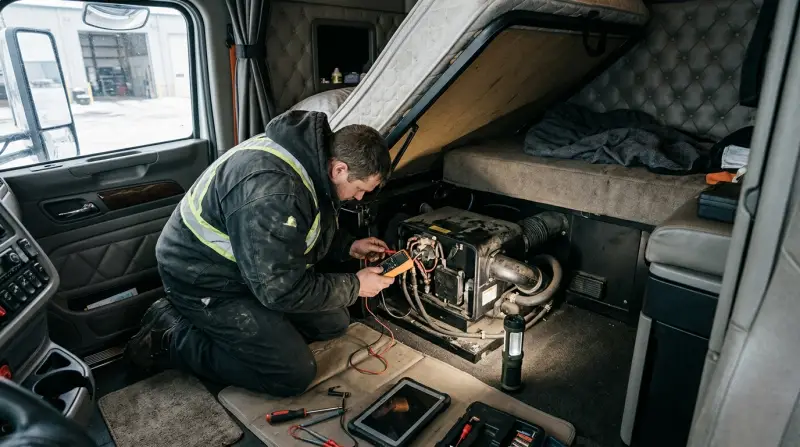
| Cause | How common | How to confirm it | Fix it yourself? |
|---|---|---|---|
| Low battery voltage | Very common | Check controller display | Yes |
| Tripped circuit breaker | Common | Inspect truck fuse box | Yes |
| Fuel line blockage | Occasional | Check fuel intake lines | Yes with care |
| Clogged air intake | Occasional | Look for debris | Yes |
| Glow plug failure | Rare | Listen for clicking | No |
| Control board fault | Rare | Check error code | No |
Battery voltage is the primary culprit. If your display shows a low voltage reading, the heater will refuse to ignite to protect the internal components. Have a technician check your battery levels, as charging the battery usually restores full function.
Circuit breakers trip when the initial power draw spikes during startup. If you hear a soft click but the unit remains dark, check the inline fuse near the battery terminal. A blown fuse looks charred; replace it with the exact same amperage rating.
Fuel blockages often occur if the truck has sat idle for over three months. Air bubbles trapped in the line act as a physical barrier. If you see persistent gaps in the transparent fuel tubing, prime the line manually until the fluid reaches the pump.
Finally, distinguish between a clogged air intake and a glow plug failure by the smell. A strong odor of raw diesel indicates the plug is failing to ignite the fuel. If there’s no smell at all, the unit is likely starved of air or fuel.
Power supply and voltage issues
Low voltage is the primary culprit when your bunk heater refuses to start. These heaters require a consistent flow of electricity to power the glow plug and the internal fan during the startup sequence. If your truck’s battery voltage drops below the manufacturer’s threshold, the unit will automatically disable itself to prevent damage. This happens most often after the truck has been sitting idle or during cold weather; have a technician verify your electrical system if this occurs.
To confirm this, look at the digital controller screen on your bunk heater. If the screen is blank or displays a low-voltage error code, your batteries are the issue. You can verify this by starting your truck engine to increase the alternator output, which provides the necessary boost to the house batteries. If the heater starts once the engine is running, your battery bank needs a full charge or a load test.
If you have a voltmeter, you can measure the voltage directly at the heater’s power input pins. If the reading is below the manufacturer’s specified minimum, don’t attempt to bypass the safety systems. This check takes about five minutes. If the batteries are healthy but the power isn’t reaching the unit, you must inspect the main power cables for loose connections or corrosion. Tighten any loose terminals you find, but don’t touch the internal wiring of the heater unit itself. If you aren’t comfortable working with vehicle electrical systems, contact a certified technician.
Fuel system and air intake blockages
A restriction in the fuel or air supply will stop the heater from completing its ignition process. Even if the fan starts, the unit will shut down if it can’t detect a flame within a set number of minutes—usually three to five minutes depending on the model. If you hear the fan running but the unit blows cold air before shutting off, the heater is likely failing to ignite.
Start by checking the fuel lines for kinks, leaks, or air bubbles. If the truck has been sitting for months, the fuel may have gelled, especially in cold climates. Inspect the air intake and exhaust ports on the outside of the vehicle to ensure they aren’t blocked by ice, mud, or road debris. A blocked intake prevents the heater from getting the oxygen it needs to create a combustion flame.
If the intake is clear, check the fuel filter. A clogged filter restricts the flow of diesel to the burner, causing the unit to fail. You can replace the filter if you have the correct part for your specific model, but be careful not to introduce air into the lines. This process typically takes 30 to 45 minutes. If you clear the debris and the fuel lines appear healthy but the unit still fails to start, the issue may be a faulty fuel pump or an internal sensor. These parts require specialized diagnostic tools to test, so you should stop here and seek professional assistance to avoid damaging the heater’s delicate internal components.
Internal component failure and diagnostics

Internal component failures, such as a burnt-out glow plug or a corrupted control board, are the final potential causes. If you have confirmed that the battery voltage is sufficient and the fuel and air lines are clear, the heater’s own computer is likely the source of the problem. Modern bunk heaters are designed to perform a self-diagnostic check every time you turn them on.
The controller will display a specific error code when it detects a failure. These codes aren’t universal; they vary by model and revision. You must find the model number on the heater’s data plate and look up that exact sequence in your service documentation. If the code indicates a glow plug failure, the heater can’t heat the fuel enough to start combustion. This is a common wear item that requires replacing the plug, which involves removing the heater from its housing.
Because the internal housing contains high-voltage components and sensitive seals, this isn’t a task for an average user. The internal circuitry is sensitive and can be damaged by static or improper handling, so never attempt to open the housing or probe the internal components yourself. If the error code points to the control board or the blower motor, these parts are usually replaced as a complete module. A professional technician will have the necessary software to reset the board or confirm if a replacement is required. This level of repair is essential to maintain the safety and warranty status of your unit.
The less likely causes
-
Exhaust blockage: A crushed or obstructed exhaust pipe causes backpressure, which triggers an automatic safety shutdown to prevent carbon monoxide buildup. If your unit fires for exactly sixty seconds before cutting out, check the exterior vent for debris or nesting materials.
-
Incorrect fuel grade: Using fuel with too high a paraffin content in freezing temperatures can clog the pump, requiring a system flush by a professional. You can identify this issue if the fuel line appears cloudy or thick during a cold snap.
-
Overheat sensor: If the heater was recently used and then turned off abruptly, the safety sensor may lock the unit out until it fully cools down. Wait at least twenty minutes before attempting a manual reset.
What a fix usually involves
Fixing a bunk heater typically involves one of three things: a simple reset, cleaning external components, or replacing a major module. A reset involves checking the power supply or clearing an error code through the menu, which costs nothing but your time. Cleaning the air intake or fuel lines requires basic hand tools and potentially a new filter, which is a small part.
When a major component like the glow plug, fuel pump, or control board fails, the repair involves the cost of the replacement part plus the labor of a technician. The price of these parts varies widely depending on the model and the age of your system. You can get an accurate quote by providing your specific serial number to a Thermo King dealer. Never attempt to use generic parts from other appliances, as this voids your safety certifications and can lead to dangerous malfunctions. Always check the official documentation to see if your specific model allows for user-level part replacements before buying anything.
Frequently asked questions

Can I reset my Thermo King bunk heater myself?
Yes, you can often clear a temporary fault by turning the unit off, waiting for the fan to stop completely, and then turning it back on. Some models also allow you to clear specific error codes through the controller menu. If the heater immediately displays the same error code again, the fault is likely physical and won’t be fixed by a reset.
Is it safe to run the heater while I am sleeping?
Yes, it’s safe to run the heater while sleeping, provided the unit is installed correctly and the exhaust system is clear of obstructions. Ensure your truck has a working carbon monoxide detector installed as a safety precaution. Never block the air intake or exhaust vents, as this can lead to an accumulation of fumes inside the cabin.
Why does my heater blow cold air?
The heater blows cold air if it fails to ignite the fuel after the initial startup cycle. This usually happens because of a fuel supply issue, a clogged air intake, or a failed glow plug. Check the controller for an error code first, as this will tell you exactly which part of the ignition process is failing to complete.
How long should the heater take to start?
About two to five minutes is the normal time for the heater to move from the initial power-on state to producing heat. This time varies by model and the outside temperature, as the glow plug needs more time to heat up in extreme cold. If the fan runs for longer than ten minutes without heat, there’s a fault.
Does the heater consume a lot of fuel?
No, the heater consumes very little fuel, typically using less than a gallon for an entire night of operation. The exact amount depends on the temperature setting and the insulation of your truck cabin. If you notice a sudden spike in fuel consumption, check for leaks in the fuel lines or a malfunctioning burner.
What happens if I ignore an error code?
No, you should never ignore an error code, as the unit will eventually lock itself out to prevent damage. Ignoring the code can lead to a more expensive repair if a small, fixable issue like a clogged filter causes a larger, more expensive part like the control board to fail from overworking.
Final Thoughts
If these basic checks don’t get the unit running, don’t hesitate to reach out to a certified service center. They’ve got the specialized tools needed to diagnose internal component failures quickly. Getting an expert’s opinion will ensure you’re back to sleeping comfortably in your cab as soon as possible.
Related guides
- Freightliner Bunk Heater Not Working? Top Fixes to Try Now
- Water Heater Beeping
- Nissan Titan Heater Not Working