
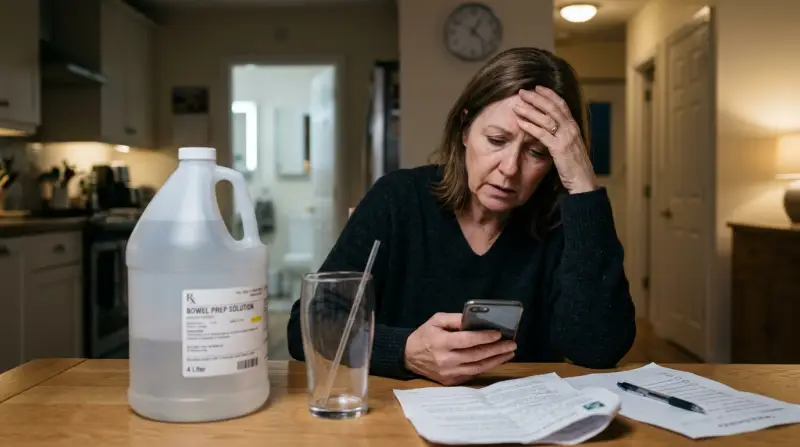
Golytely not working is usually caused by a delay in gut transit time due to constipation or improper adherence to pre-procedure diet instructions. You can confirm progress by monitoring your hydration and ensuring your output turns clear or yellow.
Why Golytely isn’t working
| Cause | How common | How to confirm it | Fix it yourself? |
|---|---|---|---|
| Slow gut motility | Very common | Lack of output | Yes with care |
| Low hydration | Common | Dark urine | Yes |
| Wrong prep timing | Common | Read the instructions | Yes |
| Dosage error | Occasional | Count the glasses | Yes |
| Dietary interference | Occasional | Review food log | Yes |
| Bowel obstruction | Rare | Severe pain | No |
| Medication conflict | Rare | Check drug list | No |
Slow gut motility often stems from a lack of physical movement. If you haven’t had a bowel movement within four hours of starting the prep, take a brisk ten-minute walk to stimulate peristalsis.
Dehydration is the most frequent mistake. If your urine is dark, you’re likely dehydrated and need to consume more clear liquids as permitted by your instructions. Drink eight ounces of clear liquid every thirty minutes until your output turns clear.
If you suspect a bowel obstruction, watch for rigid abdominal swelling or vomiting. These are medical emergencies. Don’t attempt further doses if you experience sharp, localized pain that prevents you from standing upright.
Finally, review your current medications. Blood pressure drugs or iron supplements often interact with prep solutions. If you missed a dose earlier in the day, don’t double up later to catch up. This causes severe cramping without improving the quality of your results.
Delays in digestive transit
Slow gut transit time is the primary reason the solution doesn’t seem to trigger a bowel movement within the expected window. This happens when the digestive tract is sluggish, often because the patient is prone to constipation or hasn’t maintained adequate fiber intake in the days leading up to the prep. If you haven’t seen any activity within three hours of starting the solution, your system might simply be moving slower than the average person.
To confirm if this is the issue, check your physical symptoms. If you feel bloated but don’t have sharp, stabbing pain, your bowels are likely just taking their time to process the volume of liquid. To help things along, try light physical movement like walking around your home, which can encourage peristalsis. This process requires patience; if you’re an older adult, the response time is often longer than for a younger person, sometimes taking four to five hours instead of the standard two.
If you’re concerned about the timing, compare your progress against the instructions provided by your doctor. If you find you’re behind, don’t double the dose to catch up, as this can lead to severe cramping or vomiting. Instead, maintain a steady intake of the solution as prescribed. If you still have no output after the total amount is consumed, stop and contact your clinic’s on-call nurse. They will know if your medical history requires a different approach, as this varies by patient health profile.
Insufficient fluid intake
Dehydration is a frequent cause of poor results because the solution needs a high volume of water to create the osmotic pressure required to flush the colon. If you aren’t drinking the required amount of clear liquids alongside the solution, the bowel prep can’t work effectively. You can tell if this is the problem by looking at your urine; if it’s dark or you’re urinating infrequently, you’re likely dehydrated and need to increase your intake of approved clear liquids immediately.
This is a common mistake people make, and it costs them time because it forces the doctor to cancel or delay the procedure. The fix is straightforward: sip clear liquids constantly throughout the prep period. If you feel nauseated, try chilling the solution or using a straw, which can help you consume the liquid more comfortably.
Who this is NOT for: If you have a known history of heart failure or kidney disease, you must not increase your fluid intake without explicit permission from your doctor, as you’re at risk of electrolyte imbalance. Always follow the specific volume limits provided in your medical paperwork, as these are tailored to your health status.
Improper dietary preparation

Eating solid food too close to your start time prevents the solution from clearing the colon properly. If you consumed anything other than clear liquids during the prohibited window, the residue will stay in the bowel and make the prep appear ineffective. You can confirm this by reviewing your food log against the clinic’s “what to avoid” list. If you see items like nuts, seeds, raw vegetables, or red-colored drinks, these are likely the culprits.
The trade-off here is between comfort and accuracy. If you stop eating early, you may feel hungry, but you ensure the doctor can see the colon wall clearly during the exam. If you made a mistake and ate solid food, don’t panic, but do notify your doctor’s office before you arrive for your appointment. They might need to reschedule you to ensure the procedure is safe and effective.
There’s a significant limit to what you can do once the prep has already started. If you have already ingested solid food, you cannot “flush it out” with extra solution. You must follow the instructions exactly as written for the remainder of the time. If the clinic requires a perfectly clear view, they will tell you whether or not to proceed based on what you ate. Never try to hide a diet mistake from your medical team, as it could mean the difference between a successful procedure and a wasted trip.
The less likely causes
-
Bowel obstruction: This is a medical emergency. Watch for sharp, cramping pain that comes in waves, persistent vomiting, or a stomach that feels rigid to the touch. If you can’t pass gas or haven’t had a bowel movement in 48 hours, go to the emergency room immediately. Delaying care here risks a bowel perforation.
-
Medication conflict: Drugs for chronic constipation or opioid pain management often counteract prep solutions. Call your pharmacist three days before your procedure to review your list. If you take iron supplements, stop them one week prior, as they can coat the intestinal wall and obscure the camera’s view.
-
Dosage misunderstanding: You must reach a specific osmotic threshold to trigger a purge. Drinking the solution too slowly prevents this. If you’re behind schedule, contact your clinic for guidance on how to adjust your intake safely.
-
Underlying motility disorders: Conditions like gastroparesis slow gastric emptying significantly. If you have a history of diabetes or nerve damage, tell your gastroenterologist. You may require a split-dose regimen or a longer prep window to ensure your colon is clear.
What a fix usually involves
Fixing a stalled bowel prep usually involves time, patience, and sometimes a quick call to your doctor’s office. If the issue is simple dehydration, the fix is just drinking more clear liquids, which costs nothing but your time. If the issue is a failure to follow the diet, you might need a new prescription for a different type of prep, which involves the cost of a new kit and an extra day of your time.
If you suspect you have a medical issue like an obstruction, the “fix” involves professional medical care, which is a major health decision. Always check your specific patient packet or the clinic’s website for the exact steps they want you to take if the prep isn’t working. Don’t guess the process. If you’re unsure about the cost of a replacement kit or the safety of your current progress, call the clinic’s nurse line. They have the final say on whether you should continue or wait for further instructions.
Frequently asked questions
Can I drink more water than the instructions say?
You should follow the volume limits provided by your doctor, as drinking too much water can lead to electrolyte imbalances. Check your provided instructions for the exact amount of clear liquids permitted. If you feel thirsty, stick to the clear liquids allowed on your list, but don’t exceed the total daily volume specified in your medical paperwork.
Is it safe to take a laxative if the prep isn’t working?
No, you should never add extra laxatives to your routine unless your doctor specifically told you to do so. Adding extra medication can lead to severe side effects or dangerous changes in your body’s salt balance. If you’re worried, call your clinic’s office first to ask for their recommendation for your specific situation.
What happens if I don’t finish all of the solution?
If you don’t finish the solution, your colon may not be clean enough for the doctor to perform a safe and accurate examination. Your doctor needs a clear view to spot potential issues. If you can’t finish the dose due to nausea, call your doctor’s office immediately to see if they have an alternative plan for you.
How long does it take for the solution to start working?
It typically starts working within one to three hours, but this varies based on your individual metabolism and health history. If you haven’t had a bowel movement after three hours, check your hydration status and move around the house. If you’re still concerned, call your clinic’s nurse line to discuss your progress.
Does it matter if the output isn’t perfectly clear?
Yes, it matters because the doctor needs a clear view of the colon lining to see small growths or polyps. If the output is still dark or thick, the procedure might be harder to perform. Check the instructions provided by your clinic, as they often include a color chart or description of what the output should look like.
Why am I feeling nauseated while drinking the solution?
Nausea is a common side effect of the high volume of fluid and the specific salts in the solution. You can try chilling the liquid in the refrigerator or using a straw to bypass your taste buds. If the nausea is so severe that you’re vomiting, stop drinking and contact your doctor’s office for further instructions.
Final Thoughts
If your bowel movements haven’t started after a few hours, don’t panic. Simply reach out to your doctor’s office to let them know what’s happening. They’ll provide clear guidance on how to adjust your plan so you’re ready for your procedure. You’ve got this, and they’re there to help.