
A blocked filter or a faulty circulation pump is the primary reason for a Kitchenaid Dishwasher Not Spraying Water during its cycle. You should check the wash filter and the spray arm nozzles first, as these are the most common points of failure that prevent water from reaching your dishes. If your unit is making a loud humming noise but the arms aren’t spinning, the pump is likely struggling to move water through the system. Always ensure the water supply valve is fully open before you attempt any internal repairs.
Do this first
-
Clear the drain filter: Locate the cylindrical filter at the base of the tub. Twist it counter-clockwise to remove it, rinse off any food particles under hot running water, and lock it back into place. If you see a slimy film, scrub it with a soft brush to prevent odors.
-
Inspect the spray arms: Use a thin wire or a toothpick to poke through each hole in the spray arms to remove trapped debris. If a hole is blocked by mineral buildup, soak the arm in white vinegar for thirty minutes before reattaching it.
-
Check the water supply: If you still hear no water flow, check the inlet valve screen for sediment. A clogged screen often mimics a broken pump.
-
Verify the door latch: Press firmly on the door to ensure it’s fully clicked shut. If the door isn’t sealed, the control board won’t trigger the water circulation process. If the latch clicks but the cycle refuses to start, check for a misaligned strike plate.
What is actually happening
The washing process relies on a circulation pump that pulls water from the sump and forces it into the hollow spray arms. This pressure causes the arms to rotate while water jets out of the small nozzles to clean your dishes. When this flow stops, it’s usually because the pump inlet is clogged with food waste or the pump itself has reached its service life.
If the pump is obstructed, it can’t build the pressure needed to spin the arms, which leads to the “humming” sound many people hear. You can diagnose an obstruction by checking the filter assembly at the bottom of the tub. If you find debris larger than a grain of rice, the pump is likely struggling to maintain flow.
Another possibility is a failing diverter motor. This part directs water to either the upper or lower rack. If your lower rack cleans well but the top rack remains dirty, the diverter is the culprit.
A common mistake is using too much detergent. This creates excess foam that tricks the sensors into thinking the water level is too high, causing the pump to shut down to prevent leaks. This mistake can cost you a full cycle of cleaning time and leave a stubborn film on your dishes.
To determine if the issue is mechanical or chemical, wait for the cycle to end and check the bottom of the tub. If the water is still soapy, you have a detergent issue. If the water is clear but the dishes are dry, the pump or diverter has failed.
Check these, cheapest first
Clear the spray arm nozzles
Food bits often clog the tiny holes in the spray arms. Use a small toothpick to clear every hole you see. If the arm doesn’t spin freely by hand, there’s likely a blockage inside the arm hub that needs a thorough rinse.
Clean the bottom filter assembly
The mesh filter is designed to catch particles before they reach the pump. If this mesh is coated in grease or solid food, water can’t enter the pump intake. Wash it with warm, soapy water and a soft brush until the mesh looks clear.
Test the door switch
The dishwasher won’t spray if it thinks the door is open. Check the latch mechanism for any stuck bits of plastic or food. If the latch feels loose or does not “click,” the sensor might not be sending the start signal.
Inspect the pump impeller
Reach into the sump area after removing the filter to feel for the pump blades. If you feel a piece of broken glass or a hard seed, remove it carefully. If the blades don’t spin when pushed, the pump is likely jammed or broken.
The fix
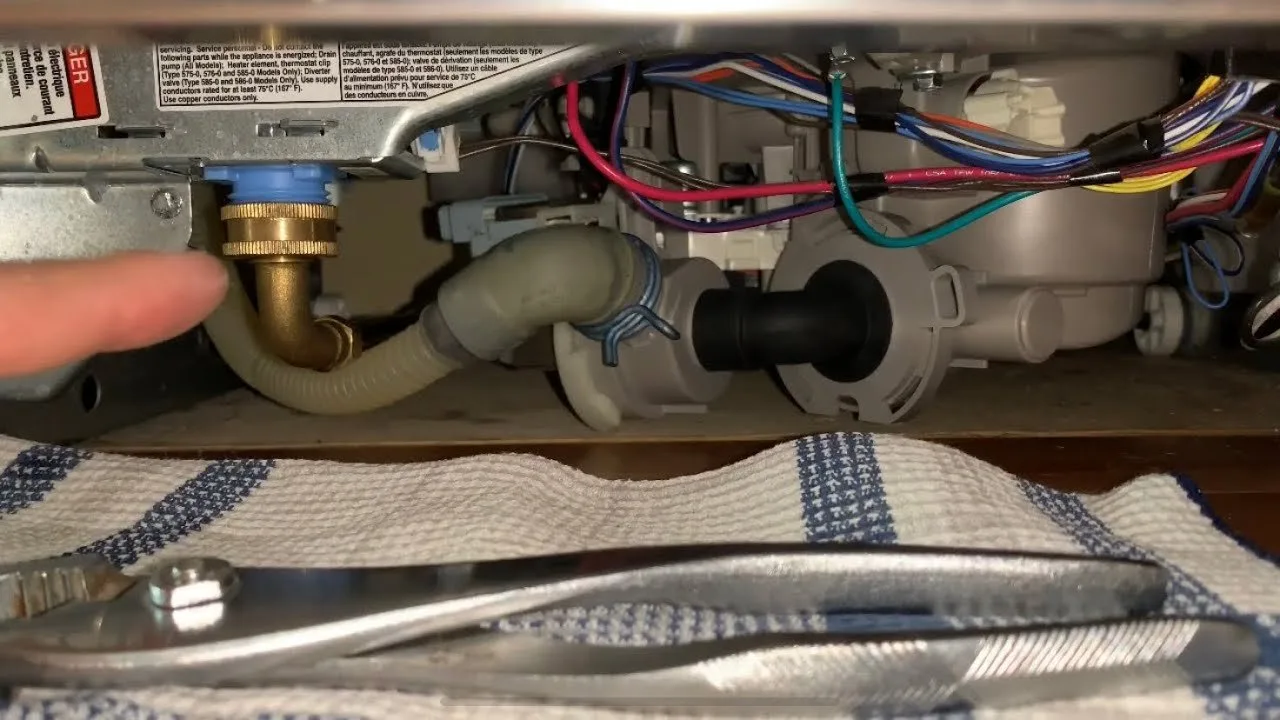
The most effective fix for a blocked system is a manual cleaning of the sump area. First, disconnect the power at the breaker panel to ensure your safety. Remove the bottom rack and the filter assembly. Use a shop vacuum to remove all standing water from the bottom of the tub. Once the area is dry, inspect the pump impeller at the base. If you see debris, remove it with needle-nose pliers. If the impeller is clear but the dishwasher still doesn’t spray, the issue is often a failed circulation pump.
To test the pump, you must check for continuity using a multimeter. This is a task strictly for a professional, as the internal capacitor can hold a lethal electrical charge even when the unit is unplugged. If the pump doesn’t show continuity, it must be replaced.
A common mistake is assuming the pump is dead when the issue is actually a clogged check valve. If you see water returning to the tub after the drain cycle finishes, the valve is stuck open. You must clear the debris from the valve housing before ordering a new pump.
A successful fix is indicated by a steady, rushing sound of water hitting the walls of the tub within two minutes of the wash cycle starting. If the problem returns within a week, check the drain hose for a kink. If the hose is clear but the error persists, the control board relay has likely burned out and requires a full module replacement.
Where this stops being a DIY job
If you have cleared the filters, checked the spray arms, and ensured the water supply is open, but the unit still doesn’t spray, the issue likely involves the electronic control board or the main circulation motor.
Because these components involve high-voltage electricity and delicate wiring, this is where you must stop. A professional technician is required to perform live voltage testing or to disassemble the motor housing. Attempting to bypass these safety systems can void your warranty or cause a fire hazard.
The decision rule is simple: if you need a multimeter to probe a live circuit, put the tools down. If you have already verified the mechanical flow path is clear, you’re dealing with a failure of the logic board or the motor windings.
When you contact a repair service, tell them you have already cleaned the filter and checked the spray arm nozzles for debris. This allows the technician to skip the basic steps and focus on testing the pump and control board relays immediately. Providing this history saves you the cost of a full diagnostic fee for tasks you have already completed.
Frequently asked questions
Can I run a cleaning cycle to fix it?
No, a cleaning cycle won’t fix a blockage. If the water can’t move through the pump, a cleaning tablet will simply sit at the bottom of the tub and dissolve without doing anything. You must manually remove the physical debris from the filter and spray arms before any cleaning product can be effective.
Why does my dishwasher make a humming noise but no water sprays?
This usually means the circulation pump is receiving power but is physically blocked by debris or has a failed motor. The pump is trying to spin but can’t move the water through the system. Check the filter area for any hard objects or food waste that might be stopping the impeller from turning.
Is it safe to use the dishwasher if it doesn’t spray?
No, you should stop using it until the problem is fixed. Running the dishwasher without water circulation can cause the pump motor to overheat and eventually burn out. This adds a costly repair to a problem that might have been solved by simply cleaning a filter.
How long should the pump last?
Hard water and excessive food debris are the two main factors that shorten the life of the pump. Consistent maintenance of the filter is the best way to ensure the pump reaches its expected life.
Does it matter if I use too much soap?
Yes, using too much soap causes excess suds that confuse the water level sensor. When the sensor detects too much foam, it often triggers an error code or shuts down the pump to prevent water from leaking out of the door. Always use the amount of detergent recommended by the manufacturer for your specific water hardness level.
Why is there water sitting in the bottom?
Water sitting in the bottom usually means the drain system is clogged rather than the spray system. If the water is dirty and smells, check your drain hose for kinks or blockages. If the water is clean, it may just be the water that remains in the sump after a cycle, which is normal for many models.
Final Thoughts
If these quick checks don’t get your machine running smoothly again, it’s best to contact a professional technician for a deeper inspection. Don’t let a minor issue turn into a costly repair; reaching out for help early will keep your kitchen running perfectly and save you plenty of time later on.